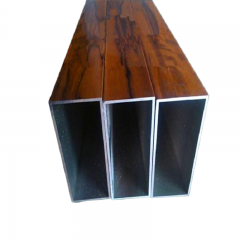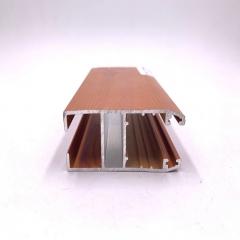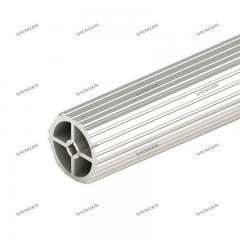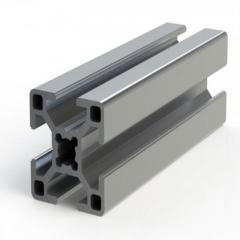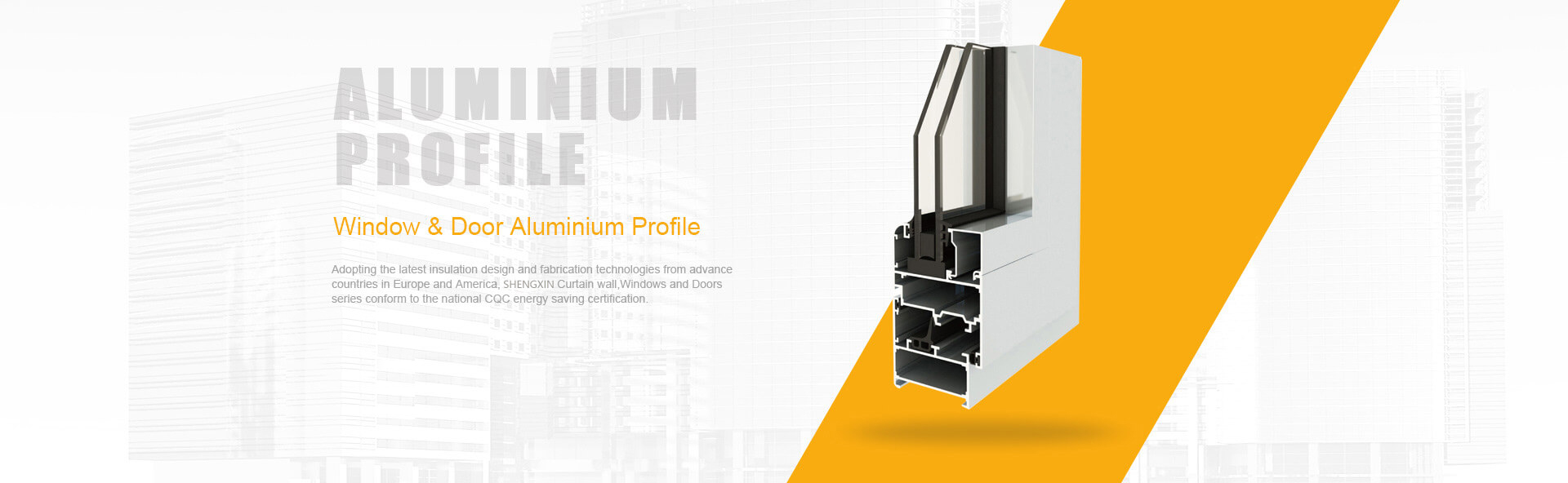
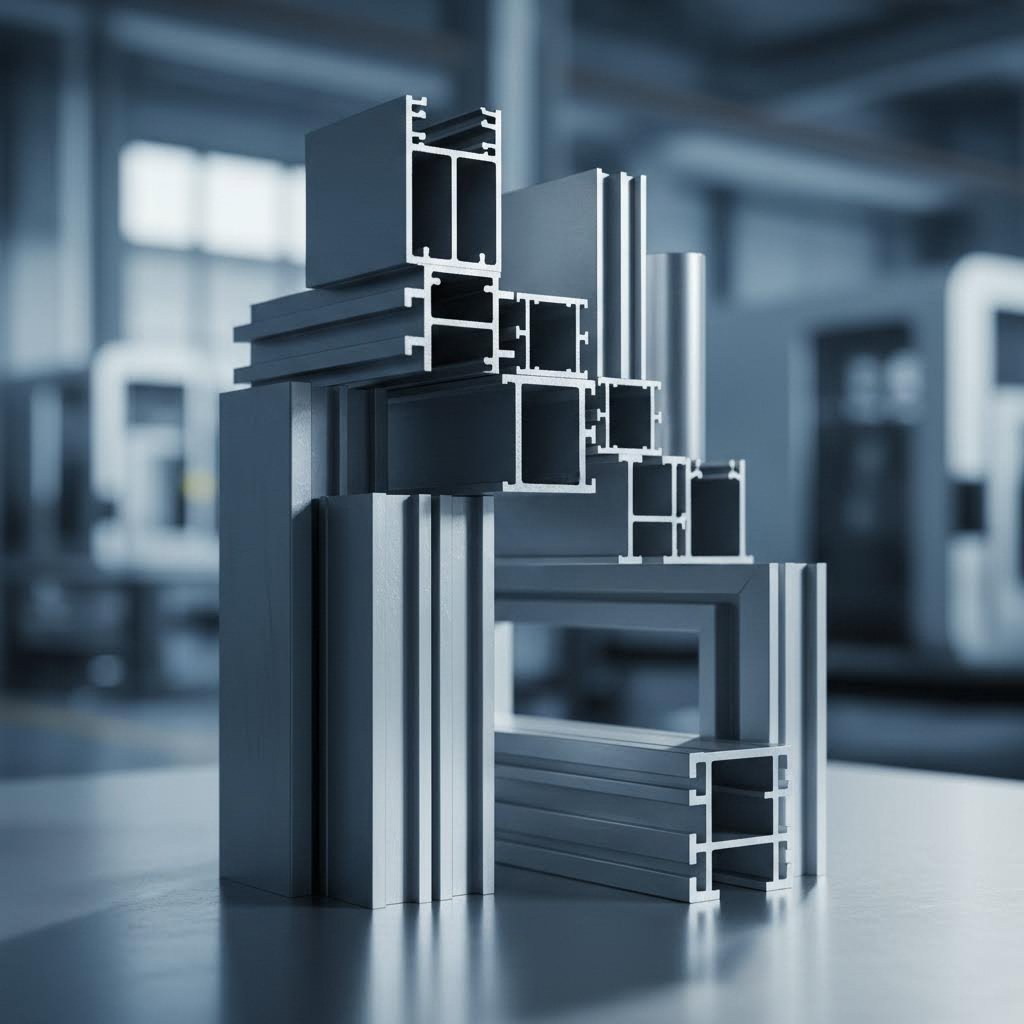
Ever wondered how manufacturers create those perfectly uniform aluminum channels, tubes, and intricate profiles you see in everything from window frames to smartphone cases? The answer lies in a remarkably efficient process that transforms raw aluminum into precisely shaped components with minimal waste.
Aluminum extrusion is a fabrication process that forces a heated aluminum billet through a custom-shaped steel die to produce a continuous profile with a consistent cross-section.
Think of it like a sophisticated version of squeezing frosting through a decorating tip—except instead of buttercream, you're working with heated aluminum alloy, and instead of decorating a cake, you're creating structural components that can support buildings, cool electronics, or frame automobiles.
So how does aluminum extrusion work in practice? Imagine you have a cylindrical log of aluminum called a billet. When you heat this billet to approximately 800-925°F, it becomes soft and malleable—pliable enough to shape, yet still solid. A powerful hydraulic ram then pushes this heated aluminum through a steel die, which acts like a cookie cutter that determines the final shape.
The pressure involved is extraordinary. According to Bonnell Aluminum, hydraulic rams can apply up to 15,000 tons of force to push the aluminum through the die. As the aluminum extruded material emerges from the other side, it takes on the exact cross-sectional shape of the die opening—whether that's a simple rectangle or a complex multi-chambered profile.
What makes the aluminium extrusion process so appealing to manufacturers across dozens of industries? Several key advantages stand out:
These benefits explain why you'll find aluminum extrude applications everywhere—from the frame holding your office partition to the heat sink cooling your laptop's processor.
The journey from raw billet to finished component involves several carefully controlled steps. First, the steel die is preheated to around 750-900°F to ensure optimal metal flow. The billet is loaded into the press container with lubrication to prevent sticking during the process.
Once the aluminum emerges in its new shape, it's rapidly cooled using water or air to control mechanical properties. Profiles are then cut to manageable lengths—typically between 8 to 24 feet—and stretched to correct any twist or deformation. This stretching also performs molecular realignment that enhances the material's properties.
But the process doesn't end there. What is extruded aluminum capable of becoming? That depends on subsequent treatments. Profiles can undergo heat treatment to enhance tensile strength, surface finishing for improved appearance and corrosion resistance, or fabrication operations like drilling and machining to achieve final specifications. This versatility is precisely why this manufacturing method has become indispensable across industries seeking cost-effective, high-performance aluminum components.
Now that you understand how the extrusion process works, here's the next critical question: which aluminum alloy should you choose? This decision directly impacts your project's performance, cost, and longevity. Yet surprisingly, many designers overlook this step—selecting whatever alloy seems available rather than matching material properties to their specific needs.
The truth is, not all extruded aluminum is created equal. Different alloys offer distinct advantages depending on whether you're building structural aluminum extrusions for a commercial facade or lightweight components for recreational equipment. Let's break down what you need to know.
When you're specifying aluminum extrusion material, you'll most frequently encounter the 6000-series alloys. Why? Because they're specifically formulated to excel in the extrusion process while delivering balanced mechanical properties.
The 6000-series alloys contain magnesium and silicon as their primary alloying elements. According to Gabrian, the magnesium increases strength while the silicon reduces the melting point—making these alloys ideal candidates for pushing through extrusion dies.
Here's what sets the most popular options apart:
When should you reach for each? Consider 6063 for extruded aluminum sections where aesthetics and corrosion resistance matter most—think window frames, decorative trim, and furniture. Choose 6061 when aluminum structural applications demand maximum strength-to-weight performance, such as in aerospace components or heavy-duty frames.
Selecting your alloy is only half the equation. The temper designation tells you how the material has been heat-treated after extrusion—and this dramatically affects mechanical properties.
You'll encounter these temper codes most frequently:
Imagine you're designing aluminium extrusion parts for a structural application. Specifying 6061-T6 gives you the highest strength available from this alloy. But if you're creating decorative profiles where appearance trumps strength, 6063-T5 offers an excellent balance of properties with a beautiful surface finish ready for anodizing.
How do you make the final call? The table below compares the three most common extrusion alloys across the properties that matter most for your project:
| Property | 6063-T5 | 6061-T6 | 6005-T5 |
|---|---|---|---|
| Tensile Strength | 27,000 psi (moderate) | 45,000 psi (high) | 35,000 psi (medium-high) |
| Corrosion Resistance | Excellent | Good | Very Good |
| Extrudability | Excellent | Good | Very Good |
| Surface Finish Quality | Excellent (ideal for anodizing) | Good | Very Good |
| Weldability | Very Good | Very Good | Very Good |
| Machinability | Fair | Good | Good |
| Typical Applications | Window frames, architectural trim, furniture, decorative profiles | Structural components, aerospace parts, automotive frames, heavy-duty equipment | Ladder rails, transportation components, structural applications requiring good surface |
Here's a practical decision framework: Start by identifying your primary performance requirement. If exposure to weather or water is expected, 6063's superior corrosion resistance makes it the obvious choice. If you need the best possible strength-to-weight ratio and plan to machine the profiles, lean toward 6061. And if you need something in between—perhaps structural aluminum extrusions that still require a quality surface finish—6005 offers an excellent compromise.
Remember, both 6061 and 6063 can be formed using almost any aluminum-forming process. The specifics of your project—whether aesthetics, structural demands, or environmental exposure takes priority—will ultimately guide your selection toward the alloy that delivers optimal performance for your application.
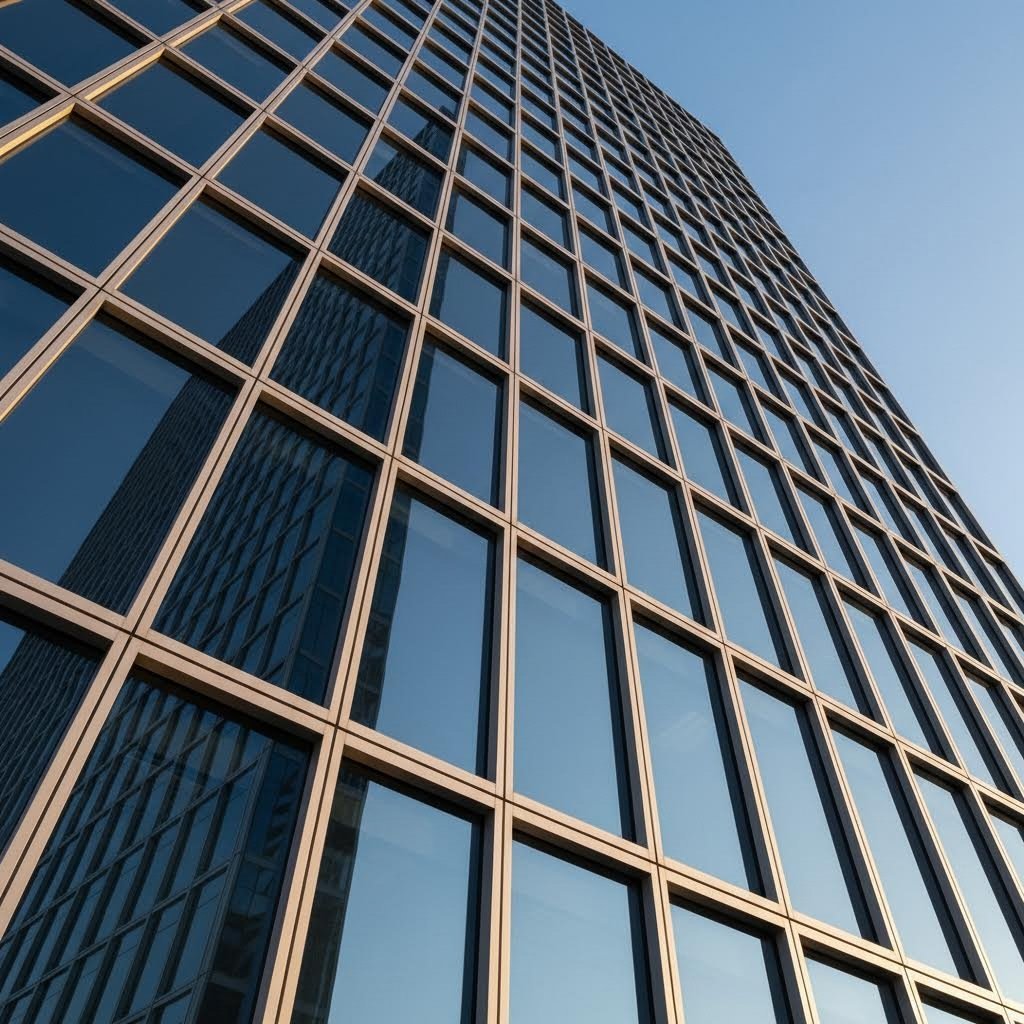
When you walk through any modern city, you're surrounded by aluminum extrusion uses—often without realizing it. Those sleek glass towers reflecting the sky? Their window systems rely on extruded aluminum frames. The curtain walls creating seamless facades? Aluminum profiles make them possible. Construction and architecture represent the largest application sector for extruded aluminum, and for good reason.
Why has aluminum frame material become the standard in modern building design? The answer lies in a powerful combination of properties that no other material matches. Aluminum delivers exceptional strength while weighing roughly half as much as steel for the same volume. According to MiniTec Solutions, this superior strength-to-weight ratio reduces the load on foundations and supporting structures—a critical advantage in high-rise construction where every pound matters.
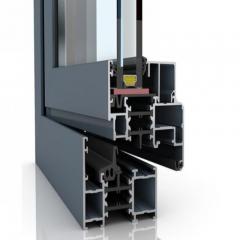
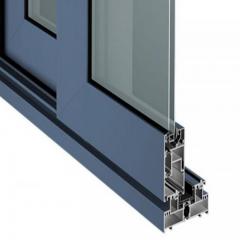
Ever noticed how modern windows feature remarkably slim frames while still providing excellent performance? That's the magic of aluminum window extrusions at work. The extrusion process allows manufacturers to create complex hollow profiles that integrate multiple functions into a single component.
Consider what a window frame must accomplish. It needs to:
According to Taber Extrusions, aluminum can withstand extreme temperatures ranging from -80°C to +300°C—making aluminium window extrusions reliable performers in virtually any climate. The extrusion process also creates grooves that hide seal materials from view, keeping facades clean and aesthetically pleasing.
Structural aluminum framing has transformed how architects approach building design. When you need to frame aluminum components for load-bearing applications, extruded profiles deliver the strength of traditional materials without the weight penalty.
The 6XXX series alloys discussed earlier excel in these applications. Their combination of strength, corrosion resistance, and extrudability makes them ideal for:
What sets aluminum framing material apart from alternatives? Beyond the weight savings, aluminum is remarkably easy to machine, cut, drill, and modify. This adaptability means components can be adjusted and reconfigured during installation without specialized equipment. For large commercial projects where precision and speed matter, this flexibility translates directly to cost savings.
Modern architecture increasingly favors facades that appear to be entirely made of glass—those stunning transparent exteriors you see on mid-rise and high-rise buildings. Achieving this look requires facade systems that combine minimal visual presence with maximum performance. Aluminum extrusion delivers exactly that.
According to SinoExtrud, extruded aluminum is popular in facade design because it allows complex, custom cross-section shapes that integrate channels for glazing, drainage, and thermal breaks in a single profile. Designers can embed grooves for weather seals or frame supports—functionality that would be difficult or impossible with flat plate or sheet metal bending alone.
The aluminum frame material used in facades must address several challenges simultaneously:
Aluminum's sustainability credentials add another dimension to its appeal. The material is 100% recyclable and retains all its properties when recycled, requiring only 5% of the energy needed to produce new aluminum. For projects pursuing LEED certification or other green building standards, specifying aluminum framing material supports environmental goals while delivering practical performance benefits.
Whether you're designing a residential window replacement or a commercial tower's entire exterior envelope, understanding these architectural applications helps you specify the right profiles for your project. But construction represents just one sector where aluminum extrusion uses deliver value—industrial and manufacturing environments present an entirely different set of demands and opportunities.
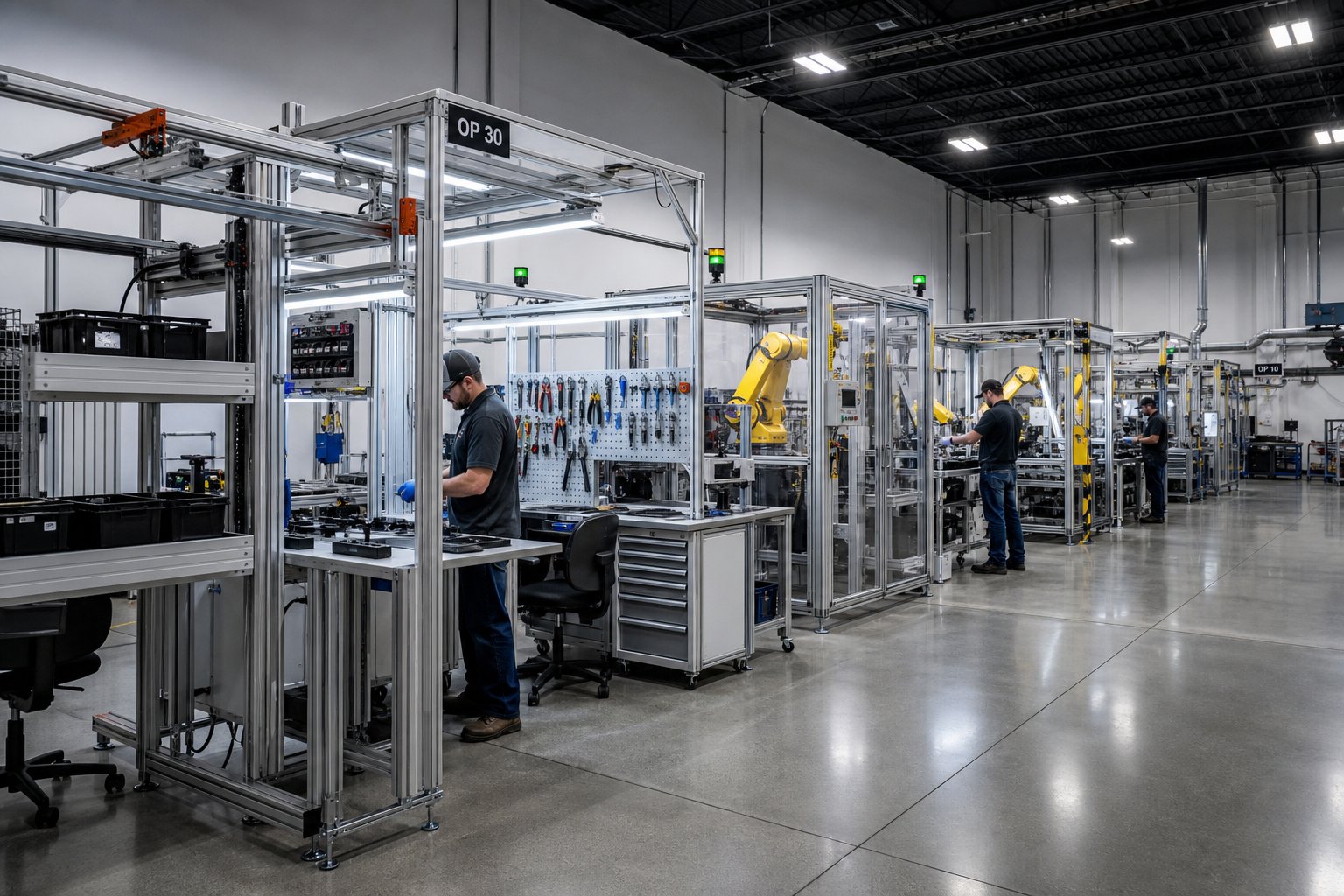
Walk into any modern manufacturing facility, and you'll notice something striking: aluminum framing systems are everywhere. From the workstations where operators assemble products to the safety enclosures protecting workers from robotic arms, extruded aluminum profiles have become the backbone of industrial automation. But why has this material displaced traditional steel in so many factory applications?
The answer comes down to adaptability. According to mk North America, T-slot aluminum framing systems offer modularity, ease of assembly, and customization options that traditional materials like steel simply cannot match. In manufacturing environments where production demands constantly evolve, this flexibility translates directly to competitive advantage.
Worker safety ranks as the top priority in any industrial setting. That's why extruded aluminum enclosures and safety guards have become standard equipment around hazardous machinery. These protective barriers prevent accidental contact with moving parts while maintaining visibility and access when needed.
What makes aluminum extrusion enclosure systems so effective for machine guarding? Consider the practical requirements:
An extruded aluminum box structure around a CNC machine, for instance, can incorporate emergency stop buttons, light curtains, and access interlocks—all mounted directly to the aluminum profiles. When that machine gets upgraded or relocated, the entire enclosure moves with it.
Manufacturing and assembly processes demand workstations that adapt to different tasks while keeping operators comfortable and productive. This is where the extruded aluminum workbench concept truly shines. Rather than purchasing fixed-dimension steel tables that may not fit your exact needs, T-slot aluminum framing lets you build precisely what each workstation requires.
According to Industrial Profile Systems, ergonomic workstations engineered with over 30 years of custom work environment experience maximize worker productivity while minimizing fatigue. The modularity of aluminum profiles makes this possible through features like:
The lightweight nature of aluminum also matters here. An extruded aluminum housing for electrical components at a workstation weighs significantly less than steel equivalents—making installation easier and allowing more flexibility in workspace arrangement.
Efficient material handling separates high-performing production lines from those struggling with bottlenecks. Aluminum framing provides the structural foundation for conveyor systems, roller stands, and transfer stations that keep products flowing smoothly through manufacturing processes.
The integration capabilities of T-slot aluminum make it particularly valuable in automation. According to Evolution Motion, application areas include autonomous mobile robots (AMRs), collaborative robots, conveyance technology, framing, machine guarding, material flow, material racks, material transport, manual production systems, robotics, and workstations.
For robotic work cells specifically, extruded aluminum enclosures offer critical advantages:
The corrosion resistance of aluminum also proves essential in certain manufacturing environments. Unlike steel, which requires coatings or treatments to prevent rust, aluminum naturally resists corrosion. For food processing, pharmaceutical manufacturing, and other industries where hygiene and cleanliness are paramount, anodized aluminum framing provides an additional layer of protection against contamination.
As automation and robotics continue to transform manufacturing, the demand for adaptable structural solutions keeps growing. Extruded aluminum enclosures, workstations, and machine frames deliver the flexibility manufacturers need to stay competitive—but understanding when this approach makes more sense than alternatives requires a closer look at manufacturing method trade-offs.
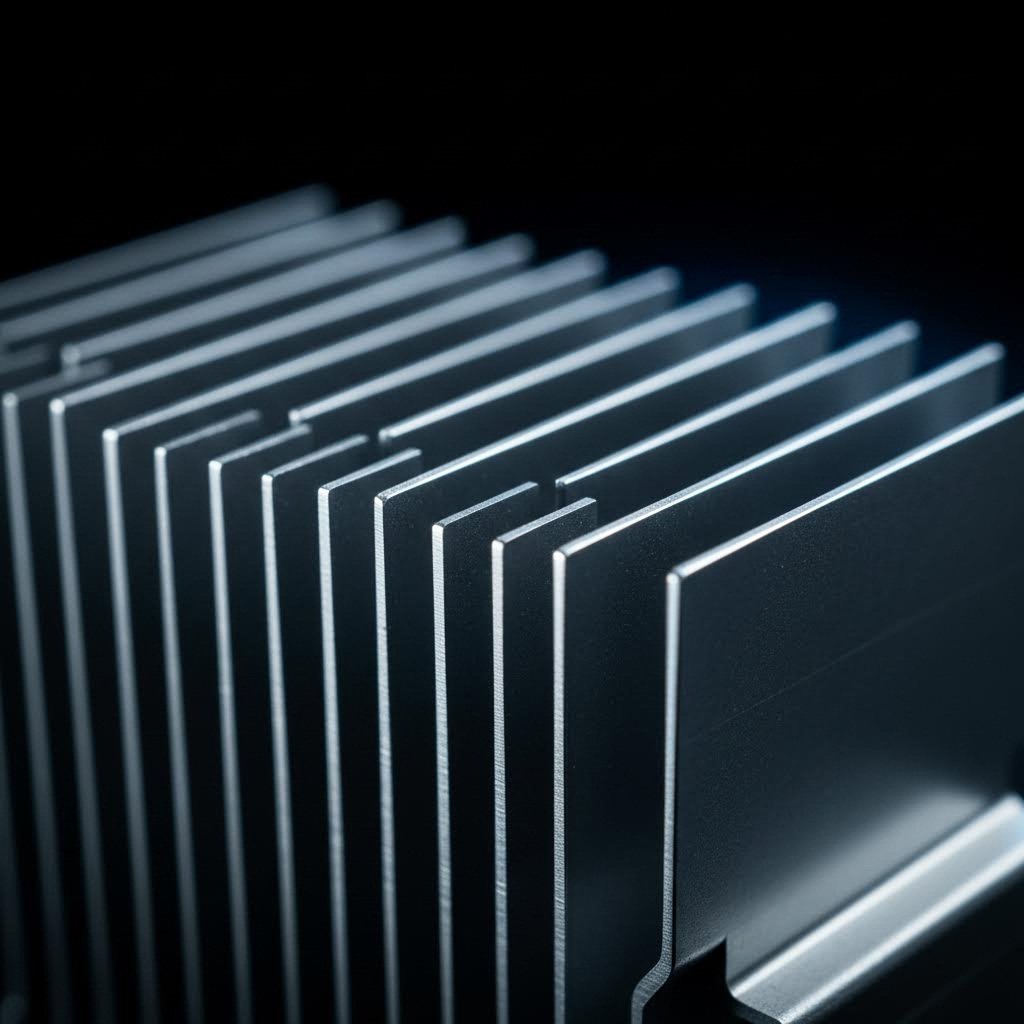
Every electronic device you use generates heat. Your smartphone, laptop, LED lights, and the power supply charging your electric vehicle—they all produce thermal energy that must be managed. Without effective cooling, components overheat, performance degrades, and equipment fails prematurely. This is where aluminum heat sink technology becomes essential.
Why has aluminum become the preferred material for thermal management? According to Hydro, aluminum is a cooling metal that's easier to shape into heat sink application profiles than copper, while also being lighter and less expensive. The extrusion process allows manufacturers to create complex fin geometries that maximize surface area—the key factor in heat dissipation performance.
Think about it this way: when heat transfers from a hot component to a heat sink extrusion, that thermal energy needs somewhere to go. By spreading across an extensive fin surface, heat can dissipate into the surrounding air or liquid coolant more efficiently. The more surface area available, the faster the cooling happens.
Open any computer or telecommunications equipment, and you'll find aluminum heatsinks attached to processors, power regulators, and other heat-generating components. These extruded heat sink profiles serve as thermal bridges—conducting heat away from sensitive electronics and releasing it into the ambient environment.
What makes extrusion ideal for electronics cooling? The process allows fin designs that would be impossible or prohibitively expensive to machine from solid blocks. Consider these application categories:
According to Kimsen, improved thermal performance through aluminium extrusions often leads to less weight, higher efficiency, and a lower total cost. In the design phase alone, cost reductions of more than 50% can be achieved compared to alternative manufacturing approaches.
LED technology has revolutionized lighting—but here's what most people don't realize: LED chips are extremely sensitive to heat. While LEDs convert electricity to light more efficiently than incandescent bulbs, the heat they do generate concentrates in a tiny area. Without proper thermal management, LED lifespan drops dramatically and light output diminishes.
This is where extruded aluminum heat sink designs prove invaluable. The housing of virtually every high-power LED fixture—whether streetlights, architectural spotlights, or industrial high-bay lights—incorporates aluminum profiles specifically engineered for heat dissipation.
Effective LED heat management involves several design considerations:
For standard fin heights, there's often weight-saving potential by designing fins as conical versus straight—a geometry easily achieved through extrusion but difficult with machining. Straight fin designs work best when active cooling with fans or blowers supplements the aluminium heat sink.
Electric vehicles represent one of the fastest-growing applications for aluminum heat sinks. The power electronics converting battery voltage to motor drive—inverters, converters, and charging systems—generate substantial heat that must be managed for safe, efficient operation.
Liquid cooling has become the standard approach for high-power EV applications. Here's where extrusion offers unique advantages: manufacturers can create profiles with internal channels for coolant flow that would be impossible to machine economically. According to Kimsen, rectangular-shaped channels increase the cooling effect even more than circular designs due to the larger contact area closer to the heat source.
Key applications in power electronics and EVs include:
The design flexibility of extrusion also enables integration beyond pure thermal function. Mounting features, structural elements, and fluid connections can all be incorporated into a single aluminum profile—reducing part count and assembly complexity while improving overall system reliability.
Whether you're cooling a small electronic module or managing thermal loads in a high-performance EV, understanding heat sink extrusion capabilities helps you specify solutions that balance performance, weight, and cost. But thermal management represents just one specialized application—choosing between extrusion and alternative manufacturing methods requires a broader decision framework.
You've identified aluminum as the right material for your project—but how should you manufacture those parts? This question trips up many engineers and procurement specialists. Metal extrusion isn't the only game in town. Die casting, CNC machining, roll forming, and stamping each offer distinct advantages depending on your specific requirements.
Choosing the wrong manufacturing method can inflate costs, extend lead times, or compromise part performance. The good news? Once you understand the decision criteria, matching your project to the optimal process becomes straightforward. Let's break down when each approach makes the most sense.
Both extrusion and die casting transform aluminum into finished shapes, but they work in fundamentally different ways. The extruded aluminum process forces heated solid metal through a shaped die to create continuous profiles. Casting, by contrast, pours molten aluminum into a mold cavity where it solidifies into the final shape.
According to Howard Precision Metals, aluminum extrusion is a generally competitive and economical production option, especially when dealing with very complex cross-sections. A new custom shape extrusion can be produced in as little as 8 weeks, with die engineering fees much less expensive compared to castings.
So when should you choose one over the other?
Here's a critical distinction: extruded metal contains no porosity, while castings almost always have some internal voids. For structural components where strength and fatigue resistance matter, this difference is significant. According to Howard Precision, although a casting might yield closer tolerances in certain geometries, an extruded shape will generally be stronger.
Size constraints also influence the decision. Aluminum extrusion manufacturing is limited by billet size and press capacity—typically profiles up to about 12 inches in circumscribing circle diameter for standard presses. Castings face no such geometric limits, making them ideal for large components like boat propellers or engine blocks where extrusion simply isn't feasible.
CNC machining takes a completely different approach: starting with solid material and removing everything that isn't the finished part. This subtractive process excels in situations where extrusion falls short.
According to ETCN Machining, CNC machining can deliver precision many times better than aluminum extrusion, achieving tolerances as narrow as ±0.001 inches. When your application demands exact dimensions and intricate details, machining becomes the clear choice.
Consider CNC machining when:
However, machining has significant drawbacks for production quantities. Each part requires cutting time, tool wear accumulates, and material waste can reach 50-80% of the starting block. For high-volume applications with suitable geometry, extruding metal and then machining only critical features often provides the best of both worlds.
ETCN Machining confirms this hybrid approach: extrude basic profiles to save material and cost, then use CNC machining to add complex features, holes, threads, or tight tolerances. This strategy improves quality and efficiency while reducing total machining time.
Making the right manufacturing choice requires weighing multiple factors simultaneously. The table below compares the major methods across criteria that typically drive decisions:
| Criteria | Aluminum Extrusion | Die Casting | CNC Machining | Roll Forming | Stamping |
|---|---|---|---|---|---|
| Ideal Volume | Medium to high (1,000+ parts) | High (10,000+ parts) | Low to medium (1-1,000 parts) | Medium to high (continuous runs) | High (10,000+ parts) |
| Tooling Cost | Low to moderate ($500-$5,000) | High ($10,000-$100,000+) | None (programming only) | Moderate ($5,000-$20,000) | High ($15,000-$100,000+) |
| Lead Time for Tooling | 2-8 weeks | 8-16 weeks | Days (programming) | 4-10 weeks | 8-16 weeks |
| Shape Complexity | Complex cross-sections, uniform along length | Complex 3D geometry, variable thickness | Virtually unlimited | Simple to moderate profiles | Flat or moderately formed shapes |
| Dimensional Tolerance | ±0.005" to ±0.020" | ±0.002" to ±0.010" | ±0.001" or better | ±0.010" to ±0.030" | ±0.005" to ±0.015" |
| Surface Finish | Excellent (ready for anodizing) | Moderate (may need fettling) | Excellent (controllable) | Good | Good to excellent |
| Material Waste | Minimal (5-10%) | Moderate (runners, gates) | High (50-80%) | Minimal | Moderate (blanking scrap) |
| Secondary Operations | Often minimal | Often required (fettling) | Typically none | Sometimes required | Sometimes required |
According to Roller Die + Forming, roll forming is best suited for medium to high volume production, as the process runs continuously and yields consistent profiles. The technique accommodates materials with good formability—including aluminum—and often minimizes the need for secondary operations by incorporating notching, cutting, and hole punching within the production line.
When evaluating your options, ask these questions:
The bottom line? Extruded metal delivers unmatched value when your design features a consistent profile along its length and production quantities justify modest tooling investment. For complex three-dimensional parts at high volumes, casting wins. For precision features, tight tolerances, or low quantities, machining remains the go-to solution. And for long, continuous profiles in sheet materials, roll forming offers exceptional efficiency.
Understanding these trade-offs positions you to specify the optimal manufacturing approach—but the story doesn't end when parts leave the press. Surface treatments and secondary processing often determine whether components meet their final performance requirements.
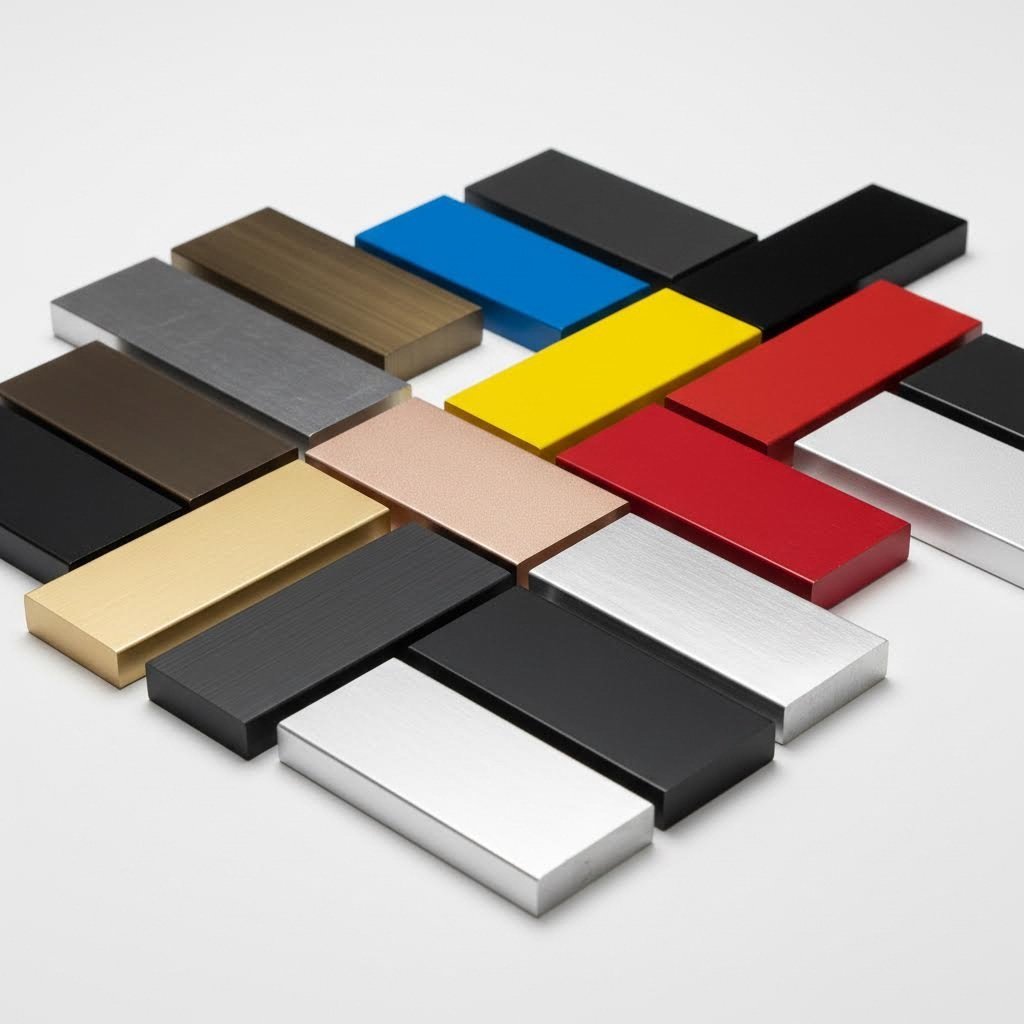
So you've selected your alloy, designed your profile, and chosen extrusion as your manufacturing method. Is the process complete? Not quite. Raw extruded aluminum—while already impressive—rarely ships directly to end users. Surface treatments and secondary processing transform functional profiles into finished components ready for their final application.
Think about an aluminum anodized handrail in a commercial building. That elegant bronze finish protecting the aluminum from thousands of daily touches didn't happen by accident. Or consider the vibrant colored panels on a modern facade—those extruded aluminum panels required specialized coating processes to achieve both their appearance and weather resistance.
Understanding your finishing options opens up design possibilities while ensuring your components perform as expected throughout their service life.
The finish you select impacts far more than aesthetics. Durability, corrosion resistance, maintenance requirements, and even cost vary dramatically between treatment methods. Let's examine the four primary options you'll encounter.
Anodizing creates an electrochemical conversion of the aluminum surface into aluminum oxide—a hard, durable, weather-resistant substance that protects the base metal. According to SAF, the coating grows from the base aluminum and cannot peel or flake like applied coatings might. This integral bond makes anodizing ideal for high-traffic applications like aluminium handrails and architectural trim.
The thickness of the anodic coating directly determines longevity. Class I anodizing (0.7 mils) lasts roughly twice as long as Class II (0.4 mils) in exterior applications. When specifying aluminium handrails or other components subject to frequent contact, Class I provides the abrasion resistance these applications demand.
Powder coating applies dry powder electrostatically to aluminum profiles, then bakes the coating onto the metal to form a hard, durable finish. According to Pailian Aluminium, the protective layer created by powder coating makes aluminum resistant to impact, abrasion, corrosion, and UV rays—ideal for outdoor applications like window frames and handrail parts aluminum components.
Powder coating offers exceptional versatility in colors and finishes. Unlike anodizing, which produces metallic tones, powder coatings deliver virtually any color imaginable. Environmental benefits also favor powder: no VOCs are emitted during curing, and overspray can be recovered and reused.
PVDF coating (polyvinylidene fluoride) represents the premium option for exterior architectural applications. This high-performance coating provides exceptional resistance to UV radiation, salt water, atmospheric pollution, and chemical exposure. PVDF-coated aluminum extrusions for panels on curtain walls and facades can carry warranties of 20 years or more against fading, cracking, and chalking.
According to SAF, PVDF coatings have come to dominate the curtain wall and metal roofing markets because of their weather resistance and the wide variety of available colors. The standard formulation—70% PVDF resin with 30% acrylic—meets the stringent AAMA 2605 specification that requires actual ten-year exposure testing in South Florida.
Mechanical finishes alter the aluminum surface texture without adding coatings. Brushing, polishing, and bead blasting create different visual effects while the aluminum retains its natural properties. These treatments often serve as preparation for subsequent anodizing or coating processes.
The following table summarizes how these options compare across key selection criteria:
| Treatment | Durability | Aesthetic Options | Abrasion Resistance | Best Applications | Typical Warranty |
|---|---|---|---|---|---|
| Anodizing (Class I) | Excellent—renewable through cleaning | Clear, bronze, black; limited colors via dyes | Superior | Storefronts, handrails, high-traffic areas | 10-20 years |
| Powder Coating | Very good | Unlimited colors and textures | Good | Outdoor furniture, railings, decorative elements | 5-10 years |
| PVDF Coating | Outstanding—superior UV resistance | Wide color range including metallics | Good | Curtain walls, metal roofing, facades | 20+ years |
| Micro-arc Oxidation | Exceptional hardness | Limited—typically white or gray | Exceptional | Industrial components, wear surfaces | Varies by application |
For projects requiring both custom aesthetics and comprehensive finishing capabilities, full-service providers offer significant advantages. Shengxin Aluminium's deep processing services, for example, include anodizing in custom colors like Champagne and Rose Gold, powder coating, PVDF, and micro-arc oxidation—allowing designers to specify exactly the appearance and performance their projects demand.
Surface treatment addresses appearance and protection, but most aluminum profiles require additional fabrication before they're ready for assembly. Cutting, drilling, tapping, bending, and CNC machining transform standard profiles into application-specific components.
Why does fabrication capability matter when selecting a supplier? Consider the alternative: sourcing raw extrusions from one vendor, shipping them to a machining shop, then sending components to a finishing house, and finally receiving completed parts. Each handoff adds lead time, logistics cost, and quality risk.
Key fabrication services include:
Extruded aluminum panels for architectural cladding often require all these operations. A facade panel might need CNC-machined attachment points, drilled drainage holes, and bent flanges—all before anodizing or coating. Consolidating these steps with a single supplier streamlines procurement and ensures dimensional consistency.
Suppliers with integrated CNC machining centers can hold tolerances that the extrusion process alone cannot achieve. Critical mounting surfaces, bearing fits, and mating interfaces get machined after extrusion to exact specifications. This hybrid approach—extrude the basic shape efficiently, then machine only where precision matters—delivers both cost efficiency and dimensional accuracy.
Your operating environment should drive finish selection more than aesthetic preference alone. A finish that performs beautifully on an interior office partition may fail rapidly on a coastal building facade.
For interior applications with minimal wear, powder coating offers excellent value with unlimited color options. Interior handrail parts aluminum components, decorative trim, and furniture benefit from powder's durability without requiring the premium performance of PVDF.
For exterior architectural applications, the decision becomes more nuanced. According to SAF, the parts of a storefront receiving the most abrasion from traffic should be anodized—its superior abrasion resistance outlasts paint on door stiles, kick-plates, and push/pull bars. Above door height, painted framing adds accent while avoiding the wear zone.
For coastal and industrial environments, PVDF coatings provide the best long-term value despite higher initial cost. Salt spray, chemical exposure, and intense UV radiation quickly degrade lesser finishes. The 20-year warranties available with quality PVDF systems reflect genuine confidence in their performance.
Here's a practical decision framework:
One often-overlooked advantage of anodizing: it's renewable. According to SAF, when an anodized coating appears to have failed, cleaning often results in a renewed appearance. A mild detergent combined with abrasive cleaning can actually remove a small amount of the anodic coating, leaving behind a refreshed surface that can last another twenty years. Once organic coatings fail, recoating or replacement are the only options.
Whether you're specifying aluminum extrusions for panels on a high-rise facade or selecting finishes for industrial equipment, matching treatment to environment ensures your components perform as intended throughout their service life. But surface treatment represents just one decision in the specification process—understanding when custom profiles justify their additional investment versus standard shapes requires its own analysis.
You've narrowed down your alloy, selected your finish, and confirmed extrusion is the right manufacturing method. Now comes a question that directly impacts your budget and timeline: should you use off-the-shelf standard profiles or invest in custom dies? This decision trips up many engineers and procurement specialists—yet getting it right can save thousands of dollars and weeks of lead time.
The good news? Once you understand the trade-offs, the choice becomes surprisingly clear. Let's walk through the decision criteria that separate projects suited for standard extruded aluminum shapes from those requiring custom tooling.
Standard aluminum extrusion profiles products come in predetermined shapes—angles, channels, tubes, T-slots, and I-beams—that manufacturers keep in stock. These ready-made solutions offer compelling benefits for many applications.
Why choose standard profiles?
According to Eleanor Aluminium, standard sections are ideal for general use where common shapes like angles, tubes, or channels meet project requirements. Industries including construction and general manufacturing benefit from standard profiles' quick availability and cost-effectiveness.
But standard profiles have clear limitations. If your application requires a specific cross-section geometry, integrated mounting features, or unusual dimensions, you'll struggle to find an off-the-shelf match. Forcing a standard shape into a custom application often means:
Think carefully before specifying standard profiles that require extensive modification. Sometimes the fabrication costs exceed what custom tooling would have required.
Custom extrusion aluminum profiles unlock design possibilities that standard shapes simply cannot achieve. The extrusion process places material exactly where your application needs it—no more, no less. But this flexibility comes with upfront investment and longer lead times.
According to Gabrian International, tool costs for extrusion dies used in normal architectural and industrial applications range from $400 to $1,000. Larger parts requiring 2,000-4,000 ton presses can push die costs as high as $2,000. Normal tool turnaround time is 3-4 weeks, with production following within a week of sample approval.
When does custom make economic sense? Consider these factors:
According to The Fabricator, the main cost for custom extrusions—the die—is likely to be in the thousands of dollars, but it's still a relatively small amount in the scope of an entire architectural project. Lead times are often less than a month, contributing to the affordability of custom extruding including full-scale prototyping and subsequent revisions if necessary.
Here's a practical breakeven calculation: if a custom die costs $1,000 and you're ordering 2,000 pounds of profile, the tooling adds $0.50 per pound. For high-value applications where that custom shape eliminates machining, reduces assembly labor, or enables better performance, the investment pays for itself quickly.
Understanding the design-to-production workflow helps you plan realistic timelines and avoid costly revisions. Custom extruded aluminum frame projects typically follow this sequence:
Step 1: Profile Design
Work with your extruder's engineering team to optimize your cross-section for manufacturability. According to The Fabricator, an expert extruder can be very helpful on profile design—often subtle differences lead to substantial cost differences. Keep these principles in mind:
Step 2: Die Engineering and Manufacturing
Once your profile design is finalized, die makers create the steel tooling. Complex geometries take more time and labor, increasing both cost and lead time. Typical die turnaround runs 3-4 weeks for standard complexity.
Step 3: Trial Extrusion and Approval
The extruder runs sample profiles for your approval before committing to production quantities. This is your opportunity to verify dimensions, surface quality, and overall suitability. Request samples for fit-checking and testing before authorizing full production.
Step 4: Production and Delivery
With approved samples, production proceeds according to your order quantity. Most extruders have minimum order sizes—often 1,000 to 2,000 pounds per shape. According to Gabrian, while a stated minimum can be an impediment for prototyping, bear in mind that stated minimums might be negotiable.
For projects requiring comprehensive capabilities from die development through finishing and fabrication, partnering with a vertically integrated supplier streamlines the entire process. Shengxin Aluminium exemplifies this full-service approach with 35 extrusion presses ranging from 600T to 5500T capacity, backed by over 30 years of experience. Their technical team provides end-to-end support—from initial die development through mass production—eliminating the coordination headaches that come with managing multiple vendors.
Whether you select standard profiles for straightforward applications or invest in custom aluminum frame extrusion for optimized performance, understanding these trade-offs ensures you make the right choice for your project's requirements and budget. With manufacturing method and profile selection decided, only the final specification decisions remain—ensuring your chosen approach delivers the performance, sustainability, and value your application demands.
You've explored alloy options, manufacturing methods, finishing treatments, and the custom versus standard profile decision. Now it's time to pull everything together. What are aluminum extrusions best suited for in your specific situation? And how do you ensure your specification delivers the performance, value, and sustainability your project demands?
The common uses of aluminum span virtually every industry—from the window frames in your office building to the heat sinks cooling your electronics. But choosing the right aluminum extrusion applications for your project requires systematic evaluation rather than guesswork.
Before committing to any specification, work through this decision-making framework. Each question builds on the previous answers to guide you toward the optimal solution:
This systematic approach ensures you don't overlook critical factors that could compromise performance or inflate costs. What are aluminum extrusions used for in your industry? The answer guides which checklist items deserve the most attention.
Here's something many specifications overlook: aluminum extruded products offer genuine environmental advantages that increasingly matter to customers, regulators, and corporate sustainability goals.
According to A-Line Automation, recycling aluminum saves up to 95 percent of the energy required to produce new aluminum from raw ore. This energy efficiency translates into considerable reduction in carbon emissions—a tangible benefit for organizations pursuing net-zero targets.
The sustainability story goes deeper:
Europe already leads globally, with over 60 percent of aluminum produced via recycling. In automotive and construction sectors, recycling rates exceed 90 percent. As sustainability requirements tighten worldwide, specifying aluminum positions your projects on the right side of environmental trends.
Looking ahead, aluminum extrusion's role in lightweight design continues expanding. According to AL Circle, aluminum content in electric vehicles has already tripled since 2015, with EV-linked demand projected to reach 10 million tonnes globally by 2030. High-performance aluminum extrusions industrial applications are growing across transportation, renewable energy, and advanced manufacturing sectors.
The construction sector shows similar momentum. Global construction work is forecast to exceed $13.9 trillion by 2037, with aluminum contributing through window frames, facades, curtain walls, and electrical systems. Urbanization drives demand for modular, energy-efficient buildings that rely on aluminum components for both aesthetic appeal and performance.
What does this mean for your specifications? Several key considerations:
According to Profile Precision Extrusions, aluminum's infinite recyclability adds a sustainability edge to your project—a factor worth highlighting in project documentation and customer communications.
The bottom line? Aluminum extrusion delivers unmatched versatility across industries—from architectural facades to thermal management, from industrial automation to transportation. By systematically evaluating your requirements against the decision criteria covered throughout this guide, you'll specify solutions that perform reliably, cost effectively, and sustainably for years to come.
Extruded aluminum commands higher value because the extrusion process enhances the metal's natural strength and durability through compression forces. Unlike castings that may contain porosity, extruded aluminum is porosity-free, delivering superior structural integrity for load-bearing applications. The process also minimizes material waste (only 5-10% compared to 50-80% in CNC machining), creates complex cross-sections in a single operation, and produces excellent surface finishes ready for anodizing without extensive secondary processing.
The five primary aluminum extrusion applications include: (1) Construction and architecture—window frames, curtain walls, and structural framing; (2) Industrial manufacturing—machine frames, safety guards, modular workstations, and conveyor systems; (3) Thermal management—heat sinks for electronics, LED lighting, and electric vehicle power systems; (4) Transportation—automotive frames, aerospace components, and truck trailers; (5) Consumer products—furniture, sporting goods, and electronic enclosures. Each application leverages aluminum's excellent strength-to-weight ratio and corrosion resistance.
Aluminum extrusion has three main limitations: (1) Profile geometry must maintain a constant cross-section along its length, limiting complex 3D shapes; (2) Dimensional tolerances typically range from ±0.005" to ±0.020"—less precise than CNC machining's ±0.001"; (3) Custom dies require 3-4 weeks lead time and $400-$2,000 investment. Additionally, extrusion is constrained by press capacity—typically profiles up to 12 inches in circumscribing circle diameter for standard presses. For complex three-dimensional parts or extremely tight tolerances, die casting or CNC machining may be more suitable.
8020 T-slot aluminum framing serves as a versatile modular building system across multiple industries. Common applications include automation equipment frames, robotic arm structures, machine guarding and safety enclosures, workstation construction, conveyor systems, and material handling racks. The T-slot design allows rapid assembly and reconfiguration using basic hand tools without welding. DIY enthusiasts also use 8020 profiles for custom projects, while manufacturers appreciate the system's ability to adapt as production requirements change.
Choose standard profiles when you need immediate availability, zero die costs, and lower minimum orders—ideal for general applications using common shapes like angles, tubes, or channels. Opt for custom profiles when your design requires specific cross-section geometry, integrated mounting features, weight optimization, or assembly simplification. Custom dies make economic sense for production volumes above 1,000-2,000 pounds, where the $400-$2,000 tooling cost spreads across enough parts. Many manufacturers refund tool costs if stipulated quantities are purchased within two years.



 dịch vụ trực tuyến
 0086 136 3563 2360
 sales@sxalu.com
 +86 136 3563 2360
 Việt
Việt English
 français
 Deutsch
 русский
 español
 português
 العربية
 ไทย
ไทย Українська