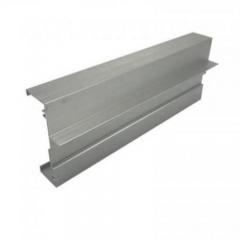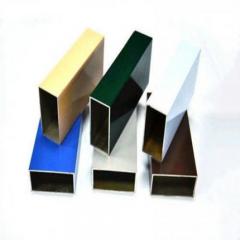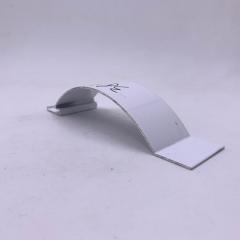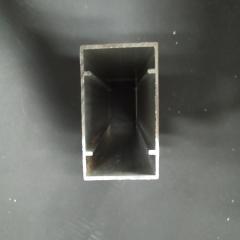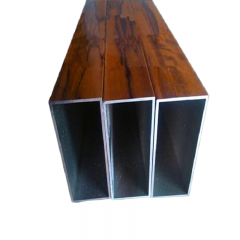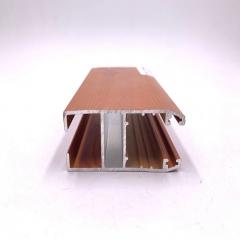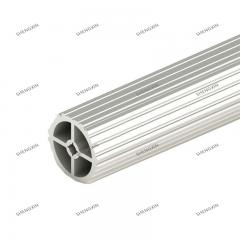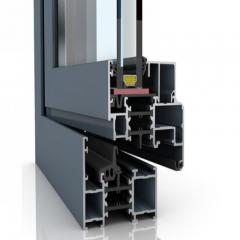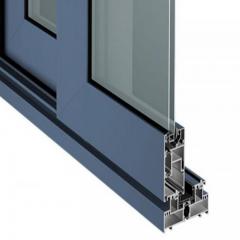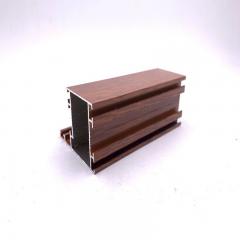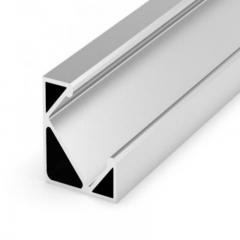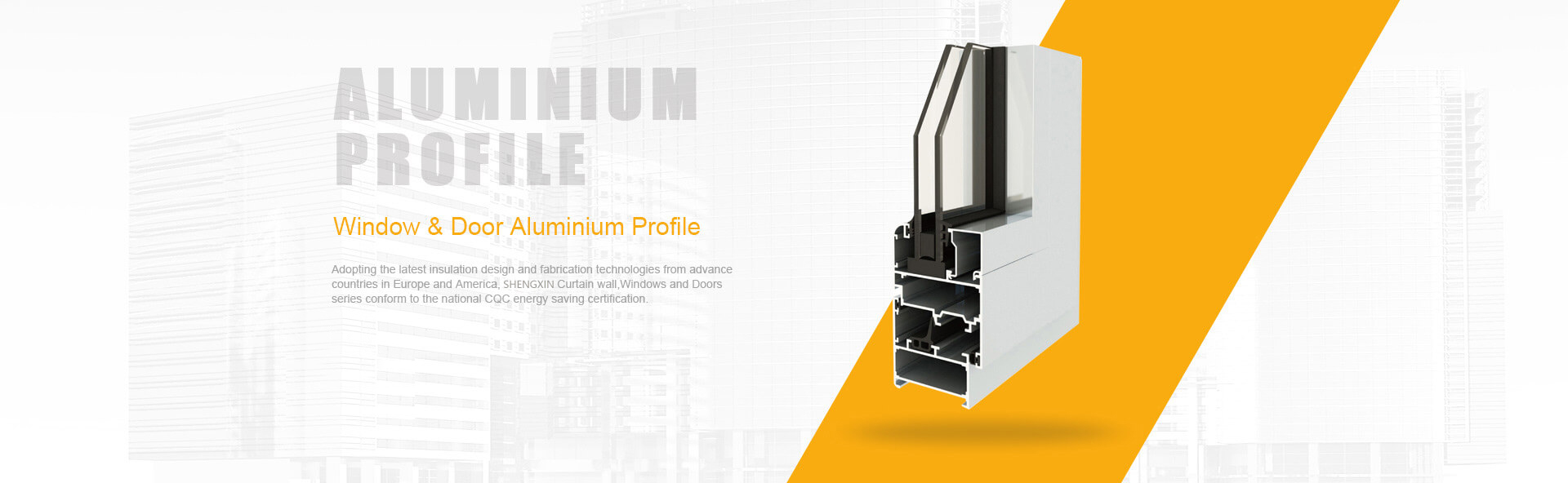
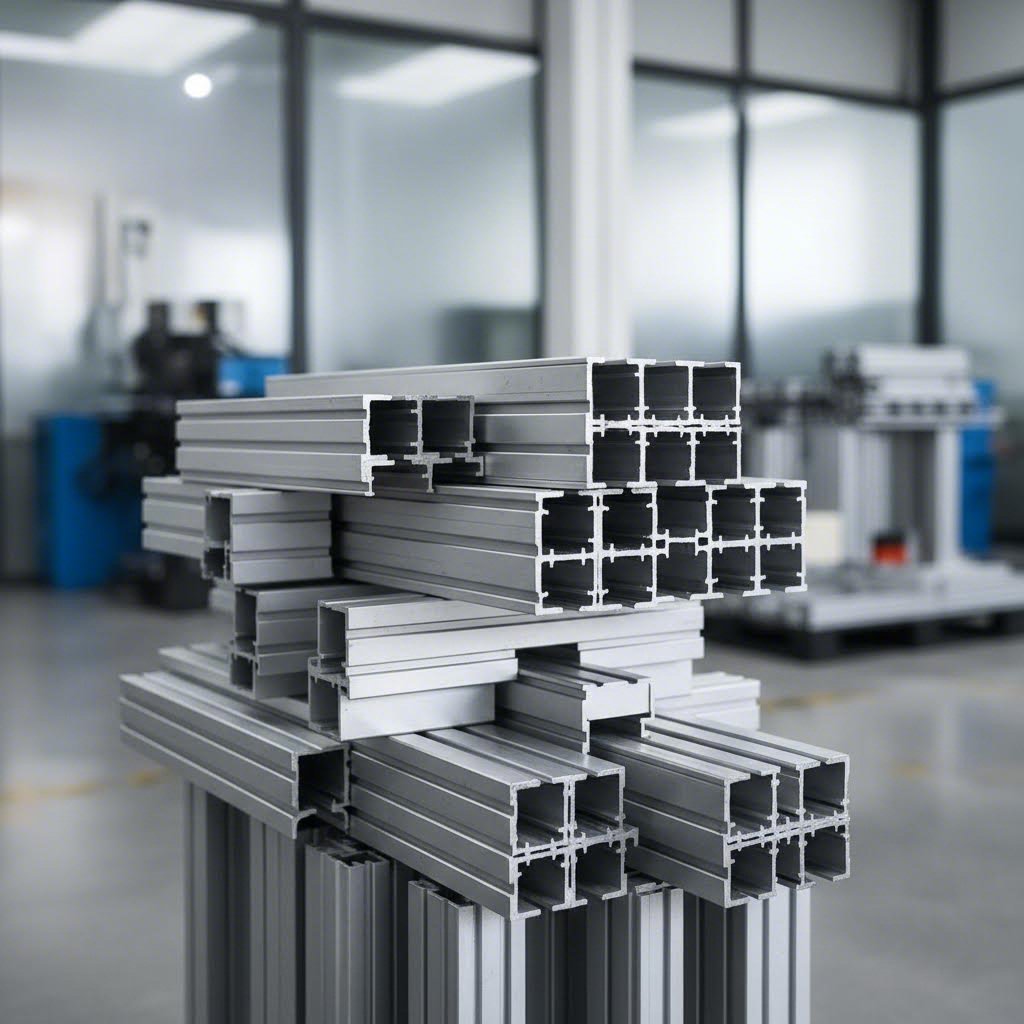
Ever wondered how those sleek, perfectly fitted panel frames come together? The answer lies in a fascinating manufacturing process that transforms raw aluminum into precisely shaped profiles. Aluminum extrusions for panels represent the backbone of modern modular construction, offering unmatched versatility for everything from cleanroom enclosures to architectural facades.
At its core, an aluminum extrusion is a length of material with a consistent cross-sectional shape. Think of it like pushing pasta dough through a shaped die—except instead of dough, manufacturers use heated aluminum, and instead of pasta shapes, they create sophisticated profiles that perfectly cradle panel edges, provide structural support, and snap together like building blocks.
The journey from raw aluminum to precision panel frames begins with a cylindrical billet—essentially a solid aluminum log. According to Wayken's technical documentation, this billet gets preheated to 400-500°C, making it soft and malleable without actually melting it.
Here's where the magic happens. A hydraulic ram applies up to 15,000 tons of pressure, forcing the softened aluminum through a specially designed steel die. As the material pushes through, it emerges on the other side with the exact cross-sectional shape of that die opening. Imagine squeezing toothpaste—the paste takes on the shape of the tube's opening. The aluminum extrusion process works similarly, just with considerably more force and precision.
Once the extruded aluminum emerges, it undergoes rapid cooling through water baths or fans. Workers then stretch the profiles to correct any twists, cut them to length, and apply heat treatments to achieve the desired strength characteristics. This entire extrusion extrusion sequence ensures every piece maintains identical dimensions—critical when you need panels to fit perfectly every time.
You might ask: why not just use standard metal framing? The difference becomes clear when you consider what panel applications demand. When manufacturers aluminum extrude material through custom dies, they can create profiles with built-in channels, slots, and retention features that standard framing simply cannot match.
Consider the advantages that make aluminum extrusion profiles ideal for panel systems:
The beauty of aluminum extrusions lies in their adaptability. Unlike welded steel frames that lock you into permanent configurations, extruded profiles—especially T-slot varieties—allow for easy modifications and reconfigurations. As noted by MK North America, removing or replacing components in a T-slot system is straightforward compared to permanent framing options.
This flexibility proves invaluable for panel applications. Need to adjust panel spacing? Swap out a profile section. Want to add an access door? The modular nature of extruded aluminum systems makes it possible without scrapping your entire framework. Whether you're building machine guards, display cases, or controlled environment enclosures, these profiles provide the precision foundation your panels require.
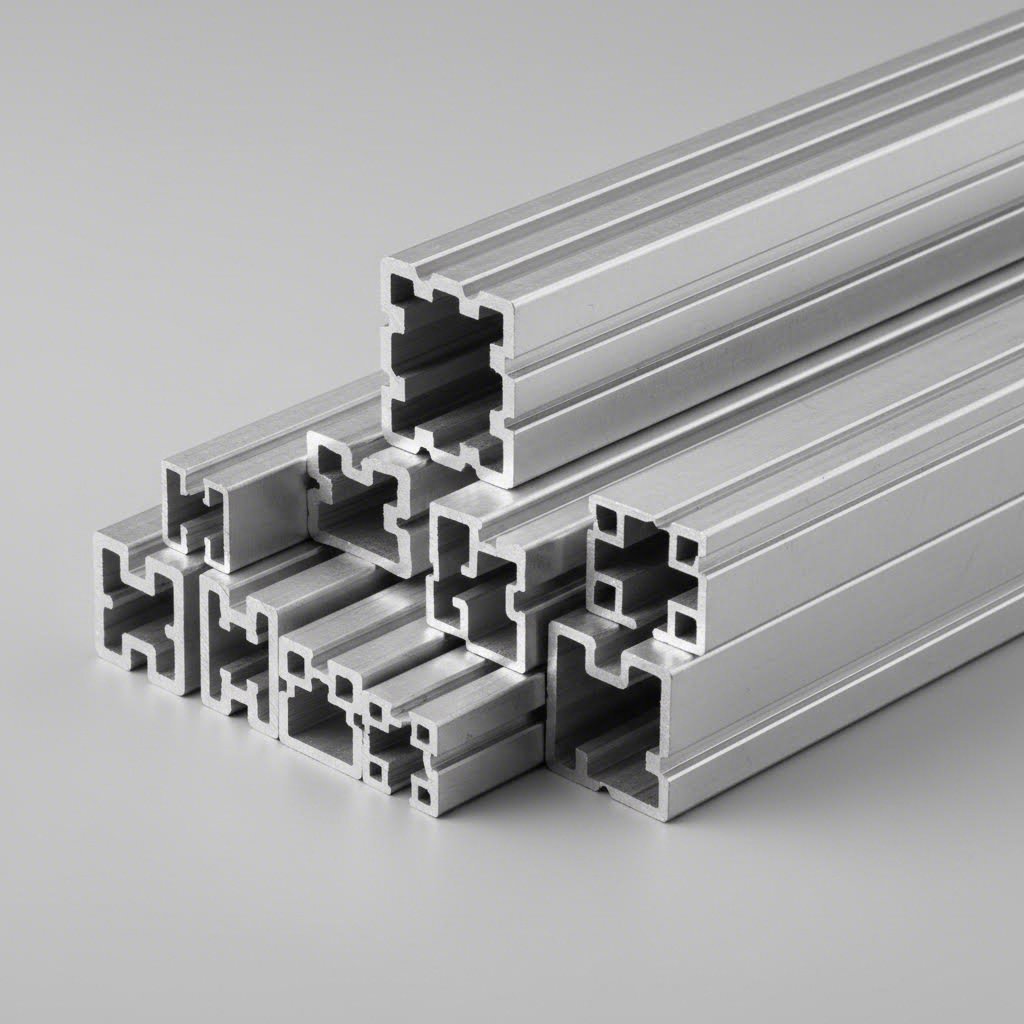
Sounds complex? Choosing the right aluminum profile for your panel project doesn't have to be overwhelming. Once you understand how different extrusion shapes function, matching profiles to applications becomes intuitive. Let's break down the main categories you'll encounter, organized by what they actually do rather than confusing product codes.
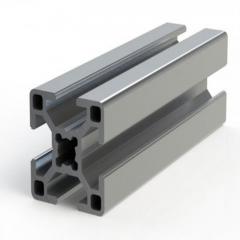
When engineers talk about modular construction, T-slot aluminum profiles are typically what they have in mind. These versatile extrusions—often called 80/20 aluminum or 80 20 aluminum after the pioneering brand—feature distinctive T-shaped grooves running along their length. According to 80/20's product catalog, these profiles range from compact 20mm x 20mm sections to robust 80mm x 80mm configurations.
What makes T-slot systems revolutionary for panel applications? Imagine building with LEGO blocks for grown-ups. Special T-nuts slide into the channels and rotate 90 degrees to lock in place, creating secure fastening points anywhere along the profile's length. This means you can attach panels, brackets, hinges, and accessories without drilling a single hole.
The most popular 8020 aluminum extrusion sizes for panel framing include:
A rail button for 8020 aluminum allows quick panel attachment and removal—particularly useful for access doors or maintenance panels that require frequent opening.
While T-slots excel at frame construction, channel extrusions serve a different purpose: securing and protecting panel edges. These profiles grip panels directly, eliminating the need for separate fasteners in many applications.
U-Channels represent the simplest and most widely used design. As noted in PTSMAKE's engineering guide, U-channels feature a flat base with two perpendicular legs of equal length, creating a channel that panels slide into. They're versatile enough for framing, tracks, and protective edging.
H-Channels take panel joining to the next level. These double-sided profiles accept panels from both directions, creating seamless connections between adjacent sections. When you need to join two glass panels in a partition wall or connect composite sheets in a display, H-channels provide clean, professional transitions.
Aluminum angle profiles—while technically not channels—deserve mention here. These L-shaped extrusion bars reinforce corners and provide mounting surfaces where panels meet at 90-degree angles.
Not all panels are created equal. Heavy glass, thick composite materials, or panels subject to wind loads demand more substantial framing. This is where standard aluminum extrusions designed for structural applications come into play.
According to item's profile guide, modular dimensions typically range from 20mm (Line 5) up to 60mm (Line 12), with heavier lines supporting tensile loads up to 10,000 N per connection. The v slotted aluminum insert systems within these profiles ensure fasteners remain secure even under vibration.
When selecting structural profiles, consider these factors:
Choosing between profile types becomes easier when you see their characteristics side by side:
| Profile Type | Best Panel Applications | Key Features | Typical Dimensions |
|---|---|---|---|
| T-Slot (80/20 style) | Machine guards, modular enclosures, workstations | Infinite fastening positions, easy reconfiguration, accessory compatibility | 20x20mm to 80x80mm |
| U-Channel | Panel edge protection, sliding tracks, simple frames | Direct panel insertion, clean appearance, cost-effective | 10mm to 50mm channel width |
| H-Channel | Panel-to-panel joining, partition walls, display systems | Double-sided panel acceptance, seamless transitions | Varies by panel thickness (3mm to 12mm typical) |
| Corner Extrusions | Frame assembly, structural corners, reinforcement | 90-degree connections, multiple mounting surfaces | 20x20mm to 60x60mm legs |
| Structural Profiles | Heavy panels, load-bearing frames, outdoor installations | High tensile strength, deep sections, vibration resistance | 40x40mm to 60x120mm |
Understanding these profile categories puts you ahead of most buyers who simply browse catalogs hoping something looks right. With this functional approach, you can match extrusion bar types to your specific panel requirements—whether that means lightweight display cases or industrial enclosures built to last decades.
Now that you understand the profile types available, a critical question remains: why choose aluminum extrusions over other framing materials? When building panel systems, you'll encounter alternatives like steel stud framing, PVC channels, and traditional wood. Each has its place—but for precision panel applications, aluminum consistently delivers advantages the others simply cannot match.
Steel stud framing dominates commercial construction for good reason. Metal studs offer exceptional strength and fire resistance, making them ideal for interior partition walls. However, when your project demands tight tolerances and easy modification, the comparison shifts dramatically in aluminum's favor.
According to Eagle Aluminum's technical comparison, steel exhibits a density approximately 2.5 times greater than aluminum. For panel framing applications, this weight difference matters enormously. A metal stud measuring standard metal stud dimensions of 3-5/8 inches weighs considerably more than an equivalent aluminum extrusion—making installation more labor-intensive and increasing structural support requirements.
Here's where aluminum truly shines: its strength-to-weight ratio. While a welded steel profile offers higher raw tensile and yield strength, aluminum extrusions are "stronger" pound-for-pound. As noted by Anglelock's engineering analysis, this allows your structural framing design to be lighter while achieving the same strength results—or achieve higher strength with equivalent weight.
Consider workability differences:
When should you choose metal studs instead? Steel stud framing remains the better option for load-bearing walls, fire-rated assemblies, and applications where code requirements specifically mandate steel construction. For panel enclosures, machine guards, and modular systems requiring precision fit, extruded aluminium delivers superior results.
PVC channels attract budget-conscious buyers with their low upfront cost. They resist moisture admirably and never require painting. So why do professional panel installations overwhelmingly favor aluminum?
The answer lies in structural integrity. PVC flexes under load and warps when exposed to temperature variations. For lightweight decorative trim, this flexibility might be acceptable. For panel systems that must maintain dimensional accuracy over years of service, PVC simply cannot compete.
According to Windows Canada's material analysis, vinyl (PVC) frames can experience movement in extreme temperature fluctuations—a significant concern for exterior panel applications or any installation subject to temperature cycling.
Aluminum extrusions maintain their precise dimensions regardless of environmental conditions. They support heavier panel weights without sagging and resist impact damage that would crack or shatter PVC. When your panels require structural support rather than mere decoration, aluminum provides the dependable framework PVC cannot.
At face value, aluminum framing components cost more than wood, PVC, or basic steel studs. However, surface-level pricing doesn't tell the whole story.
True cost analysis must account for:
As Eagle Aluminum notes, when designing custom profiles, creating custom aluminum extrusions is surprisingly inexpensive due to affordable tooling and die costs. This makes aluminum accessible for specialized panel applications where off-the-shelf materials fall short.
| Criteria | Aluminum Extrusions | Steel Studs | PVC Channels | Wood Framing |
|---|---|---|---|---|
| Weight per Linear Foot | 0.3-1.5 lbs (varies by profile) | 0.8-2.0 lbs | 0.2-0.8 lbs | 1.0-2.5 lbs |
| Corrosion Resistance | Excellent (natural oxide layer) | Poor without coating/galvanizing | Excellent | Poor (requires sealing) |
| Ease of Modification | Excellent (modular assembly) | Difficult (requires welding) | Moderate (glue/fasteners) | Moderate (cutting/nailing) |
| Recyclability | 95%+ recyclable with value | Recyclable | Limited recyclability | Biodegradable but limited reuse |
| Thermal Conductivity | High (may need thermal breaks) | High | Low (good insulator) | Low (good insulator) |
| Typical Lifespan | 30-50+ years | 25-40 years (with maintenance) | 15-25 years | 20-30 years (with maintenance) |
| Dimensional Precision | Excellent (tight tolerances) | Good | Moderate (can warp) | Variable (natural material) |
The verdict? For panel applications requiring precision fit, modular assembly, and long-term durability, aluminum extrusions offer the optimal balance of performance characteristics. Steel studs serve better for permanent construction, PVC works for budget-conscious decorative applications, and wood suits traditional aesthetic requirements—but when panels must align perfectly and systems need future flexibility, extruded aluminum remains the professional's choice.
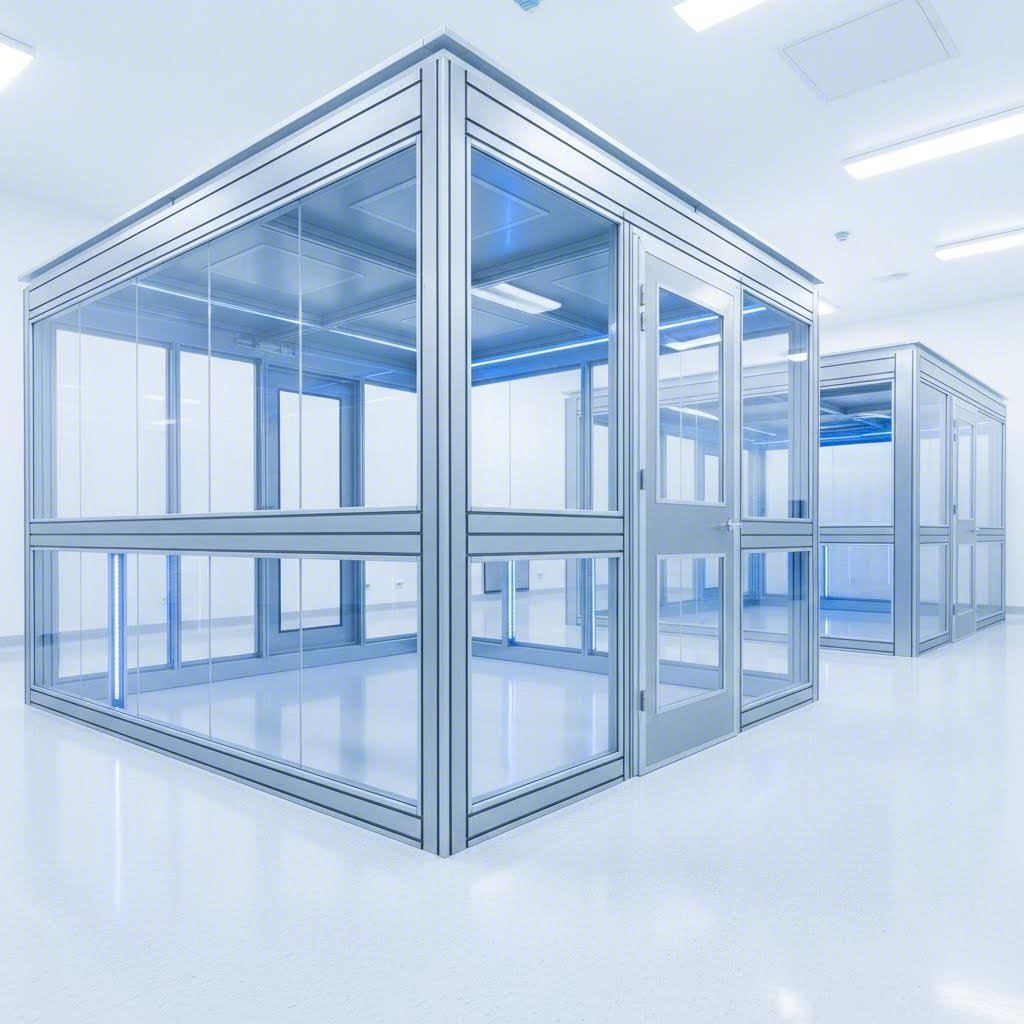
Understanding profile types is one thing—knowing which one fits your specific project is another challenge entirely. When you're standing in front of dozens of aluminum extrusion options, how do you match the right profile to your application? The answer lies in understanding what each use case demands, from sterile cleanroom environments to rugged industrial machine guards.
Let's walk through the major application categories and discover which aluminum extrusions for panels work best for each scenario.
Controlled environments demand more from panel framing than any other application. When contamination control matters—whether you're manufacturing pharmaceuticals, electronics, or medical devices—your extrusion choice directly impacts environmental integrity.
According to Gerbig Cleanrooms' technical specifications, the AireCell modular cleanroom system represents the gold standard for hardwall cleanroom construction. Their system includes over 60 different aluminium extrusion varieties designed for specific cleanroom applications, from vertical studs (CX203, CX234, CX237) to horizontal reinforcement profiles (CX211, CX251).
What makes cleanroom-grade extrusions different? Consider these critical factors:
For pass-through chambers and workstations within cleanrooms, the aluminium extrusion case design must accommodate frequent opening while maintaining pressure differentials. The modular nature of these systems allows reconfiguration as cleanroom requirements evolve—a significant advantage over permanent construction.
When aesthetics matter as much as function, architectural panel applications demand a different mindset. Facade panels, interior feature walls, and decorative partitions require extrusions that disappear visually while providing robust structural support.
Architectural applications typically prioritize:
Aluminum fence panels exemplify how extruded profiles serve dual aesthetic and functional roles. The same principles apply to architectural wall systems—profiles must frame panels securely while contributing to the overall design vision rather than detracting from it.
For sliding panel applications, an aluminum sliding door track provides smooth operation while supporting substantial panel weights. These extruded aluminum track systems incorporate precision-machined bearing surfaces that maintain smooth operation over thousands of cycles.
Industrial environments present the harshest demands on panel framing systems. Machine guards must protect workers while withstanding vibration, impact, and exposure to cutting fluids, coolants, and manufacturing debris.
The aluminum track extrusion profiles used in machine guarding applications differ significantly from architectural varieties:
As Orange Aluminum's profile guide notes, aluminum tubing and structural profiles combine significant strength with lightweight design—perfect for machine guards that require frequent repositioning or reconfiguration as production needs change.
The modular nature of T-slot systems proves particularly valuable in manufacturing environments. When production lines change, guards built from extruded profiles can be disassembled and reconfigured rather than scrapped entirely.
Retail and exhibition environments demand extrusions that balance visual appeal with practical functionality. Display cases, trade show booths, and museum installations require profiles that showcase products while providing security and ease of reconfiguration.
Key considerations for display applications include:
The same extruded aluminum track systems used for sliding doors work beautifully in display applications, allowing panels to glide smoothly for product access while maintaining secure closure when needed.
How do you translate application requirements into specific profile selections? Consider these decision factors:
| Application Factor | Cleanroom | Architectural | Industrial | Display/Retail |
|---|---|---|---|---|
| Primary Concern | Contamination control | Visual aesthetics | Safety & durability | Flexibility & appearance |
| Preferred Profile Style | Flush-face with gasket channels | Slim, hidden mounting | Heavy T-slot | Decorative channels |
| Typical Panel Weight | Light to medium | Medium to heavy | Medium to heavy | Light to medium |
| Reconfiguration Frequency | Occasional | Rare | Frequent | Very frequent |
| Surface Finish Priority | Smooth, cleanable | Decorative | Functional | Premium appearance |
| Environmental Exposure | Controlled interior | Often exterior | Industrial interior | Climate-controlled |
Panel weight significantly influences extrusion selection. Lightweight acrylic or polycarbonate panels require less robust framing than heavy tempered glass or composite materials. Environmental exposure matters equally—exterior installations face UV degradation, temperature swings, and moisture that interior applications never encounter.
Aesthetic requirements often determine whether you select visible T-slot profiles or hidden channel systems. Industrial applications embrace the utilitarian appearance of exposed aluminum framing, while architectural and retail installations typically demand concealed mounting solutions.
With these application-specific considerations in mind, you're ready to dive into the technical specifications that fine-tune your extrusion selection—starting with alloy choices and surface treatments that impact both performance and longevity.
You've identified the right profile type and matched it to your application—now comes the deeper dive into technical specifications that separate adequate installations from exceptional ones. Selecting aluminum extrusions for panels involves more than shape selection; the alloy composition, surface treatment, and dimensional tolerances directly determine how your system performs over its lifetime.
Think of these specifications as the DNA of your panel framing system. Get them right, and your installation delivers years of reliable service. Overlook them, and you'll face premature failures, poor aesthetics, or panels that simply won't fit.
When reviewing extrusion specifications, you'll repeatedly encounter two alloy designations: 6063 and 6061. Both belong to the 6000 series aluminum family, featuring silicon and magnesium as primary alloying elements—but their performance characteristics differ significantly.
According to Eagle Aluminum's technical comparison, the choice between these alloys ultimately depends on what matters most: strength or finishing quality.
6063 Aluminum earns its reputation as the "architectural alloy" for good reason. Its excellent extrudability allows manufacturers to create complex cross-sections with smooth, attractive surfaces. When you need extruded aluminum sections that accept anodized finishing beautifully and prioritize visual appeal, 6063 delivers.
Key characteristics of 6063 aluminum include:
6061 Aluminum steps in when structural demands exceed 6063's capabilities. This precipitation-hardened alloy—developed in 1935—offers significantly higher strength while maintaining good corrosion resistance and weldability.
When should you specify 6061? Consider it for:
For most architectural panel applications—display cases, interior partitions, lightweight enclosures—6063 provides the ideal balance of formability, appearance, and adequate strength. Reserve 6061 for demanding structural applications where strength trumps surface aesthetics.
Raw aluminum develops a thin natural oxide layer that provides basic corrosion resistance—but for panel framing applications, this mill finish rarely suffices. Surface treatments enhance durability, appearance, and performance in ways that dramatically extend service life.
According to A-Line Automation's finishing guide, selecting the right finish depends on environmental exposure, aesthetic requirements, and budget considerations. Here are your primary options:
When selecting finishes, consider your installation environment. Interior display cases might need only clear anodizing for a clean, professional look. Exterior architectural panels demand PVDF coatings to resist UV degradation and maintain appearance over decades. Industrial machine guards benefit from powder coating's impact resistance.
Much like selecting router bit profiles for woodworking applications, choosing the right surface treatment requires matching the finish characteristics to your specific performance requirements.
Here's where many panel projects go wrong: assuming all extrusions maintain identical dimensions. In reality, manufacturing tolerances—the acceptable deviation from specified dimensions—vary between suppliers and affect how precisely panels fit within frames.
According to PTSMAKE's engineering guide, standard tolerances work for most applications, but projects requiring high precision may need tighter, custom specifications. Understanding these tolerances prevents assembly headaches.
Critical dimensional considerations include:
Panel weight significantly influences dimensional requirements. A standard 4x8 aluminum sheet panel weighing 20 pounds demands different support than a tempered glass panel weighing 80 pounds. Heavier panels require:
Consider stud spacing principles from construction: just as standard stud spacing of 16 or 24 inches on center reflects load distribution requirements, your aluminum plate framing must account for panel weight distribution. Heavier panels need closer frame member spacing or more substantial extruded aluminum sections to prevent deflection.
When ordering extrusions, request dimensional certification if precision matters. Reputable suppliers provide tolerance specifications and can accommodate tighter requirements for critical applications—ensuring your panels fit perfectly every time.
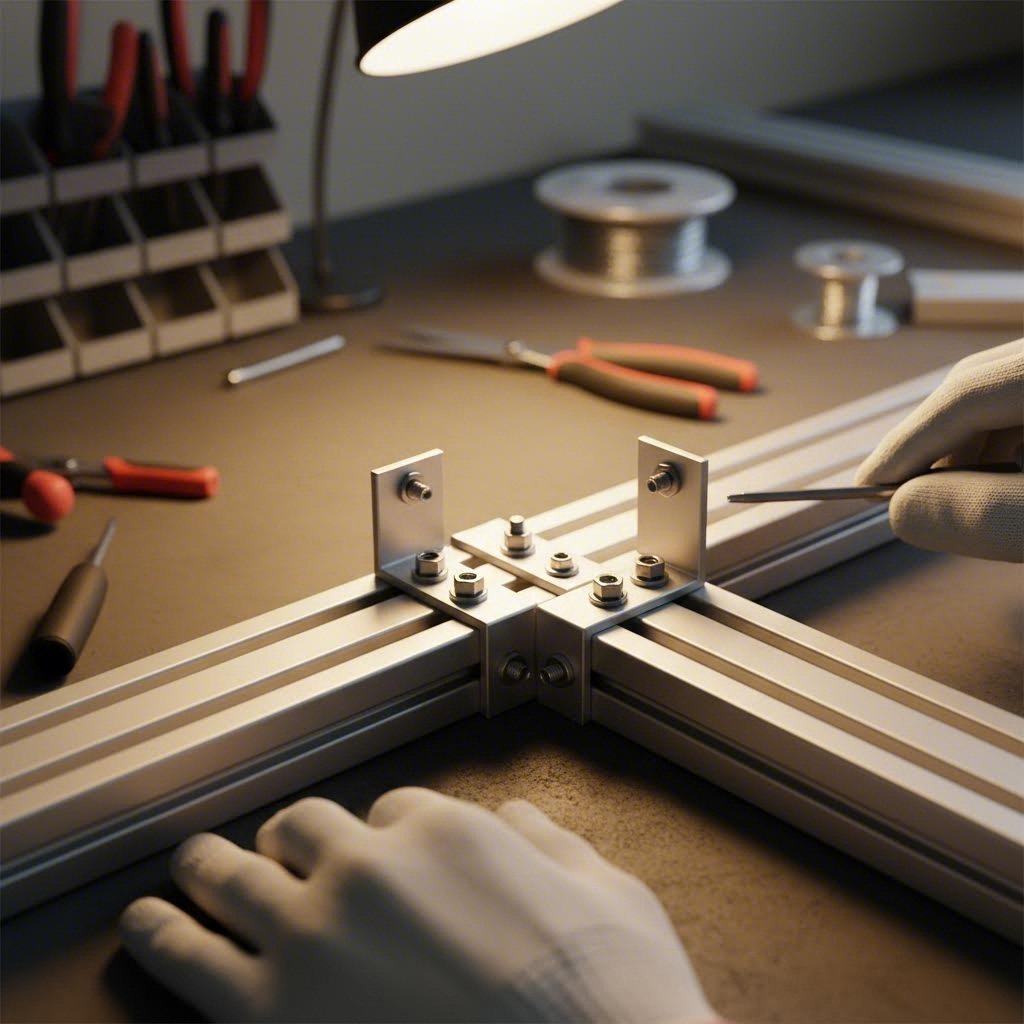
You've selected the perfect profile and specified the right alloy—now comes the moment of truth. How do you actually assemble these extrusions into a functional panel frame? Whether you're building a 2x3 frame for a small display or constructing an elaborate machine enclosure, the assembly principles remain consistent. Let's walk through the practical steps that transform individual profiles into precision panel systems.
Before cutting a single piece of aluminum, smart builders invest time in layout planning. Think of it like framing a 4x4 picture frame—measure twice, cut once applies even more critically when working with precision extrusions.
Start by determining your panel dimensions, then work backward to calculate frame member lengths. Remember that T-slot profiles have specific corner connection requirements that affect final dimensions. According to A-Line Automation's building guide, the pieces work like puzzle pieces that connect together seamlessly, but only when you account for connector geometry.
Key planning considerations include:
For inset panels, experienced builders recommend cutting your panel 1/16" to 1/8" smaller than the X-Y opening. The tighter the fit, the better—but with wood panels, account for expansion in humid conditions.
With your layout finalized, it's time to cut profiles to length. Unlike wood framing where minor discrepancies hide behind trim, aluminum extrusions demand precision. A miter saw with a carbide-tipped blade designed for non-ferrous metals produces clean, square cuts essential for tight-fitting assemblies.
Follow these sequential steps for professional results:
Connection hardware varies by profile series and load requirements. For 10-series T-slot profiles, 1/4-20 bolts with roll-in T-nuts provide secure fastening. The 15-series uses larger 5/16-18 hardware for increased strength. As noted by 80/20's fastener guide, options range from simple 2-hole inside corner brackets to heavy-duty 8-hole gusseted brackets for demanding applications.
L shaped brackets remain the most versatile corner solution. These simple connectors secure two profiles at 90 degrees using T-nuts and standard bolts. Gusseted versions add triangular reinforcement for applications requiring extra rigidity—similar to how 4x4 brackets reinforce wooden post connections.
Here's where panel material dictates technique. Glass, acrylic, composite, and metal panels each require different retention approaches within extrusion channels. Understanding these differences prevents cracked panels, rattling installations, and premature failures.
Panel Mounting Methods Comparison:
| Panel Material | Recommended Retention Method | Key Hardware | Special Considerations |
|---|---|---|---|
| Glass | Gasket channels with rubber inserts | EPDM gaskets, setting blocks | Never allow metal-to-glass contact; use setting blocks for weight distribution |
| Acrylic/Polycarbonate | Friction-fit channels or panel retainers | Plastic gaskets, panel clips | Allow thermal expansion clearance; avoid over-tightening |
| Composite/Plywood | Panel retainer brackets | Countersunk bolts, T-nuts, 4x4 post brackets | Drill oversized holes for expansion; use nylock nuts to prevent loosening |
| Metal Sheets | Direct fastening or overlay brackets | Screws for metal studs, self-tapping fasteners | Match fastener material to panel to prevent galvanic corrosion |
For inset panel installations using panel retainer brackets, the process follows a logical sequence:
Overlay panel installations work differently. As described by experienced van builders, you can oversize panels to cover the T-slot profiles completely, then use corner brackets and bolts for 4x4 posts or similar structural connections hidden behind the panel face.
The extruded aluminum slide channel approach suits applications requiring removable panels. Rather than using mechanical fasteners, panels insert into U-channel extrusions from one end and slide into position. This method works beautifully for access panels, sliding partitions, and maintenance covers that need frequent removal.
How many attachment points do you need? The answer depends on panel size, weight, and material. Generally, larger and thinner panels require more brackets, while smaller and thicker panels need fewer. For reference, most builders use four brackets for larger galley-sized panels and three for smaller side panels. Critical panels subject to vibration or impact may warrant additional attachment points for security.
With your panels securely mounted within their aluminum frames, you're nearly finished—but even well-assembled systems can develop issues over time. Understanding how to troubleshoot common challenges ensures your installation performs flawlessly for years to come.
Even the best-planned installations encounter problems. That perfectly assembled frame suddenly rattles when equipment vibrates nearby. Your outdoor enclosure develops mysterious popping sounds on sunny afternoons. Panels that fit beautifully in the shop refuse to align properly on the job site. Sound familiar?
These frustrations don't mean your aluminum extrusions for panels are defective—they typically indicate addressable issues with fit, environmental factors, or assembly techniques. Let's troubleshoot the most common challenges and discover practical solutions that restore performance without starting over.
Nothing undermines confidence in a panel installation like annoying rattles and vibrations. When panels move within their frames, they create noise, accelerate wear, and eventually damage both the panel edges and extrusion channels.
The root cause? Improper fit between panel and channel. Here's how to diagnose and fix the problem:
Gasket selection deserves special attention. Not all gaskets perform equally in panel applications. The gasket must compress enough to eliminate gaps without requiring excessive clamping force that could crack acrylic extrusions or stress glass panels. EPDM rubber provides excellent compression characteristics and weather resistance for most applications, while silicone gaskets handle higher temperature exposures in industrial settings.
Ever heard mysterious "popping" sounds from an aluminum facade on a sunny day? You're witnessing thermal expansion stress release—and it indicates your installation is fighting against natural material movement.
According to Aeroframe's technical bulletin on thermal expansion, aluminum's high coefficient of thermal expansion (23 x 10⁻⁶/°C) means even modest temperature swings produce measurable movement. A 3-meter mullion experiencing a 70°C temperature change expands approximately 4.8mm—significant enough to cause problems if not accommodated.
Recognize these thermal expansion symptoms:
Solutions follow a clear hierarchy—allow movement first, then reduce it, guide it, and finally damp remaining effects:
For existing installations experiencing thermal noise, remedial options include enlarging clearances at stack joints, introducing PTFE slide pads under brackets, and applying silicone-based dry film lubricant to splice liners—typically effective for 3-5 years before reapplication.
Modular aluminum slide track channel systems promise easy assembly and reconfiguration—but that flexibility becomes frustrating when panels refuse to align properly across large arrays. Cumulative tolerance stack-up across multiple frame members creates visible misalignment that single-panel installations never reveal.
Tackle alignment challenges systematically:
Long-span applications present additional challenges. Profiles spanning significant distances may deflect under their own weight or panel loads, creating visible sag. Solutions include selecting deeper profile sections, adding intermediate supports aligned with standard stud spacing principles, or specifying stiffer 6061 alloy for critical spans.
Combining aluminum extrusions with stainless steel fasteners or other dissimilar metals creates an invisible problem: galvanic corrosion. Left unchecked, it weakens joints, creates unsightly staining, and eventually destroys aluminum components.
According to Sinoextrud's corrosion prevention guide, galvanic corrosion requires two conditions: direct metal-to-metal contact and presence of an electrolyte (moisture). Eliminate either condition to prevent the reaction.
Practical prevention strategies include:
When stainless steel fasteners are unavoidable—for their strength or corrosion resistance in marine environments—always isolate them from aluminum surfaces using plastic or nylon sleeves and washers. The additional hardware cost is trivial compared to replacing corroded extrusions.
Troubleshooting panel extrusion challenges requires understanding root causes rather than treating symptoms. Whether you're silencing rattles with proper gasket selection, accommodating thermal movement in outdoor installations, or preventing galvanic corrosion in mixed-metal assemblies, the solutions start with identifying why problems occur. Armed with these diagnostic approaches and practical fixes, you can resolve issues efficiently—and prevent them from recurring in future installations.
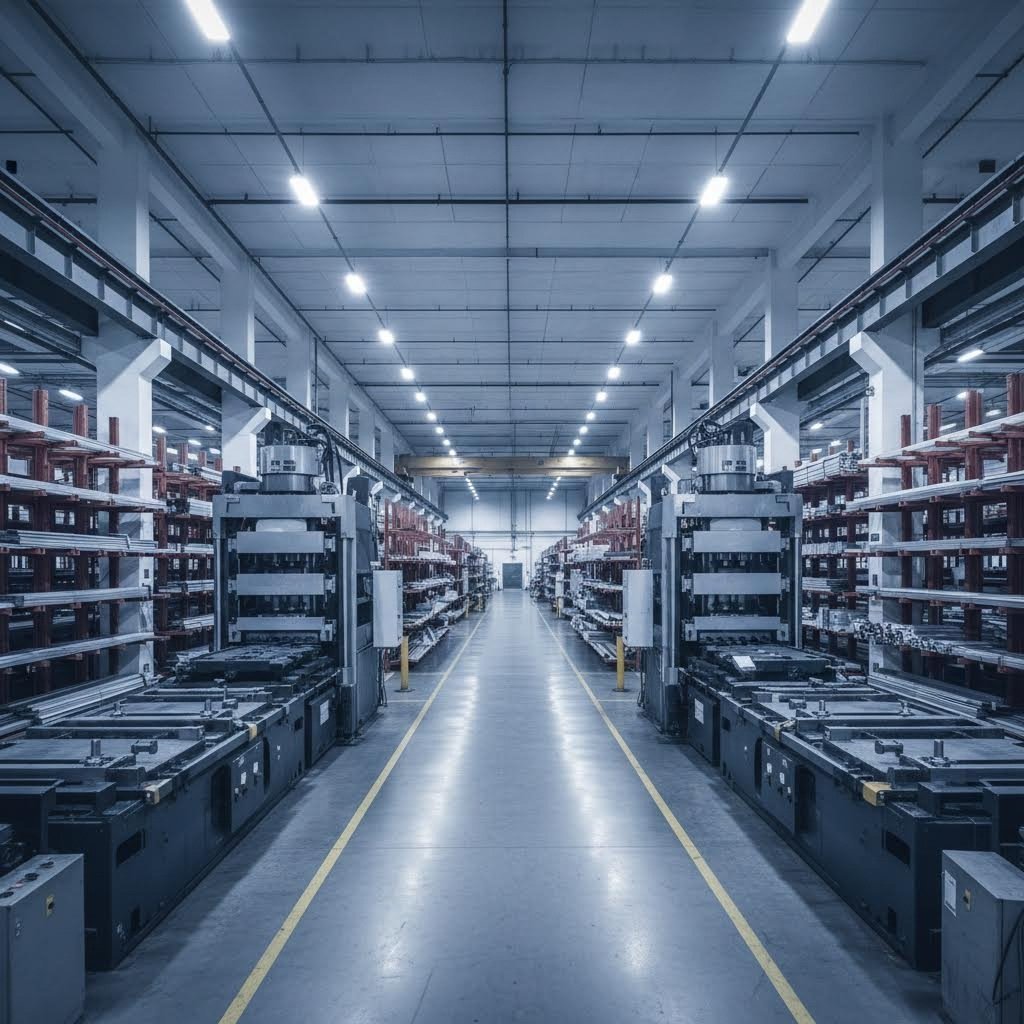
You've mastered profile selection, understood alloy specifications, and learned assembly techniques—but where do you actually source quality aluminum extrusions for panels? The supplier you choose impacts everything from dimensional accuracy to delivery timelines. Whether you're sourcing stock aluminum extrusions for a quick prototype or commissioning custom profiles for production runs, finding the right manufacturing partner determines project success.
Wondering where to buy aluminum extrusion that meets your specifications without breaking your budget? The answer depends on your project requirements, timeline, and volume. Let's explore what separates exceptional suppliers from mediocre ones.
Not all extrusion suppliers offer equal capabilities. According to Aluphant's supplier evaluation guide, the extrusion press defines what profiles a supplier can produce—and press capacity directly limits your options.
When assessing potential suppliers, examine these critical capability areas:
For example, Shengxin Aluminium exemplifies the full-service approach, operating 35 extrusion presses ranging from 600T to 5500T capacity. Their integrated CNC machining centers handle precise cutting, drilling, and bending, while comprehensive surface treatments—including anodizing in custom colors like champagne and rose gold, powder coating, PVDF, and micro-arc oxidation—ensure extruded aluminum panels meet both functional and aesthetic requirements.
Communication quality often distinguishes professional manufacturers from traders. Capable suppliers provide Design for Manufacturability (DFM) feedback on drawings, offer cost optimization suggestions, and share inspection photos before shipment. This proactive approach prevents issues rather than reacting after defects occur.
One fundamental decision shapes your sourcing strategy: should you use stock aluminum extrusions or invest in custom profiles? According to Paramount Extrusions' sourcing guide, the choice depends on balancing cost, lead time, and performance requirements.
Stock profiles include standard shapes—angles, channels, tubes, bars—that manufacturers and distributors keep in inventory.
Stock profiles work best for prototyping, small projects, replacement parts, or applications where standard shapes satisfy requirements.
Custom profiles use unique dies designed to your specifications, enabling optimized designs impossible with off-the-shelf options.
Custom aluminum extrusion panels make economic sense for engineered products, high-volume production runs, or applications where weight savings and performance optimization justify tooling investment. With over 30 years of experience, manufacturers like Shengxin Aluminium provide end-to-end technical support from die development through mass production, making custom profiles accessible even for specialized applications.
Beyond basic capabilities, the best suppliers function as manufacturing partners rather than transactional vendors. When evaluating wholesale aluminum extrusions suppliers for ongoing relationships, prioritize these characteristics:
Lead time reliability serves as a practical indicator of supplier capability. According to industry benchmarks, typical timelines include 10-20 days for die manufacturing, 7-15 days for extrusion production, and 5-10 days for surface finishing—totaling 4-6 weeks for standard projects. Suppliers with ERP-based production systems generally deliver more consistently.
For aluminum extrusion hardware and accessories, verify that your supplier stocks compatible fasteners, brackets, and connection components. Sourcing frames from one vendor and hardware from another creates compatibility risks and complicates project management.
The right manufacturing partner transforms aluminum extrusion panels from challenging projects into streamlined production. Whether you need stock profiles for immediate needs or custom extrusions optimized for your specific application, investing time in supplier evaluation pays dividends through consistent quality, reliable delivery, and technical support when challenges arise.
Aluminum extrusion profiles are lengths of material with consistent cross-sectional shapes created by forcing heated aluminum billets through custom-shaped dies. The process involves preheating aluminum to 400-500°C, applying up to 15,000 tons of hydraulic pressure to push it through a steel die, then rapidly cooling and stretching the material. This manufacturing method produces dimensionally consistent profiles ideal for panel framing, offering lightweight strength, corrosion resistance, and design flexibility that standard framing cannot match.
The best profile type depends on your application. T-slot profiles (80/20 style) excel in modular enclosures and machine guards with infinite fastening positions. U-channels provide direct panel edge insertion for simple frames and sliding tracks. H-channels join adjacent panels seamlessly in partition walls. Corner extrusions reinforce 90-degree connections, while structural profiles support heavy panels in load-bearing applications. Common sizes range from 20x20mm for lightweight displays to 80x80mm for robust industrial frames.
Aluminum extrusions offer significant advantages over steel stud framing for precision panel work. Aluminum weighs approximately 2.5 times less than steel while delivering superior strength-to-weight ratios. Unlike welded steel requiring specialized equipment for modifications, aluminum T-slot systems assemble and reconfigure with simple hand tools. Aluminum naturally resists corrosion without coatings and actually gains strength in cold temperatures. Steel studs remain better suited for load-bearing walls and fire-rated assemblies where building codes mandate steel construction.
Choose 6063 aluminum for most architectural panel applications where surface finish and appearance matter. This alloy offers excellent extrudability, superior anodizing response, and smooth surfaces ideal for visible installations. Select 6061 aluminum when structural strength is paramount—it delivers 50% higher tensile strength than 6063-T6 at approximately 42,000 PSI. Use 6061 for heavy panel loads, industrial equipment frames, high-stress environments, and applications involving vibration or impact where strength outweighs aesthetic considerations.
Quality aluminum extrusions are available through specialized manufacturers offering comprehensive capabilities. Look for suppliers with multiple press capacities (600T-5500T range), in-house die design, integrated CNC machining for cutting and drilling, and diverse surface treatments including anodizing and powder coating. Manufacturers like Shengxin Aluminium provide factory-direct pricing with end-to-end technical support from die development through mass production. For stock profiles, industrial distributors offer immediate availability, while custom profiles require working directly with manufacturers for optimized designs.



 dịch vụ trực tuyến
 0086 136 3563 2360
 sales@sxalu.com
 +86 136 3563 2360
 Việt
 English
 français
 Deutsch
 русский
 español
 português
 العربية
 ไทย
 Українська