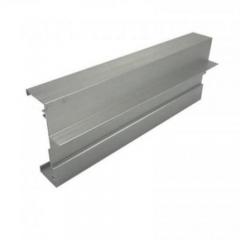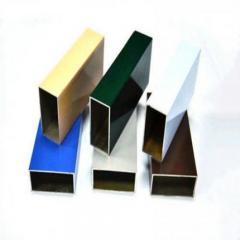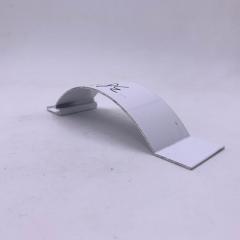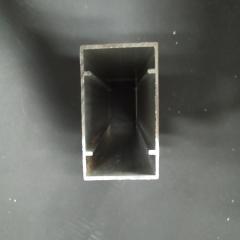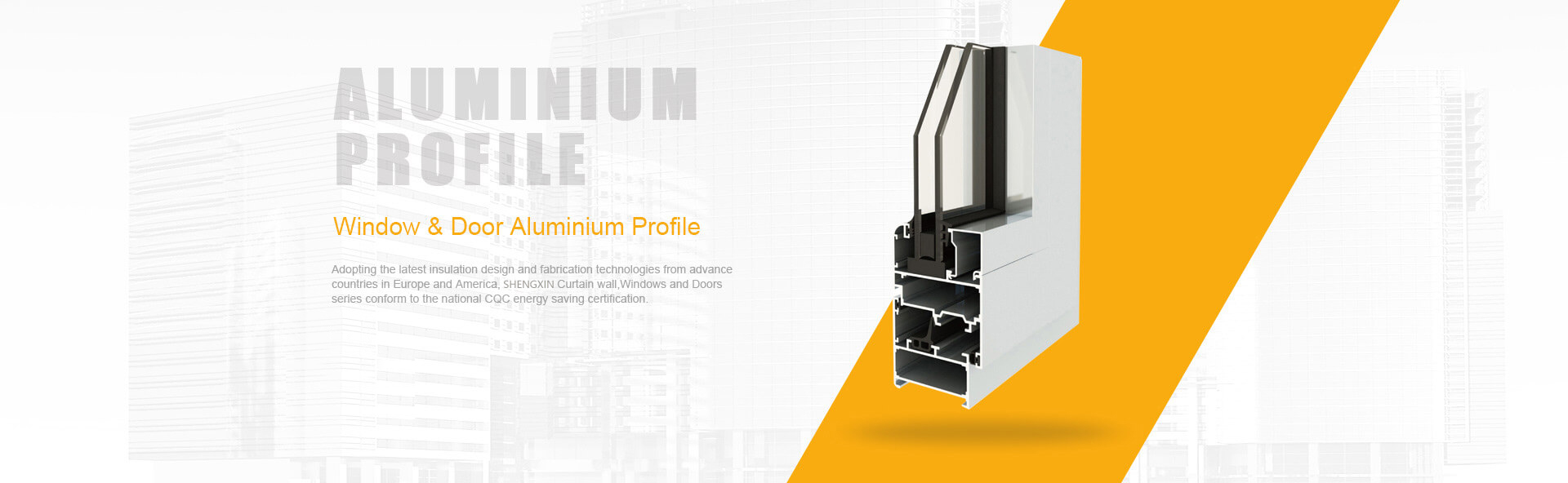
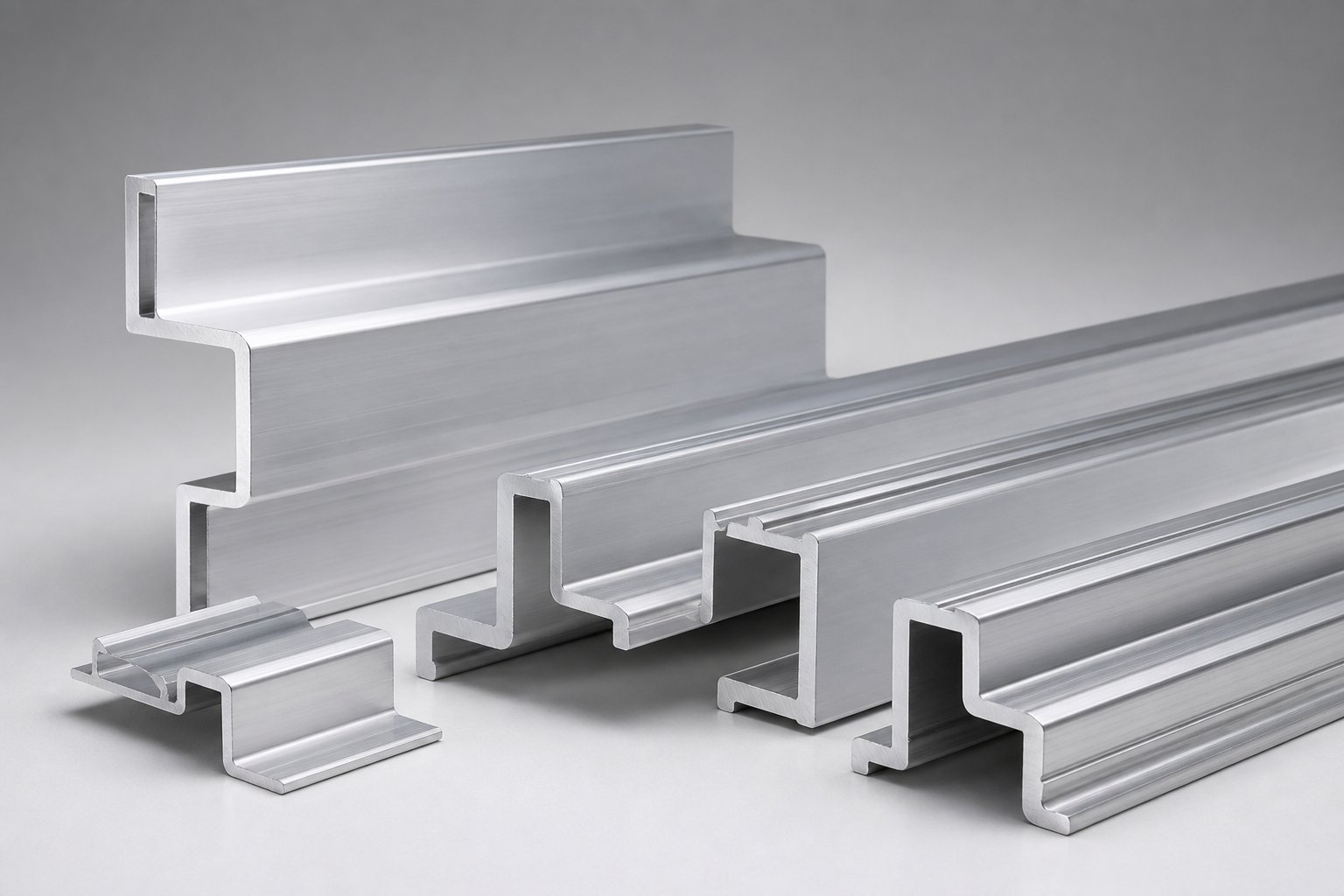
Ever looked at a structural component and wondered why engineers chose that particular shape? When it comes to aluminum zee extrusions, the answer lies in a clever combination of geometry and material science that delivers exceptional performance across countless applications.
Aluminum zee extrusions are extruded aluminum profiles featuring a distinctive Z-shaped cross-section with two offset flanges connected by an angled web, providing superior strength-to-weight ratios and versatile mounting capabilities for structural, architectural, and industrial applications.
These profiles earn their name from the obvious resemblance to the letter "Z" when viewed in cross-section. In industry terminology, you'll hear them called "zee" profiles, aluminum z channel configurations, or simply z channels. The naming convention follows the same logic as C-channels and I-beams—the cross-sectional shape tells the whole story at a glance.
What makes the aluminum z profile geometry so special? Picture two parallel flanges that don't align vertically but instead offset from each other, connected by a diagonal web. This asymmetrical arrangement creates a profile that behaves differently than symmetrical shapes like C-channels or angles.
The z channel aluminum design features:
According to Comhan's profile specifications, the unique Z-shape offers excellent stability and load-bearing capacity while maintaining flexibility in processing. This geometry allows the profiles to be easily cut, drilled, and milled for specific project requirements.
Imagine you're designing a roof support system that needs to span multiple connection points. Here's where zee profiles shine. Unlike C-shaped profiles that require butted connections, the asymmetrical flange design of an aluminum z bar allows end lapping—effectively doubling the part's strength in the lap area.
Engineers consistently select z channels for applications requiring:
The Light Gauge Steel Institute actually standardized zee purlin design with slightly different flange sizes—creating a non-symmetrical profile that nests together naturally during installation. This practical innovation eliminates guesswork on the jobsite.
When you combine the zee geometry with aluminum's inherent properties, you get a profile that performs exceptionally well across diverse environments. The extruded aluminum construction provides natural corrosion resistance, making these profiles ideal for moisture-prone or outdoor applications without requiring extensive protective treatments.
The structural advantages include:
These extrusions find their way into building and construction for finishing and reinforcement, industrial applications as connecting or support profiles, transport and coachbuilding for lightweight structures, and even advertising systems for mounting and displays. The versatility stems from that fundamental Z-shaped geometry working in harmony with aluminum's material properties.
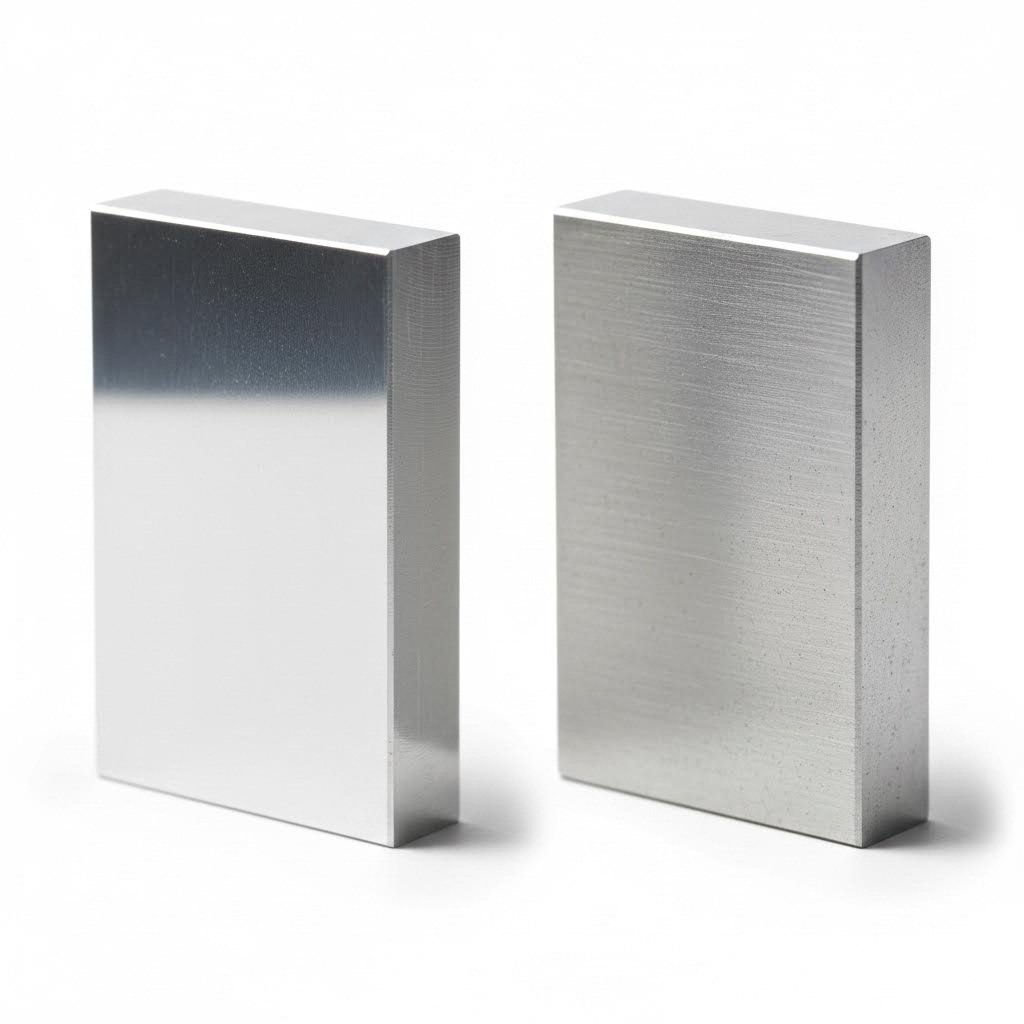
Now that you understand the distinctive geometry of zee profiles, here's the next critical question: which aluminum alloy should you specify? The material you choose fundamentally shapes how your metal z channel performs in real-world conditions. Get this decision right, and your project benefits from optimized strength, durability, and cost-efficiency.
The 6xxx series alloys dominate the extrusion industry, accounting for roughly 75% of all extrusion applications. Within this family, two alloys stand out for z bar metal profiles: 6063 and 6061. Both contain magnesium and silicon as primary alloying elements, yet they deliver distinctly different performance characteristics.
Think of 6063 as the "architectural alloy" and 6061 as the "structural workhorse." This simple distinction guides most selection decisions, but the details matter when you're specifying anodized aluminum extrusion profiles for demanding applications.
Aluminum 6063 excels at producing smooth surface finishes and complex shapes. According to Eagle Aluminum's alloy comparison, this alloy is the preferred material for custom extrusions, making possible the creation of intricate profiles with surfaces suitable for visible architectural elements. When visual appeal matters more than maximum strength, 6063 delivers.
Aluminum 6061 steps in when structural demands increase. Developed in 1935, this precipitation-hardened alloy undergoes heat treatment that spreads strengthening particles evenly throughout the metal's grain structure. The result? Significantly higher tensile and yield strength compared to 6063, making it ideal for load-bearing zee profiles in heavy-duty applications.
Here's a direct comparison of the key properties you'll evaluate when selecting between these alu z profile materials:
| Property | 6063-T6 | 6061-T6 | Winner |
|---|---|---|---|
| Ultimate Tensile Strength | 30,000 psi (min.) | 38,000+ psi (min.) | 6061 |
| Yield Strength (0.2% offset) | 25,000 psi (min.) | 35,000 psi (min.) | 6061 |
| Elongation (min.) | 8-10% | 8-10% | Comparable |
| Surface Finish Quality | Excellent | Good | 6063 |
| Anodizing Response | Superior | Good | 6063 |
| Corrosion Resistance | Excellent | Very Good | 6063 |
| Machinability | Good | Excellent | 6061 |
| Weldability | Good | Very Good | 6061 |
| Best Use Scenario | Architectural trim, visible profiles, decorative applications | Structural framing, heavy-duty supports, load-bearing members | Application-dependent |
Sounds complex? The temper designation following the alloy number tells you exactly how the metal z channel was processed after extrusion. This processing directly determines the mechanical properties you'll get.
According to the Aluminum Extruders Council, common temper designations include:
When you see a specification like "6063-T5," you're looking at a 6063 alloy that's been cooled from extrusion temperature and artificially aged. This delivers minimum tensile strength of 22,000 psi and yield strength of 16,000 psi for wall thicknesses up to 0.500 inches.
For structural metal z applications requiring maximum performance, 6061-T6 provides the highest strength combination: minimum 38,000 psi tensile strength and 35,000 psi yield strength.
How do you decide between these options for your zee extrusion project? Start by ranking these factors in order of importance:
For window frames, door frames, architectural trim, and decorative alu z profiles, 6063 remains the industry standard. Its ability to accept anodizing and powder coating while maintaining smooth surfaces makes it unmatched for visible applications.
When your zee extrusions serve as structural angles, equipment frames, or load-bearing supports—particularly in applications like scaffolding, truck components, or industrial framing—6061 delivers the mechanical performance you need. Both alloys weld well and resist corrosion effectively, so the strength versus finish trade-off typically drives the final decision.
You've selected your alloy—now comes another decision that significantly impacts performance: should your zee profile feature equal or unequal wall thickness? This distinction rarely appears in supplier catalogs, yet it fundamentally affects load capacity, weight optimization, and application suitability. Understanding these variations helps you specify exactly what your project demands.
When you order a standard z bar from most suppliers, you're typically receiving an equal thickness profile. This means the web (the diagonal or vertical connecting portion) and both flanges share identical wall thickness throughout the entire cross-section.
Equal thickness z channel profiles offer several practical advantages:
For general-purpose applications like trim work, z strip installations, or light-duty framing, equal thickness profiles deliver reliable performance without overcomplicating the specification process. The symmetrical material distribution means stress concentrates evenly across the profile under typical loading conditions.
Imagine a z section supporting a heavy roof panel while simultaneously providing an attachment flange for interior ceiling systems. The load-bearing flange experiences significantly more stress than the attachment flange. Why use the same material thickness in both locations?
Unequal thickness zee profiles address exactly this engineering reality. By varying wall thickness between the web and flanges—or between the two flanges themselves—designers can:
When reviewing aluminum z bar sizes for demanding structural applications, consider whether an unequal thickness configuration might better match your actual loading conditions. The trade-off involves higher initial die costs for custom profiles, but material savings over large production runs often justify the investment.
How exactly do you specify a z channel when communicating with suppliers? Industry conventions define zee profiles using three primary dimensions: height (the overall depth of the profile), flange width (often specified separately if flanges differ), and material thickness.
You'll typically encounter aluminum z bar sizes expressed in formats like "1.5" x 1" x 0.125"" where the first number indicates height, the second represents flange width, and the third specifies wall thickness. Some suppliers list leg lengths instead of overall dimensions, so always confirm measurement conventions before ordering.
Common standard z bar profiles and their typical applications include:
When standard z section sizes don't quite fit your requirements, custom extrusion becomes an option worth exploring. The next consideration? Understanding how these profiles actually get manufactured—and what that process means for your tolerances, lead times, and budget.
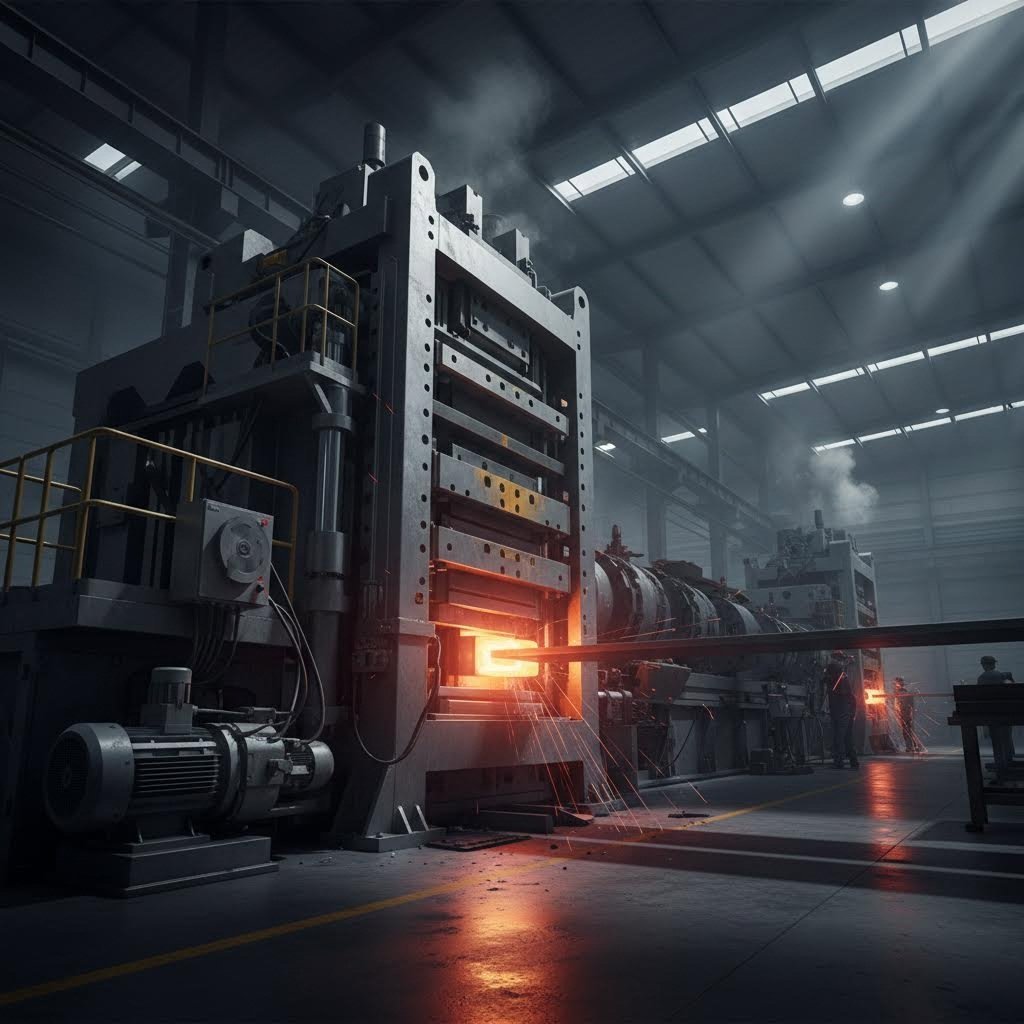
Ever wondered how a solid cylinder of aluminum transforms into that precisely shaped zee profile you're specifying? Understanding the extrusion process helps you make smarter decisions about tolerances, lead times, and whether custom aluminum z extrusion makes sense for your project. Let's walk through exactly how these profiles come to life.
At its core, aluminum extrusion works like squeezing toothpaste from a tube—except you're forcing heated aluminum through a steel die at pressures reaching 15,000 tons. According to RapidDirect's manufacturing guide, this technique creates continuous profiles with uniform cross-sections that can be cut to virtually any length.
The journey from raw material to finished extruded channel follows a carefully orchestrated sequence. Here's what happens at each stage:
Die Preparation: Before any aluminum moves, the extrusion die gets preheated to 450-500°C. This critical step ensures even metal flow and extends die life significantly. For zee profiles, the die must be precisely machined to create that distinctive Z-shaped aperture.
Billet Heating: A cylindrical aluminum billet—essentially a thick round log of your specified alloy—enters an oven reaching 400-500°C. This temperature makes the aluminum malleable without melting it completely. Think of it as achieving a "play-doh" consistency that flows under pressure.
The Extrusion Push: Here's where the magic happens. A hydraulic ram applies massive pressure, forcing the heated billet into a container. As pressure builds, the aluminum has nowhere to go except through the die openings. Your zee profile emerges fully formed on the other side.
Quenching and Cooling: The emerging profile immediately passes through cooling fans or water baths. This rapid cooling—called quenching—locks in the material properties you need. Temperature control throughout this phase directly affects the final mechanical characteristics.
Stretching and Straightening: Fresh extrusions often exhibit slight twists or bows. Mechanical stretchers grip both ends of the profile, pulling it into precise alignment. This step also work-hardens the aluminum slightly, contributing to final strength properties.
Cutting and Aging: Finally, profiles get cut to specified lengths and may undergo artificial aging in ovens. This heat treatment achieves the temper designation—T5 or T6—that determines ultimate strength.
The extrusion die deserves special attention because it directly determines your profile quality and what's actually achievable. For aluminum z profiles, die designers face unique challenges compared to simpler shapes.
The asymmetrical nature of zee geometry creates uneven metal flow patterns. One flange might fill faster than the other, potentially causing dimensional inconsistencies. Experienced die makers compensate by:
According to Orange Aluminum's profile guide, high-quality machining and tooling are crucial to achieving exact specifications for diverse applications. This is particularly true for zbar construction applications where dimensional accuracy impacts structural performance.
Die costs vary significantly based on profile complexity. A simple zee shape might require a $1,500-$3,000 die investment, while complex aluminum extrusion panels with multiple hollow sections could push tooling costs above $10,000. These upfront investments get amortized across your production volume.
What tolerances can you realistically expect from extruded zee profiles? Several factors influence achievable precision:
Press Capacity and Profile Complexity: The relationship between press tonnage and profile geometry directly affects quality. Larger presses (ranging from 600T to 5500T) handle more complex shapes and thicker walls. However, industry sources note that lightweight sections sometimes demand greater press capacities than their weight suggests—particularly for thin-walled hollow configurations.
Extrusion Ratio Considerations: This ratio compares the billet's cross-sectional area to the final profile's area. Higher ratios mean more mechanical work during extrusion, which affects dimensional consistency. Zee profiles typically fall into moderate extrusion ratio territory, allowing for good tolerance control.
Temperature Management: Too-high billet temperatures create fluid metal flow that resists entering tight corners. The result? Dimensions may fall outside specified tolerances, or sharp corners might show tearing. Optimal temperature balances cycle time against quality requirements.
Standard tolerances for aluminum z sections typically follow industry standards like those published by the Aluminum Extruders Council. For a typical zee profile, expect:
| Dimension Type | Typical Tolerance Range | Precision Grade Available |
|---|---|---|
| Wall Thickness | ±0.006" to ±0.012" | ±0.004" (special order) |
| Flange Width | ±0.012" to ±0.025" | ±0.008" (special order) |
| Overall Height | ±0.015" to ±0.030" | ±0.010" (special order) |
| Straightness | 0.0125"/ft typical | 0.006"/ft (precision stretched) |
| Twist | 1° per foot maximum | 0.5° per foot (controlled) |
When your application demands tighter tolerances than standard extrusion provides, secondary machining operations—cutting, drilling, milling—can achieve precision that rivals machined parts. Many manufacturers offer these value-added services alongside raw extrusion capabilities.
Understanding these manufacturing realities helps you specify zee profiles that balance performance requirements against practical production constraints. With the extrusion fundamentals covered, the next logical question involves what happens after the profile emerges from the press: surface finishing options that enhance both appearance and durability.
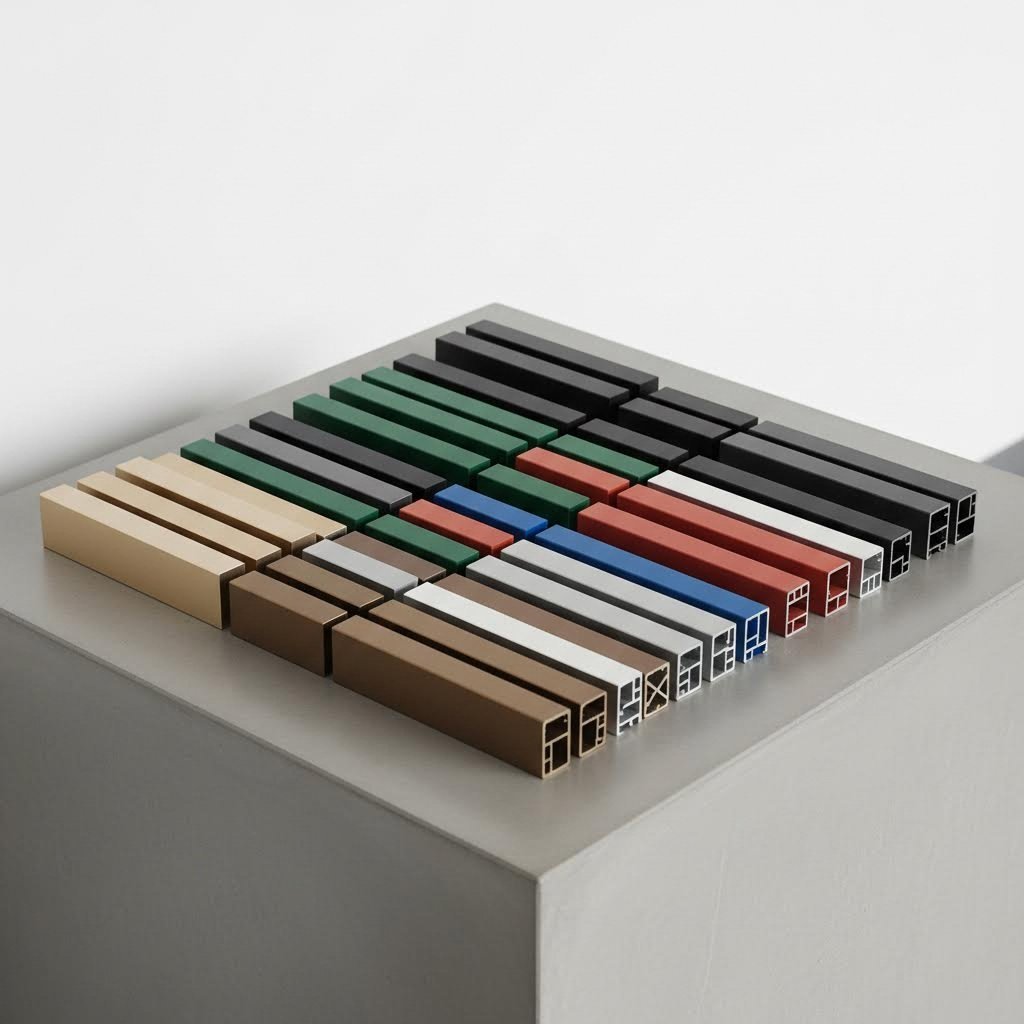
Your zee profile has emerged from the extrusion press with precise dimensions and proper alloy properties. Now comes the question that determines how it performs over the next twenty years: what surface finish should you specify? The right finishing treatment transforms raw aluminum into a durable, aesthetically pleasing component that withstands your specific environment—whether that's a coastal facade, industrial equipment frame, or decorative aluminum z trim application.
According to SAF's finishing guide, the application and desired appearance dictate the finish selected. This isn't merely a cosmetic choice—each finishing option delivers distinct performance characteristics that affect corrosion resistance, abrasion durability, color retention, and long-term maintenance costs.
Think of anodizing as growing a protective layer from the aluminum itself rather than adding something on top. This electrochemical process—developed over 100 years ago—converts the aluminum surface into a hard, durable aluminum oxide coating that becomes integral to the metal.
Why does this matter for your aluminum z flashing or architectural zee profiles? Unlike applied coatings, anodized finishes cannot peel or flake because the coating literally is part of the metal. The Aluminum Association's designation system classifies anodic coatings by thickness:
The color possibilities extend well beyond basic clear or bronze finishes. Anodized coatings can be colored through dye impregnation, electrolytic deposition (two-step process), or integral coloring during the anodization itself. Manufacturers like Shengxin Aluminium offer custom anodizing colors including Champagne and Rose Gold finishes that create distinctive architectural appearances impossible to achieve with paint.
Here's what makes anodizing particularly valuable for z flashing aluminum applications in high-traffic or abrasive environments: the coating hardness exceeds that of any organic coating. Door frames, kick plates, and exposed structural members benefit from this superior abrasion resistance.
When unlimited color selection matters more than the metallic luster of anodizing, powder coating delivers. This eco-friendly technique applies ionized dry powder electrostatically, then bakes the coating to create a uniform, durable finish with zero VOC emissions.
According to coating industry resources, powder coating achieves several advantages over liquid paint:
Polyester-based powder coatings dominate the architectural market for aluminum z trim and facade applications. These standard coatings carry warranties up to 10 years in European climates and resist aging and weathering effectively. For enhanced performance, polyester coatings with contamination-resistant additives reduce cleaning frequency to 18-month intervals while maintaining attractive appearances.
One consideration: powder coatings can exhibit "orange peel" texture, creating a slightly textured appearance rather than a perfectly smooth surface. For applications requiring glass-smooth finishes, liquid PVDF coatings remain the preference.
PVDF (polyvinylidene fluoride) coatings have dominated curtainwall and metal roofing markets for good reason. Formulated typically as 70% PVDF with 30% acrylic resins, these coatings meet AAMA 2605—the most stringent specification for spray-coated architectural aluminum—which requires actual ten-year Florida exposure testing.
What about specialized requirements? Some applications demand finishes beyond standard options:
Manufacturers offering comprehensive surface treatment capabilities—including anodizing, powder coating, PVDF, and micro-arc oxidation—provide flexibility to match finishing precisely to application requirements.
Here's how the major finishing options compare across key performance criteria:
| Performance Criteria | Anodizing (Class I) | Powder Coating (Polyester) | PVDF Coating | Mill Finish |
|---|---|---|---|---|
| Corrosion Resistance | Good (vulnerable to acids) | Very Good | Excellent | Moderate (natural oxide only) |
| Abrasion Resistance | Excellent | Good | Good | Poor |
| UV Resistance | Excellent (unaffected) | Good (may chalk) | Excellent | N/A |
| Color Options | Limited (metallics, earth tones) | Virtually Unlimited | Virtually Unlimited | Natural Aluminum |
| Renewability | Can be cleaned/renewed | Requires recoating | Requires recoating | Can be refinished |
| Relative Cost | Moderate | Low-Moderate | Higher | Lowest |
| Best Applications | High-traffic areas, storefronts, visible structural | General architectural, industrial equipment | Curtainwall, metal roofing, coastal exposure | Interior hidden framing, temporary installations |
Mill finish—leaving the aluminum in its as-extruded state—remains viable for concealed framing or temporary applications where appearance doesn't matter. The natural oxide layer provides moderate corrosion protection, but this finish won't withstand harsh environments or visible applications long-term.
When specifying finishes for your zee profiles, consider the complete lifecycle: initial cost represents only part of the equation. A Class I anodized finish costs more upfront but can be renewed through cleaning after decades of service. PVDF coatings command premium pricing but outlast alternatives in corrosive environments. The right choice balances your aesthetic requirements, environmental exposure, maintenance expectations, and budget constraints.
With finishing options clarified, the practical question becomes: where exactly do these finished zee profiles get installed? Understanding real-world applications across industries helps confirm whether this profile geometry suits your specific project requirements.
You've selected your alloy, specified wall thickness, and chosen the perfect finish. But here's the question that matters most: will aluminum zee extrusions actually solve your specific application challenge? The answer depends on understanding how these versatile profiles perform across different industries—and recognizing when that distinctive Z-shaped geometry delivers advantages no other profile can match.
According to Johnson Brothers Metal Forming, Z-bars and zee profiles serve as framing, supports, reinforcements, stiffeners, rails, slides, tracks, and countless other functions. Their applications span construction, metal buildings, garage doors, displays, store fixtures, furniture, enclosures, cabinets, and storage systems. Let's break down exactly where these profiles excel.
When architects specify aluminum zee extrusions for visible building elements, they're leveraging both structural performance and aesthetic versatility. The Z-shaped geometry creates natural shadow lines that add visual depth to facades while simultaneously providing functional attachment points.
Common architectural applications include:
What makes zee profiles particularly valuable in facade applications? Their ability to create thermal breaks. The offset geometry naturally separates interior and exterior attachment points, reducing thermal bridging that compromises building envelope performance.
Move beyond visible applications, and you'll find aluminum zee extrusions working hard as structural workhorses. The Z-shaped cross-section delivers impressive strength-to-weight ratios that make these profiles essential for z framing applications where every pound matters.
Structural applications leverage the profile's unique characteristics:
The lapping capability deserves special attention for z wall and framing applications. Unlike C-channels that require butted connections, zee profiles overlap at splice points—effectively doubling material thickness where structural demands peak. This elegant solution eliminates complex connection hardware while increasing load capacity precisely where needed.
Construction professionals reach for zee profiles when traditional solutions create problems. The distinctive geometry solves specific challenges that other profile shapes simply cannot address.
Key construction applications include:
The z channel for drywall application illustrates why geometry matters. Standard furring channels create a fixed standoff distance. But z-furring channel profiles allow installers to adjust standoff by rotating the profile—one flange against the substrate, the other supporting finish materials. This adjustability compensates for wall irregularities without shimming.
Beyond construction, industrial applications demand zee profiles for their combination of strength, precision, and corrosion resistance. Manufacturing facilities, processing plants, and material handling systems rely on these profiles daily.
Industrial applications commonly include:
Interestingly, historical records show that in the early 1980s, manufacturers produced Z-purlins from 6061-T4 aluminum for building-sized parabolic satellite antenna receiving stations used worldwide. These purlins required sweep bending in the hard direction across 16 different radii—demonstrating the remarkable formability of aluminum zee profiles even in demanding aerospace-adjacent applications.
How do you determine whether zee extrusions suit your specific project? Consider these decision factors:
When your application demands the specific advantages that Z-shaped geometry provides—lapping capability, offset attachment points, natural channel formation, or nesting efficiency—aluminum zee extrusions deliver solutions that simpler shapes cannot match. But how do these profiles compare directly against alternative options like C-channels, angles, or I-beams? Understanding those trade-offs helps confirm your selection.
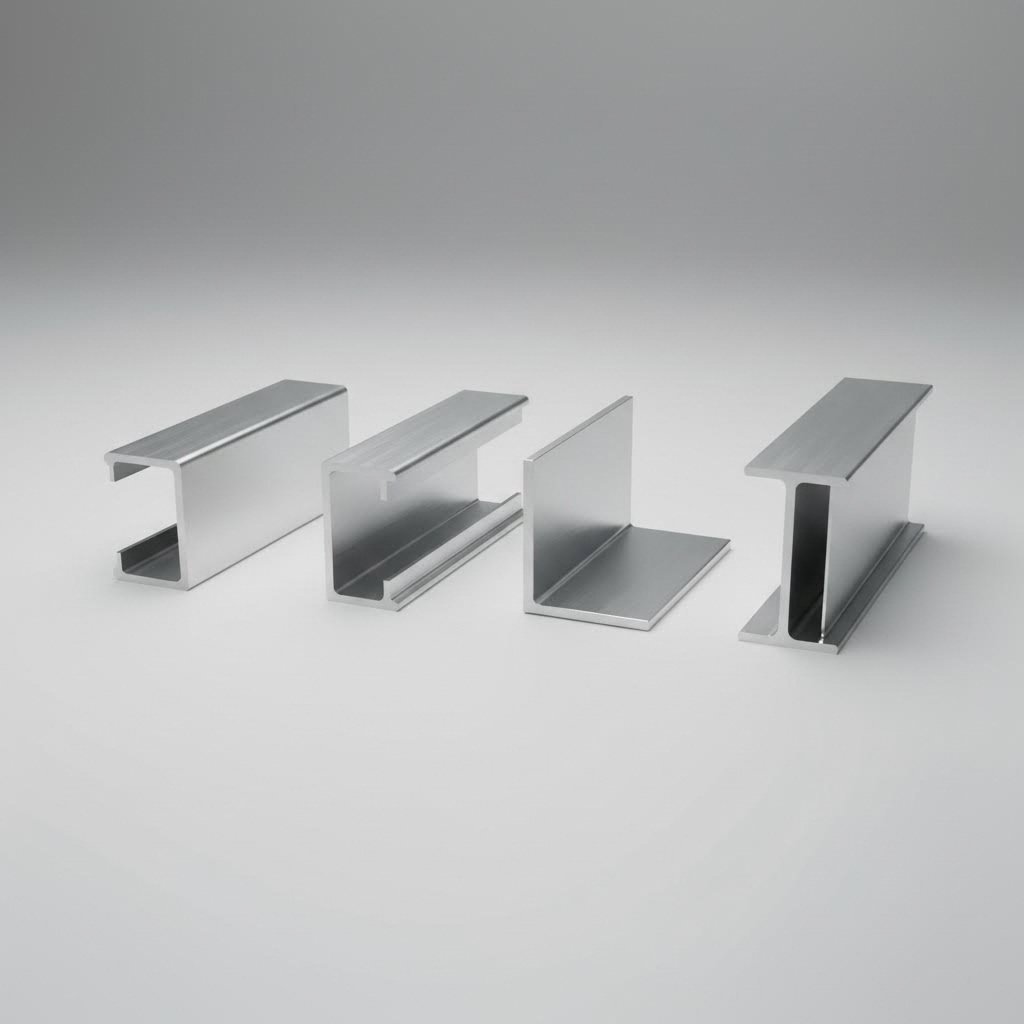
So you know zee profiles work well for your application—but are they actually the best choice? That's the question experienced engineers ask before finalizing any specification. Understanding how aluminum zee extrusions stack up against C-channels, angle profiles, and I-beams helps you make confident decisions backed by objective performance data rather than assumptions.
Here's the reality: no single profile shape dominates every application. Each geometry excels in specific scenarios while presenting limitations in others. The key lies in matching profile characteristics to your actual requirements—load patterns, connection methods, weight budgets, and cost constraints.
C-channels and zee profiles often compete for the same applications, yet they behave quite differently under load. The fundamental distinction? Symmetry versus asymmetry.
C-channels feature a symmetrical cross-section with both flanges extending in the same direction from the web. This geometry creates a natural "channel" but limits connection options to one side of the profile. Zee profiles flip one flange to the opposite side, creating offset attachment points and enabling the lapping capability that proves invaluable in continuous span applications.
According to Acier Steel's purlin comparison, Z-shaped profiles enable longer spans through nesting and lapping, optimizing structural layouts in ways C-channels cannot match. This translates to fewer splice points, reduced hardware requirements, and more efficient load transfer across multiple supports.
Consider these performance differences:
When does a steel z channel or stainless z channel outperform its C-shaped counterpart? Continuous roof purlins, multi-span wall girts, and any application requiring overlapped connections benefit from zee geometry. C-channels remain preferable for single-span applications, vertical studs, and situations where symmetrical loading dominates.
Sometimes the answer isn't a channel z profile at all. Angle sections and I-beams solve different structural problems that zee profiles cannot address efficiently.
Angle profiles (L-shaped cross-sections) excel where simple corner bracing, diagonal supports, or edge trim applications dominate. Their symmetrical legs provide equal strength in two perpendicular directions—ideal for z angle alternatives in bracing systems where loads reverse direction. Angles also cost less per pound than more complex shapes, making them economical for non-critical applications.
I-beams (wide-flange sections) deliver maximum bending efficiency when loads act perpendicular to the web. The symmetrical flange distribution places material at maximum distance from the neutral axis—exactly where it resists bending most effectively. For primary structural members spanning significant distances under heavy loads, I-beams outperform zee profiles decisively.
Reference materials from structural steel comparisons note that traditional hot-rolled beams suit general structural framing and heavy industrial supports, while cold-formed profiles like zee sections specialize in secondary framing, roofing, cladding, and lighter-duty applications.
Here's when alternative profiles make more sense:
Ready to make your final decision? This comparison matrix presents the critical trade-offs across profile types:
| Selection Criteria | Aluminum Zee Profile | C-Channel | Angle Profile | I-Beam |
|---|---|---|---|---|
| Load Distribution | Excellent for continuous spans with lapping | Good for single spans | Limited to axial/diagonal loads | Optimal for bending loads |
| Weight Efficiency | Excellent—aluminum saves 65% vs steel | Good | Moderate | Lower (heavier sections) |
| Ease of Attachment | Excellent—offset flanges provide dual-side mounting | Good—single-side mounting | Limited—corner connections only | Good—flange mounting |
| Spanning Capability | Very Good—lapping extends effective spans | Moderate | Poor—not designed for spanning | Excellent |
| Corrosion Resistance | Excellent (aluminum with finish) | Requires coating | Requires coating | Requires coating |
| Relative Cost | Moderate | Lower | Lowest | Higher |
| Best Applications | Purlins, girts, furring, facade supports | Wall studs, single-span framing | Bracing, trim, corner reinforcement | Primary beams, heavy loads |
The decision framework becomes clearer when you prioritize your requirements:
Ultimately, aluminum zee extrusions occupy a valuable middle ground—stronger than angles, more versatile than C-channels, and lighter than I-beams. They excel in secondary framing, continuous span applications, and situations where corrosion resistance matters. When these characteristics align with your project requirements, zee profiles deliver performance that alternatives cannot replicate.
Of course, selecting the right profile geometry is only half the sourcing decision. The next consideration—custom versus standard extrusion—determines your lead times, tooling investments, and per-piece economics.
You've identified the perfect alloy, specified the right thickness, and selected an appropriate finish. Now comes the sourcing decision that directly impacts your project timeline and budget: should you order standard aluminium z bar profiles off the shelf, or invest in custom aluminum zee extrusion tailored precisely to your specifications?
This decision isn't always straightforward. According to industry comparisons, the choice between custom and standard extrusion depends on the specific requirements of the application and the desired balance between design flexibility and cost. Understanding when each approach makes sense helps you avoid both unnecessary tooling expenses and the compromises that come with forcing standard profiles into custom applications.
Standard aluminum z-bar profiles offer compelling advantages for straightforward applications. These readily available shapes—produced using pre-existing dies—eliminate tooling costs and dramatically shorten lead times. When your z bar aluminum requirements align with common dimensions, standard profiles represent the most economical path forward.
Consider standard z aluminum channel profiles when:
Standard aluminium extrusions for sale through distributors typically ship within days rather than weeks. This availability proves invaluable for prototype development, urgent repairs, or projects where design flexibility matters less than speed to implementation.
The trade-off? Standard profiles rarely match exact requirements perfectly. You might accept slightly heavier sections than necessary, adjust designs around available dimensions, or add secondary operations that custom extrusion would eliminate. These compromises make sense for smaller quantities but become increasingly costly as volume grows.
When standard profiles create unacceptable compromises—or when production volumes justify tooling investment—custom aluminum zee extrusion opens design possibilities that stock shapes cannot match. The process transforms your precise specifications into dedicated dies that produce exactly what your application demands.
Here's how the end-to-end custom extrusion process unfolds:
According to industry sources, tooling lead time typically ranges from 2 to 4 weeks depending on profile complexity. The overall size, geometry, and shape of the extrusion may require additional time for intricate dies. Production lead time then depends on scheduling, with additional days or weeks added for fabrication and finishing operations.
Manufacturers with comprehensive capabilities streamline this process significantly. For example, Shengxin Aluminium operates 35 extrusion presses ranging from 600T to 5500T capacity, enabling production of profiles from delicate architectural trim to heavy structural sections. Their integrated CNC machining centers handle precision cutting, drilling, and bending—eliminating the coordination delays that occur when sourcing extrusion and fabrication separately.
The custom versus standard decision ultimately comes down to economics—but not just the obvious per-piece pricing. Smart sourcing considers total cost across your entire production lifecycle.
Die costs represent the most visible custom extrusion expense. Simple z molding profiles might require dies costing $1,500-$3,000, while complex geometries push tooling investments above $10,000. However, dies typically last for millions of feet of extrusion, making per-piece amortization negligible at production volumes.
Minimum order quantities (MOQ) factor significantly into sourcing decisions. As manufacturers explain, MOQs exist for economic and technical reasons: die preparation overhead, press setup time, and quality verification runs all add costs that must be distributed across production quantities. The profile's shape, size, and weight affect which press can be used—larger presses typically require higher MOQs.
Consider these cost factors when comparing options:
| Cost Factor | Standard Profiles | Custom Extrusion |
|---|---|---|
| Tooling Investment | None | $1,500-$10,000+ (one-time) |
| Minimum Order | Often 1 piece or small quantities | Typically 500-2,000 lbs minimum |
| Per-Piece Material Cost | Higher (less optimized) | Lower (weight-optimized design) |
| Secondary Machining | Often required | Minimized or eliminated |
| Assembly Labor | Higher (adapting standard parts) | Lower (purpose-designed fit) |
| Lead Time | Days to weeks | 4-8 weeks typical (first order) |
| Reorder Lead Time | Same as initial | 2-4 weeks (die exists) |
The break-even calculation varies by application, but custom extrusion typically becomes economical when:
What about that first order with its tooling costs and longer lead time? Think of die investment as purchasing a production asset. The die remains yours, ready for reorders at reduced lead times whenever demand requires additional aluminum zee profiles. Manufacturers offering end-to-end support from die development through mass production protect this investment by maintaining dies properly and coordinating seamlessly across production runs.
Whether you source standard profiles for immediate needs or invest in custom extrusion for optimized performance, the fundamentals remain consistent: match your profile geometry to actual requirements, specify appropriate alloys and tempers, select finishes suited to your environment, and partner with manufacturers whose capabilities align with your production demands. Armed with the knowledge from this guide, you're equipped to make sourcing decisions that balance performance, cost, and timeline for your specific aluminum zee extrusion applications.
Aluminum Z channels serve diverse applications across construction, architecture, and industrial sectors. In construction, they function as z-furring channels for drywall installation, siding transitions, and flashing. Architectural uses include curtain wall systems, window framing, and facade panel supports. Industrial applications range from conveyor system frames and equipment mounting rails to solar panel mounting structures. The distinctive Z-shaped geometry allows for overlapping connections, dual-side mounting, and efficient load distribution across continuous spans.
The key difference lies in strength versus finish quality. 6061-T6 aluminum delivers higher tensile strength (38,000+ psi) and yield strength (35,000 psi), making it ideal for structural, load-bearing zee profiles. 6063-T6 offers lower strength (30,000 psi tensile) but produces superior surface finishes and responds better to anodizing, making it the preferred choice for visible architectural applications. Both alloys provide excellent corrosion resistance and weldability, so the selection typically depends on whether structural performance or aesthetic appearance takes priority.
Standard aluminum Z bar sizes range from light gauge profiles like 1" x 0.5" x 0.063" for decorative trim to heavy structural sections measuring 4" x 2.5" x 0.375" for industrial applications. Common mid-range sizes include 1.5" x 1" x 0.125" for drywall furring and 2" x 1.5" x 0.188" for structural framing. Dimensions typically specify height, flange width, and wall thickness. Custom extrusion services from manufacturers like Shengxin Aluminium can produce non-standard sizes when standard profiles don't meet specific project requirements.
Zee extrusions feature asymmetrical geometry with offset flanges, enabling overlapping connections that effectively double material thickness at splice points. This lapping capability makes them superior for continuous multi-span applications like roof purlins and wall girts. C-channels have symmetrical geometry requiring butted connections with additional splice plates. Zee profiles also provide dual-side mounting options and nest more compactly during shipping. However, C-channels work better for single-span applications, vertical studs, and situations with symmetrical loading patterns.
Custom extrusion becomes economical when annual volume exceeds 1,000-2,000 pounds, weight optimization significantly reduces material costs, or multiple secondary machining operations can be eliminated through purpose-designed features. Custom profiles also make sense when standard dimensions create unacceptable design compromises or when integrated features like mounting holes reduce assembly labor. Die costs range from $1,500-$10,000+ but amortize across production quantities. For smaller orders or urgent timelines, standard profiles offer immediate availability without tooling investment.



 dịch vụ trực tuyến
 0086 136 3563 2360
 sales@sxalu.com
 +86 136 3563 2360
 Việt
Việt English
 français
 Deutsch
 русский
 español
 português
 العربية
 ไทย
ไทย Українська