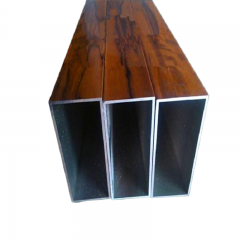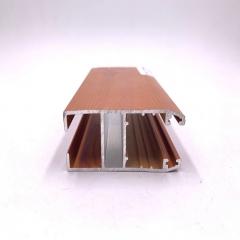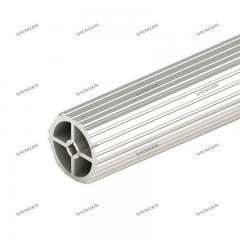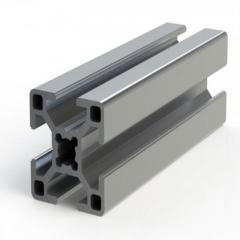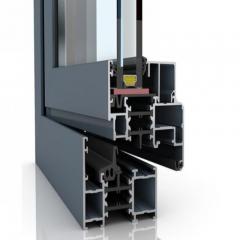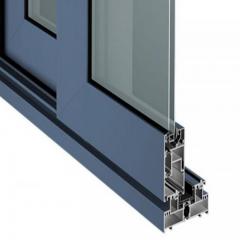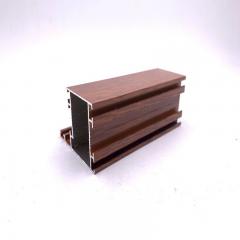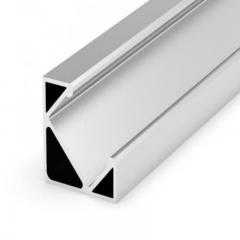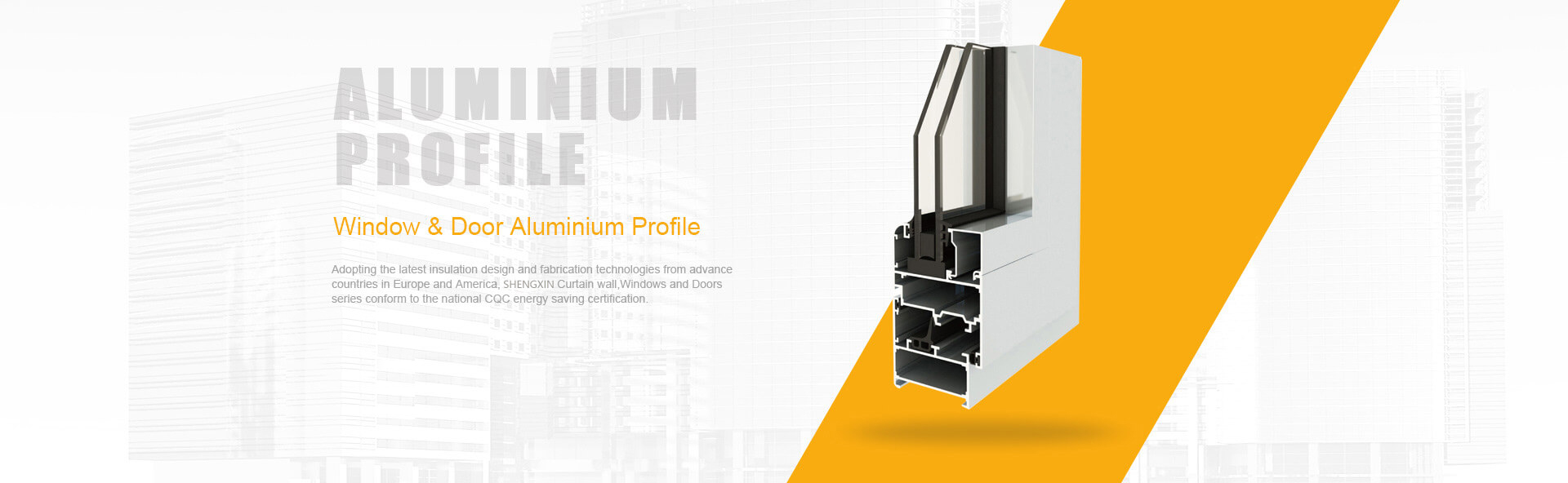
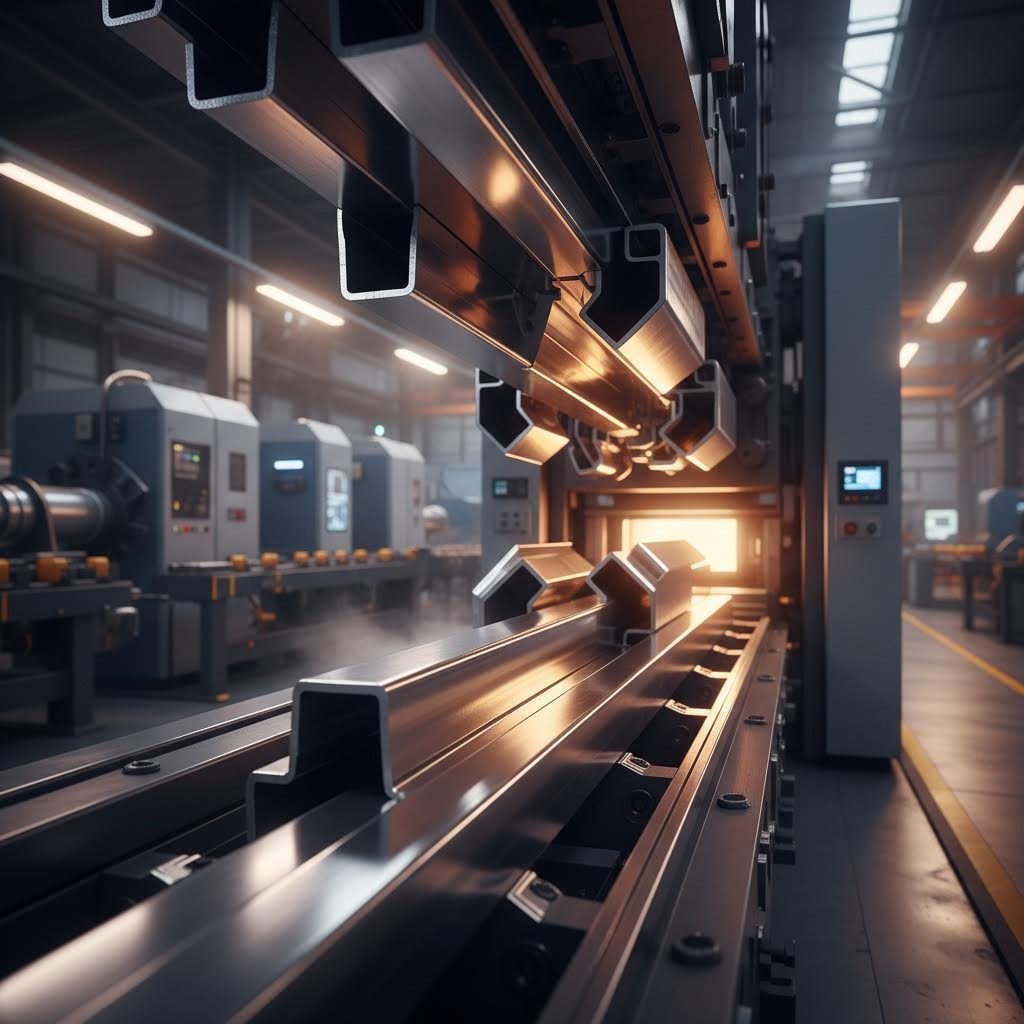
When you're searching for the perfect aluminum alloy for your next project, the options can feel overwhelming. With over 110 registered alloys in the 6xxx series alone, how do you know which one delivers the ideal balance of performance and manufacturability? For many engineers and procurement specialists, the answer is 6105 aluminum—a heat-treatable alloy that has quietly become a go-to choice for custom aluminum extrusions requiring both structural integrity and design flexibility.
So what exactly is 6105 aluminum? It's a wrought alloy belonging to the aluminum-magnesium-silicon family, commonly known as the 6000 series. This alloy is specifically designed for extrusion processes, meaning it's engineered to flow smoothly through dies to create complex cross-sectional shapes. The result? Custom extruded aluminum profiles that meet demanding specifications without sacrificing surface quality or mechanical performance.
Imagine needing the surface finish quality of 6063 but with significantly higher mechanical strength. That's precisely where 6105 shines. According to Alfiniti, this alloy offers "a blend of 6063 surface finish with higher mechanical strength for durable architectural profiles." This combination makes it exceptionally valuable for precision extrusion applications where appearance matters just as much as structural performance.
The primary alloying elements that give 6105 its distinctive properties include:
What truly sets 6105 apart from its 6xxx siblings is its reduced sensitivity to quenching—the rapid cooling process after extrusion. This characteristic means aluminum extrusion companies can produce high-performance aluminum extrusions for industrial applications with greater consistency and fewer defects.
Understanding where 6105 fits within the broader 6xxx family helps explain why engineers specifically seek it out. The 6xxx series is defined by its magnesium and silicon content, which makes these alloys heat-treatable. As the Aluminum Extruders Council explains, increasing magnesium and silicon levels generally boosts strength—but there's a trade-off. Higher-strength alloys often become more difficult to extrude, driving up costs and limiting design possibilities.
6105 aluminum occupies a sweet spot in this family tree. It extrudes more easily than stronger alloys like 6061, yet delivers mechanical properties that exceed the highly extrudable 6063. This balance is exactly why engineers working on ladders, handrail tubing, seamless structural tubing, and automotive connector stock frequently specify this alloy for their custom extrusion projects.
The alloy comes in two primary temper designations: T1 (naturally aged) and T5 (artificially aged). For applications requiring bendability, T1 is typically the preferred choice. Meanwhile, T5 temper delivers the mechanical properties needed for structural applications. Both tempers are compatible with various anodizing processes—clear, colored, and hardcoat—giving designers extensive finishing flexibility.
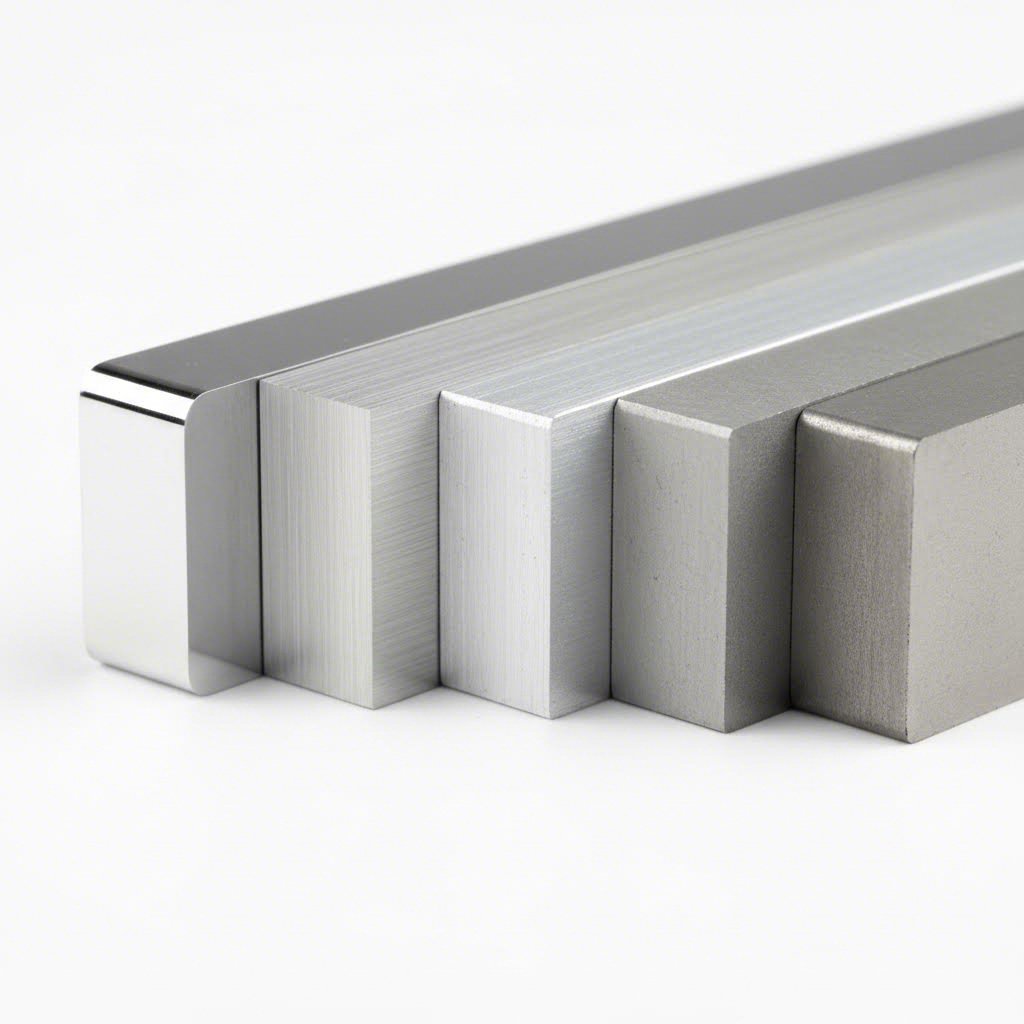
You've identified 6105 as a promising candidate for your custom extrusion project—but before finalizing your material selection, you need hard numbers. What tensile strength can you actually expect? How does the temper designation affect performance? These are the questions that separate preliminary interest from confident engineering decisions. Let's dive into the specifications that matter most.
When evaluating any extruded aluminum profile for structural aluminum extrusions, mechanical properties tell the real story. According to the Aluminum Association's mechanical property limits, 6105 aluminum delivers impressive performance across key metrics. Here's what you can expect from standard aluminum extrusions in this alloy:
Notice the significant difference between T1 and T5 tempers? The T5 designation delivers substantially higher strength values, while T1 offers nearly double the elongation—making it ideal when your aluminum profile extrusion requires post-extrusion bending or forming operations.
The alloy also features a density of 0.097 lb/in³, which is consistent across most 6xxx series alloys. This translates to excellent strength-to-weight performance that engineers value in transportation, architectural, and industrial applications. Additionally, the thermal expansion coefficient averages 13.0 × 10⁻⁶ inches per inch per °F (between 68°F and 212°F), an important consideration for applications experiencing temperature fluctuations.
Why do these numbers matter for your custom extrusion project? Consider this: a 6105-T5 extruded aluminum profile achieves the same minimum tensile and yield strength as 6061-T6—the workhorse alloy of the aluminum industry—while being significantly easier to extrude into complex shapes. This means you're not sacrificing structural performance when choosing 6105 for intricate cross-sections.
Understanding the difference between T1 and T5 tempers is essential for proper material specification:
| Property | 6105-T1 | 6105-T5 |
|---|---|---|
| Heat Treatment Process | Cooled from elevated temperature shaping and naturally aged at room temperature | Cooled from elevated temperature shaping and artificially aged |
| Ultimate Tensile Strength (min) | 25 ksi (172 MPa) | 38 ksi (262 MPa) |
| Yield Strength (min) | 15 ksi (103 MPa) | 35 ksi (241 MPa) |
| Elongation (min) | 16% | 8% |
| Wall Thickness Range | Up through 0.500 in | Up through 0.500 in |
| Best Application | Parts requiring bending or forming after extrusion | Structural applications requiring maximum strength |
| Aging Characteristics | Properties may increase with room temperature aging | Properties stabilized through controlled artificial aging |
In practical terms, what does this mean? If you're designing ladder rails or handrail tubing that require bending after extrusion, T1 is your go-to temper—its higher ductility accommodates forming operations without cracking. However, if maximum strength is the priority for load-bearing structural components, T5 delivers performance that rivals the most demanding 6xxx series specifications.
One important note: properties in T1 temper may increase more rapidly with room temperature aging compared to 6063 and 6061 alloys, due to the excess silicon content. This means parts should ideally be formed within 1-2 weeks of production if you're relying on T1's enhanced ductility.
With these mechanical specifications in hand, you're equipped to make data-driven material decisions. But how does 6105 stack up when placed side-by-side with other popular 6xxx alloys? The comparison reveals exactly why this alloy occupies such a valuable position in the aluminum extrusion landscape.
Choosing the right aluminum alloy for your custom extrusions often comes down to trade-offs. Do you prioritize strength over extrudability? Surface finish over weldability? The good news is that 6105 aluminum was specifically developed to minimize these compromises. According to the ASM Handbook, alloys 6005 and 6105 were created in the 1960s to serve as alternatives to 6061 in many applications—offering comparable strength with significantly better extrusion characteristics.
But how does 6105 actually perform when placed alongside its closest competitors? Let's break down the comparison with real data so you can make a confident material selection for your next profile aluminum extrusion project.
| Property | 6105 | 6061 | 6063 | 6005 |
|---|---|---|---|---|
| Tensile Strength (T5/T6) | 190–280 MPa | 130–410 MPa | 145–240 MPa | 190–270 MPa |
| Yield Strength (T5/T6) | 120–270 MPa | 76–370 MPa | 90–215 MPa | 130–245 MPa |
| Extrudability | Excellent | Moderate | Excellent | Excellent |
| Surface Finish Quality | Excellent | Good | Excellent | Very Good |
| Weldability | Good | Good | Excellent | Good |
| Quench Sensitivity | Low | High | Low | Low |
| Corrosion Resistance | Good | Good | Excellent | Good |
| Typical Applications | Ladders, scaffolding, automotive, structural tubing | Aircraft, marine, structural frames | Architectural, window frames, trim | Ladders, railings, truck trailers |
Here's where things get interesting. If you've worked with 6061 aluminum, you know it's the industry workhorse—strong, versatile, and widely available. So why would you choose 6105 instead?
The answer lies in how these alloys behave during the extrusion process. According to Sapa's technical documentation, 6105 contains higher amounts of silicon than 6061, which makes it easier to extrude and less quench sensitive. What does "less quench sensitive" mean in practical terms? It means 6105 can achieve its target mechanical properties without requiring the aggressive cooling rates that 6061 demands. This translates to:
Looking at the comparative data from MakeItFrom.com, 6105 actually demonstrates superior fatigue strength (95–130 MPa versus 58–110 MPa for 6061) and better thermal conductivity (180–190 W/m-K versus 170 W/m-K). These advantages make custom extruded aluminum profiles in 6105 particularly attractive for applications involving cyclic loading or thermal management.
When does 6061 still win? If you need the absolute highest strength levels achievable in the 6xxx series, 6061-T6 can reach tensile strengths up to 410 MPa—higher than 6105's maximum of 280 MPa. For aerospace or heavy structural applications where every MPa counts, 6061 remains the better choice despite its processing challenges.
Now consider the other end of the spectrum. 6063 is often called the "architectural alloy" because of its exceptional surface finish and anodizing response. It's the default choice for window frames, door systems, and decorative trim. So when should you upgrade to 6105 for your custom extrusion aluminum project?
The decision typically comes down to strength requirements. While 6063 extrudes beautifully and produces mirror-like finishes after anodizing, its mechanical properties are noticeably lower than 6105. If your application is purely aesthetic—think decorative moldings or non-structural trim—6063 makes perfect sense. But the moment your bespoke aluminium extrusion needs to carry loads or resist impact forces, 6105 becomes the smarter choice.
Consider these scenarios where 6105 is preferred over 6063:
The best part? You don't sacrifice much in terms of surface quality. 6105 still delivers excellent anodizing response and surface finish—not quite as pristine as 6063, but certainly acceptable for visible applications. This means you can create profile aluminum extrusion designs that are both structurally capable and aesthetically pleasing.
Ultimately, 6105 bridges the gap between these two popular alloys. It provides the extrudability and surface finish approaching 6063, combined with mechanical properties that rival 6061. For engineers designing custom extrusions that must balance multiple performance requirements, this middle-ground positioning makes 6105 an increasingly popular specification—and understanding the manufacturing process reveals even more reasons why this alloy delivers consistent results.
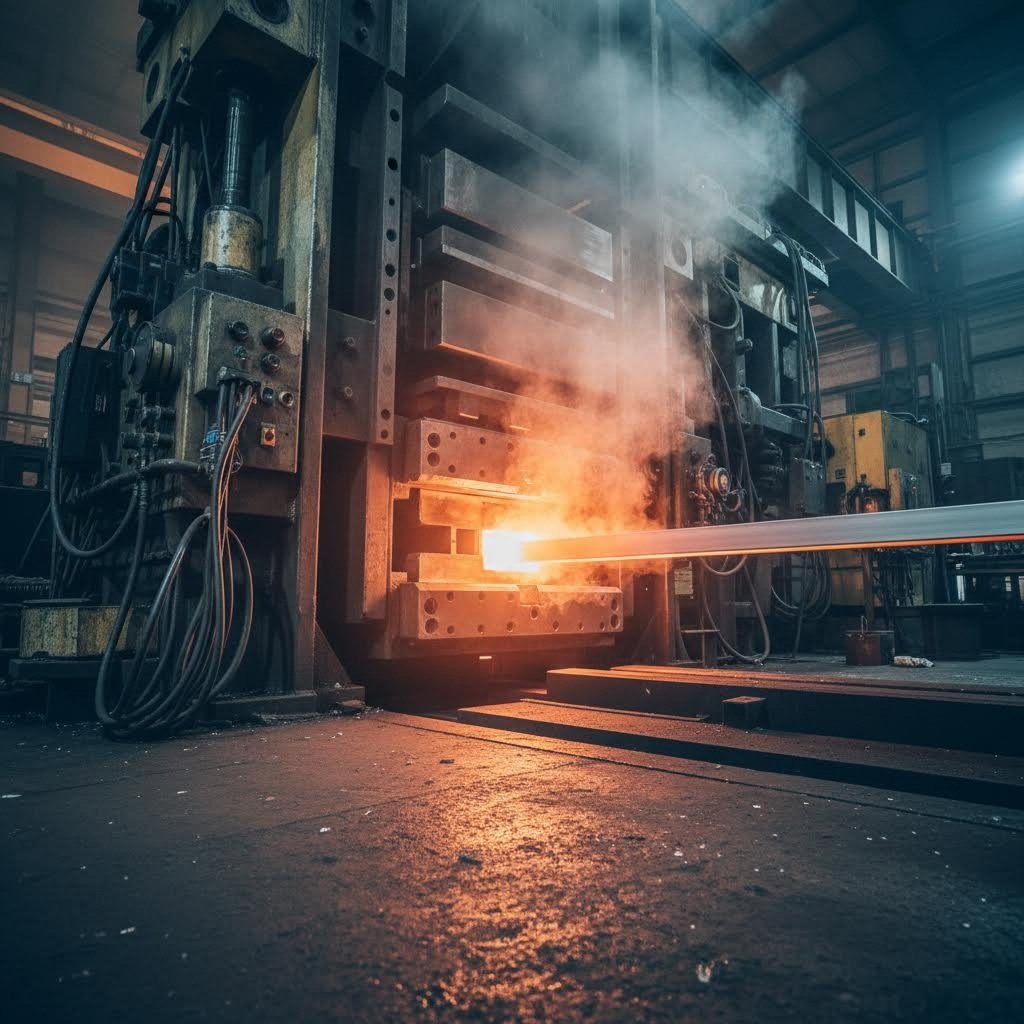
Understanding alloy properties is one thing—but how does 6105 aluminum actually transform from a solid billet into a precision-engineered custom profile? The manufacturing process involves carefully orchestrated steps where temperature, pressure, and timing must work together seamlessly. What makes 6105 particularly attractive for aluminum extrusion manufacturing is how forgiving it is throughout this process compared to harder-to-extrude alloys like 6061.
Let's walk through the complete production sequence that turns raw material into finished custom aluminum extrusion profiles.
The extrusion die is where your custom profile extrusions take shape—literally. Die design for 6105 aluminum benefits from the alloy's excellent flow characteristics, but several factors still require careful attention.
For solid profiles, flat-face dies (90° semi-cone angle) are the industry standard. The bearing land—the portion of the die that contacts the aluminum as it flows through—must be carefully calibrated. Sections of the profile farther from the die center or with thinner walls require shorter bearing lengths to equalize metal flow rates across the entire cross-section.
Hollow profiles present greater complexity. These require porthole dies where the metal stream divides around a mandrel, then welds back together inside the die. According to ASM technical literature, the extrusion ratio (container cross-section divided by extrudate cross-section) needs to be 14:1 or greater to ensure sound weld integrity in hollow sections. 6105's composition supports excellent weld seam strength under these conditions.
Here's where 6105 truly shines in custom profile extrusions. Temperature management during extrusion is a delicate balance—too cold and the extrusion pressure skyrockets; too hot and surface tearing occurs.
The ASM Handbook notes that friction between the billet and container wall generates significant heat during direct extrusion. This means the back of the billet can be considerably hotter than the front by the end of the stroke. To counteract this, experienced extruders often use tapered billet heating—starting the front of the billet at optimal deformation temperature while the back is slightly cooler, allowing friction heating to equalize temperatures throughout the process.
Why does 6105 tolerate faster extrusion speeds than 6061? Two reasons:
This combination means 6105 can often be extruded at speeds 50% faster than 6061 while maintaining superior surface finish quality—a significant advantage for production economics.
Press capacity matters for profile complexity. Smaller presses excel at thin-walled architectural shapes, while higher-tonnage equipment handles the heavy structural sections used in transportation and industrial applications. Multi-hole dies—where several identical profiles are extruded simultaneously—can dramatically improve productivity when the press has sufficient capacity.
With the extrusion process complete, the real question becomes: how well does 6105 respond to the secondary operations that transform raw profiles into finished components? The answer reveals yet another advantage of this versatile alloy.
So you've received your custom 6105 aluminum extrusions from the press—now what? For most applications, the extruded profile is just the starting point. Drilling mounting holes, cutting to precise lengths, welding assemblies together, or bending sections to follow curved installations are all common downstream operations. The good news? 6105 aluminum responds exceptionally well to these fabrication processes, making it a preferred choice among custom aluminum extruders seeking predictable, high-quality results.
Understanding how this alloy behaves during machining, welding, and exposure to corrosive environments helps you plan your manufacturing workflow—and avoid costly surprises during production.
When it comes to CNC machining operations, 6105 aluminum falls into the "good machinability" category typical of 6xxx series alloys. According to machining experts at Jiga, aluminum's combination of light weight, corrosion resistance, and favorable strength-to-weight ratio makes it indispensable across industries—and 6105 is no exception.
What does this mean in practical terms? Your machined aluminum extrusion parts will experience:
For best results when machining 6105 profiles, consider these parameter guidelines:
Bending operations deserve special attention. If your design requires post-extrusion forming—think curved handrails or L shaped aluminum extrusion configurations bent to match architectural contours—specify T1 temper rather than T5. The T1 condition offers 16% minimum elongation compared to T5's 8%, providing the ductility needed to form tight radii without cracking. Just remember that T1 properties can change with room temperature aging, so schedule bending operations within 1-2 weeks of extrusion for optimal results.
Welding 6105 aluminum follows standard practices for 6xxx series alloys. The recommended filler alloys include 4043 (for general-purpose applications with good fluidity) and 5356 (when higher strength or better color match after anodizing is required). Keep in mind that welding creates a heat-affected zone where mechanical properties are reduced—the solution-strengthened matrix loses its temper in the weld area. For structural applications, factor this localized strength reduction into your design calculations.
One of aluminum's inherent advantages is its natural corrosion resistance, and 6105 is no exception. When exposed to air, the alloy immediately forms a thin but tenacious aluminum oxide layer that protects the underlying metal from further degradation. According to AZoM's technical data, 6105 aluminum offers "good corrosion resistance"—making it suitable for outdoor, industrial, and moderately aggressive environments.
How does 6105 perform in specific conditions?
For extruded structural aluminum components destined for harsh environments, surface treatments significantly enhance corrosion protection. Anodizing thickens the natural oxide layer from a few nanometers to 5-25 microns (or more for hardcoat applications), while powder coating creates an impermeable barrier between the aluminum and corrosive agents. These finishing options—covered in detail in the next section—transform 6105's inherent corrosion resistance into long-term durability for even demanding applications.
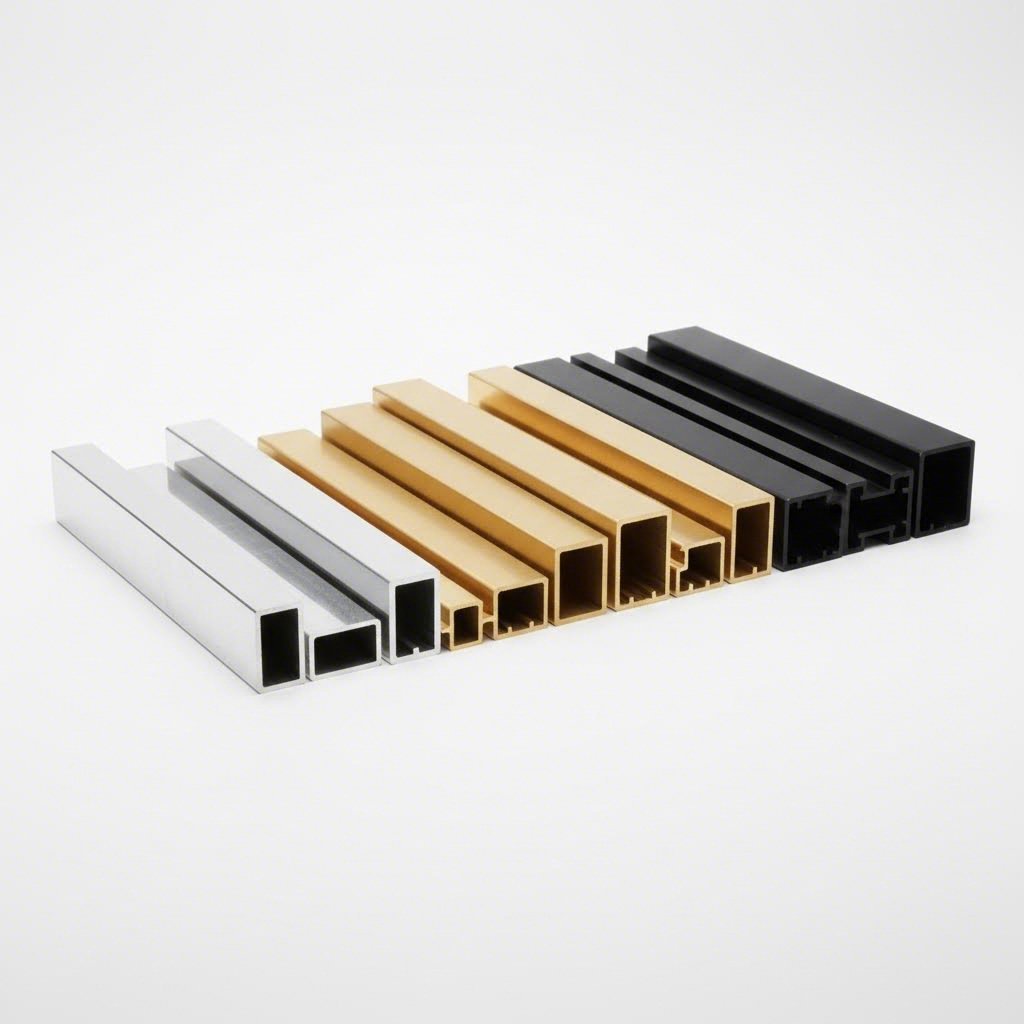
Your custom extruded profiles have been machined, welded, or bent to specification—but the job isn't finished until you've addressed surface treatment. The right finish transforms raw aluminum into a product that meets both performance and aesthetic requirements. What makes 6105 particularly interesting from a finishing perspective? Its magnesium-silicon composition places it squarely in the 6xxx series sweet spot for surface treatments, delivering predictable results across anodizing, powder coating, and advanced finishing technologies.
Let's explore how each finishing option interacts with 6105's specific alloy characteristics—and which choice makes sense for your application.
Anodizing creates an integral oxide layer by using the aluminum itself as an anode in an electrolytic bath. For 6105 aluminum, this process produces excellent results thanks to the alloy's balanced composition. According to the Mid-States Aluminum anodizing reference guide, 6xxx series alloys containing magnesium and silicon produce "clear, good protection" coatings—making them well-suited for both decorative and protective applications.
What specific anodizing characteristics can you expect from 6105? The reference data reveals that 6105 achieves a maximum hard coat (Type III) thickness of 0.0035 inches with gray/green color overtones. This positions it between 6061 (0.003" max, dark gray) and 6063 (0.004" max, green)—giving you flexibility for various architectural aluminum extrusions and industrial components.
Here are the primary anodizing options available for custom aluminium extrusion projects:
One important consideration: anodizing quality depends on proper sealing after the coloring step. Industry standards specify maximum weight loss of 40 mg/dm² during seal quality testing to ensure the porous oxide layer is properly closed. Well-sealed Type II coatings on 6xxx alloys can achieve 3000+ hours of salt spray resistance—excellent protection for outdoor applications.
When color flexibility and thick protective barriers matter more than the metallic look of anodizing, powder coating becomes the go-to finish for custom extruded profiles. The electrostatically applied powder melts and cures into a durable polymer film that completely encapsulates the aluminum surface.
How does 6105's composition affect powder coating results? The alloy's magnesium-silicon content creates an excellent substrate for adhesion—provided proper pretreatment is performed. Surface preparation typically involves:
Powder coating offers virtually unlimited color options—far exceeding anodizing's palette—plus the ability to achieve textured, metallic, and specialty finishes. Film thicknesses typically range from 60 to 120 microns, providing substantial barrier protection against corrosion and mechanical damage.
For the most demanding architectural and industrial applications, polyvinylidene fluoride (PVDF) coatings represent the premium finishing tier. According to industry technical resources, PVDF coatings form a molecularly bonded fluoropolymer film that resists weathering, fading, and corrosive degradation far beyond conventional paints.
Why specify PVDF for your 6105 profiles? The fluoropolymer matrix inhibits photochemical breakdown from UV radiation, resulting in minimal color fading or chalking over extended exposure periods—often 25+ years in exterior applications. PVDF systems are available in multiple configurations:
| System Type | Composition | Typical Application |
|---|---|---|
| 2-Coat | Primer + PVDF Topcoat | Basic industrial and architectural use |
| 3-Coat | Primer + Color Coat + Clear Coat | Standard for curtain walls and façades |
| 4-Coat | Primer + Metallic Base + Color + Clear | Metallic or high-gloss premium applications |
Dry film thickness for PVDF typically ranges from 25-35 microns for architectural applications. The coating meets rigorous specifications like AAMA 2605 (North America) and Qualicoat Class 3 (international), ensuring verified long-term performance.
Micro-arc oxidation (MAO) represents another advanced option, particularly for industrial applications requiring extreme hardness and wear resistance. As noted in post-treatment technical literature, this process uses high-voltage alternating current to create ceramic films directly on the aluminum surface through plasma discharge. The resulting coating transforms aluminum oxide into harder α-Al₂O₃ and γ-Al₂O₃ phases, delivering superior wear resistance, corrosion protection, and thermal shock resistance compared to conventional anodizing.
How do you choose between these options? Consider the balance between cost, appearance, and performance demands:
With surface treatment options clearly defined, the natural question becomes: where does 6105 aluminum actually excel in real-world applications? The answer spans industries from transportation to construction—each leveraging the unique combination of properties this alloy delivers.
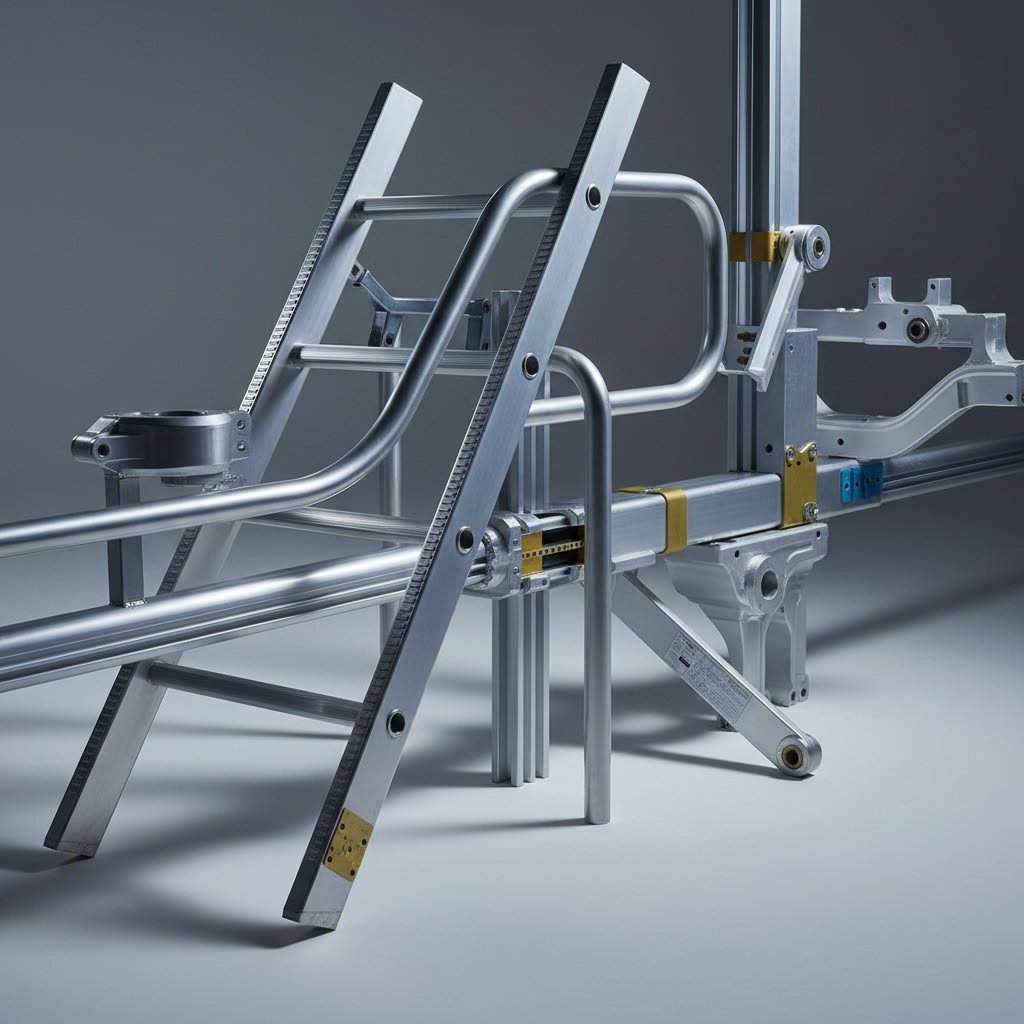
You've seen the specifications, compared the alloys, and understand the manufacturing process—but where does 6105 aluminum actually prove its worth in the real world? The answer spans multiple industries, each leveraging the alloy's unique combination of strength, extrudability, and corrosion resistance to solve specific engineering challenges.
What makes 6105 particularly valuable across these sectors? According to Tri-State Aluminum's alloy specifications, 6105 is "typically used where finishing and strength may be required"—a description that perfectly captures its dual-purpose nature. Let's explore the specific applications where aluminum extrusion custom solutions in 6105 deliver superior performance.
Imagine designing components for a truck trailer where every pound of weight directly impacts fuel efficiency and payload capacity. This is exactly where 6105's strength-to-weight ratio becomes a competitive advantage. Hydro Extrusion identifies automobile connector stock as a primary application for 6105—and for good reason.
The transportation sector relies on 6105 extrusions for:
Why does 6105 outperform alternatives in these applications? The answer lies in its medium strength combined with excellent extrudability. When manufactured in T5 temper, 6105 delivers yield and tensile strength comparable to 6061-T6—but with the ability to form more complex cross-sections. This means engineers can consolidate multiple parts into single extruded structural aluminum profiles, reducing assembly time and improving overall structural efficiency.
Walk through any construction site and you'll encounter 6105 aluminum—often without realizing it. The alloy's combination of structural capability and surface finish quality makes it ideal for industrial aluminum profiles that must perform double duty as both load-bearing members and visible architectural elements.
Key building and construction applications include:
According to industry application data, 6005/6105 alloys serve building and construction, consumer durables, fixtures and framing, marine applications, display structures, signage, and ladder platforms. This versatility stems from the alloy's medium strength profile—strong enough for structural demands, yet workable enough to create the complex geometries modern architecture requires.
Here's practical guidance for determining whether 6105 is right for your specific project needs:
| Application Category | Typical Profile Complexity | Key 6105 Advantage |
|---|---|---|
| Ladder structures | Medium (hollow sections, integrated features) | High yield strength in T5 temper meets safety load requirements |
| Seamless structural tubing | Low to medium (round/square hollow profiles) | Good corrosion resistance without additional coatings |
| Automotive connectors | High (precision tolerances, thin walls) | Excellent extrudability enables intricate cross-sections |
| Handrail systems | Medium (decorative profiles with structural cores) | Surface finish quality supports visible applications |
| Scaffolding components | Medium (interlocking features, hollow sections) | Strength-to-weight ratio reduces transportation costs |
When should you choose 6105 over alternatives? Consider it the ideal candidate when your aluminum extrusion custom project requires moderate-to-high strength, complex profile geometries, and acceptable surface finish—all without the processing challenges of 6061 or the strength limitations of 6063. For applications where impact resistance is critical or maximum possible strength is required, alternatives may be more appropriate.
With application requirements clearly defined, the next consideration becomes practical: how do you actually order these custom profiles, and what factors influence cost and lead time?
You've determined that 6105 aluminum is the right alloy for your project, selected the appropriate temper, and designed your custom profile. Now comes the practical question every procurement specialist faces: what will this actually cost, and how long will it take to receive production quantities? Unlike purchasing standard aluminum extrusions from stock, custom aluminum extrusion profiles involve upfront tooling investments and production economics that vary significantly based on order parameters.
Understanding these cost drivers helps you budget accurately, negotiate effectively with aluminum extrusion suppliers, and make informed decisions about order quantities and timing.
Every custom aluminum extrusion project begins with a die—the precision-machined steel tool that shapes your profile. Unlike injection molds or casting dies, extrusion tooling represents a relatively modest upfront investment. According to Gabrian International's cost analysis, tooling costs for typical architectural and industrial extrusion dies range from $400 to $1,000, while dies for larger profiles produced on 2,000-4,000 ton presses can reach $2,000.
What factors influence die cost for your custom aluminum profiles?
Here's good news for ongoing production: many custom aluminum extrusions suppliers offer die cost amortization programs. As Gabrian notes, manufacturers often refund tooling costs if a stipulated quantity is purchased within two years. Additionally, most suppliers don't charge for replacement dies after the original tool reaches the end of its useful life—provided orders continue. This approach significantly reduces the long-term cost burden for sustained production programs.
Typical die turnaround time runs 3-4 weeks from design approval, with production following within approximately one week of sample approval. Industry sources confirm this 2-4 week average for die creation, though complex geometries or unusual profile sizes may extend this timeline.
Beyond the initial die investment, several variables influence what you'll pay per pound or per piece for your 6105 extrusions. Understanding these factors helps you optimize your procurement strategy with custom aluminum extrusions suppliers.
Raw material costs represent the largest variable in the pricing equation. According to industry cost analysis, aluminum prices have fluctuated dramatically—anywhere from $1,500 to $3,500 per metric ton in recent years. Political events, environmental regulations affecting major producers like China, and global demand patterns all influence base metal pricing. For projects with ongoing production needs, some extruders offer metal purchase programs that lock in rates over time, providing cost predictability.
Profile characteristics directly impact manufacturing costs:
Secondary operations add significant cost layers. Fabrication pricing data indicates that anodizing and powder coating typically run $1,200 to $1,400 per metric ton, while alodine finishing costs approximately $800 per metric ton. Simple drilling operations add $200-$300 per metric ton, with more complex machining operations incurring additional tooling and setup costs.
Perhaps the most significant cost lever you control is order quantity. The fixed costs of die development, press setup, and quality verification spread across larger production runs, dramatically reducing per-piece costs at volume.
| Order Volume Category | Relative Per-Piece Cost Impact | Key Considerations |
|---|---|---|
| Prototype / Sample (50-200 lbs) | Highest cost per piece | Die costs not amortized; setup time represents large percentage of total cost; ideal for design validation only |
| Small Production (200-1,000 lbs) | High cost per piece | MOQ thresholds may apply; overhead costs still significant relative to material costs |
| Medium Production (1,000-5,000 lbs) | Moderate cost per piece | Economics improve substantially; die amortization programs may apply |
| High Volume (5,000+ lbs) | Lowest cost per piece | Optimal production economics; multi-cavity dies become viable; potential for metal purchase programs |
Why do minimum order quantities exist? According to industry experts, MOQs reflect legitimate technical and economic realities: die preparation overhead, the relationship between profile size and required press capacity, quality verification requirements for new dies, and the reality that achieving specification often requires 2-3 trial runs with die adjustments. These aren't arbitrary barriers—they reflect the actual costs of producing quality custom extrusions.
Realistic timeline expectations help you plan project schedules and avoid costly delays. The complete cycle from initial design to finished parts typically involves three distinct phases:
International shipping adds another variable. Recent logistics data shows 40-foot container costs from Asia to North America ranging from $8,000 to $20,000—a wide range reflecting ongoing supply chain volatility. Despite these costs, many buyers find the combination of shorter Asian lead times and lower production costs still delivers value compared to domestic alternatives.
With cost and timing factors clearly understood, the final consideration is perhaps the most important: how do you select the right manufacturing partner to bring your custom 6105 extrusion project to life?
You've defined your project specifications, selected 6105 as your alloy, and understand the cost factors involved—but none of that matters if you choose the wrong manufacturing partner. The difference between a successful custom aluminium extrusions project and a frustrating experience often comes down to supplier capabilities and communication. Whether you're sourcing from aluminum extrusion california facilities or exploring global options for custom aluminum extrusion suppliers, the evaluation criteria remain remarkably consistent.
So what separates a reliable, long-term partner from a risky vendor? According to industry procurement experts, "Choosing the right supplier for your business is crucial; it will affect your product design, manufacturing process, product quality, and cost." Let's break down exactly what to look for when vetting potential partners for your aluminum extrusion profiles products.
Before diving into certifications and pricing, you need to verify that a supplier can actually produce what you need. Sounds obvious, right? Yet many procurement challenges stem from selecting manufacturers whose equipment doesn't match project requirements.
Here are the critical capability factors to evaluate:
Why does press tonnage variety matter so much for custom extrusion technologies? Different profile sizes and complexities demand different press capacities. A facility limited to smaller presses (under 2000T) may struggle with large hollow sections or thick-walled structural profiles. Conversely, running small profiles on oversized presses is inefficient and may result in higher pricing. The ideal partner operates a range of equipment that matches your current—and anticipated future—requirements.
As an example of comprehensive capability, consider what distinguishes leading manufacturers in this space. Shengxin Aluminium operates 35 extrusion presses ranging from 600T to 5500T, backed by over 30 years of industry experience. Their integrated surface treatment capabilities—including anodizing in custom colors, powder coating, PVDF, and micro-arc oxidation—illustrate the kind of end-to-end support that eliminates coordination headaches and reduces overall project risk.
Certifications aren't just paperwork—they represent verified systems for consistent quality. But with so many acronyms floating around, which certifications actually matter for your aluminum extrusion profiles products?
According to quality assurance experts, "Key certifications like ISO 9001 for quality management systems, along with specific material test certificates and optional third-party inspections (SGS, BV, TUV), are crucial. They ensure consistent product quality and process reliability in aluminum manufacturing."
Here's what to prioritize when evaluating certifications:
ISO 9001 certification represents a commitment to consistent quality—not just at final inspection, but throughout the entire production process from raw materials to delivery.
Beyond certifications, evaluate the supplier's quality control practices directly. Do they perform dimensional checks throughout production, or only at final inspection? What equipment do they use for verification—CMM machines, optical comparators, standard gauges? How do they handle non-conforming material? These operational details often reveal more about actual quality culture than certificates alone.
The best custom aluminum extrusion suppliers function as extensions of your engineering team, not just order-takers. According to B2B extrusion guides, early collaboration between engineers and manufacturers helps optimize designs for performance and manufacturability—often identifying cost savings or performance improvements before tooling begins.
What does comprehensive support look like in practice?
Whether you're sourcing from domestic facilities—including aluminum extrusion california operations—or exploring international partners for cost optimization, these evaluation criteria apply universally. The goal is finding a manufacturer whose capabilities, quality systems, and communication style align with your project requirements and organizational values.
Just as important as knowing what to seek is recognizing warning signs during the evaluation process. Industry procurement guidance identifies several red flags that may indicate future problems:
The right partner transforms custom 6105 aluminum extrusions from a procurement challenge into a competitive advantage. They bring technical expertise that improves your designs, quality systems that ensure consistency, and communication practices that keep projects on track. Take the time to evaluate thoroughly—the investment in due diligence pays dividends throughout your production program.
6105 aluminum offers comparable strength to 6061-T6 in T5 temper (both achieving minimum 38 ksi tensile strength) but with significantly better extrudability. The key difference is quench sensitivity—6105 contains higher silicon content, allowing it to achieve target properties with gentler cooling methods. This translates to more complex profile geometries, superior surface finish, and faster extrusion speeds. However, 6061-T6 can reach higher maximum tensile strengths (up to 410 MPa) for demanding aerospace applications.
Both tempers achieve similar minimum mechanical properties—6105-T5 and 6061-T6 share minimum tensile strength of 38 ksi and yield strength of 35 ksi. The T5 designation means 6105 is artificially aged after cooling from extrusion, while T6 indicates solution heat treatment by artificial aging. 6105-T5 offers better fatigue strength (95-130 MPa vs 58-110 MPa), superior thermal conductivity, and excellent surface finish quality, making it ideal for structural profiles requiring both performance and aesthetics.
6105 aluminum extrusions excel in applications requiring both structural strength and quality surface finish. Primary uses include ladder rails and rungs, scaffolding systems, handrail tubing, truck trailer components, automotive connector stock, and architectural framing. The alloy is particularly valuable for safety-critical components where its high yield strength (35 ksi minimum in T5) meets load requirements while its excellent extrudability enables complex cross-sectional designs.
Custom extrusion costs involve several components: die tooling ($400-$2,000 depending on complexity and press size), raw aluminum (fluctuating with market prices), and per-piece production costs that decrease significantly with volume. Secondary operations add approximately $1,200-$1,400 per metric ton for anodizing or powder coating. Many suppliers offer die cost amortization programs, refunding tooling costs when specified quantities are purchased within two years. Lead times typically run 3-4 weeks for tooling plus 1-2 weeks for production.
Evaluate suppliers based on press capacity range (ideally 600T to 5500T+ for flexibility), in-house CNC machining and surface treatment capabilities, ISO 9001:2015 certification, and technical support responsiveness. Look for end-to-end services from die development through mass production. Manufacturers like Shengxin Aluminium, with 35 extrusion presses and 30+ years experience, exemplify comprehensive capability—offering integrated anodizing, powder coating, PVDF, and micro-arc oxidation under one roof to streamline your supply chain.



 dịch vụ trực tuyến
 0086 136 3563 2360
 sales@sxalu.com
 +86 136 3563 2360
 Việt
Việt English
 français
 Deutsch
 русский
 español
 português
 العربية
 ไทย
ไทย Українська