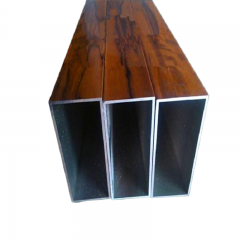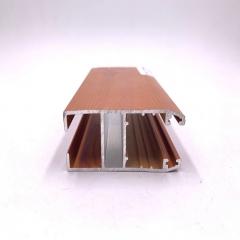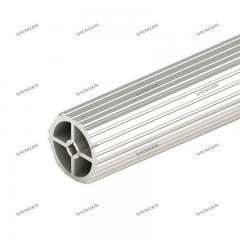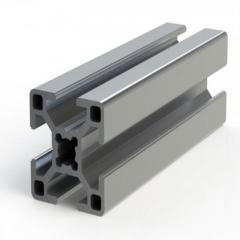
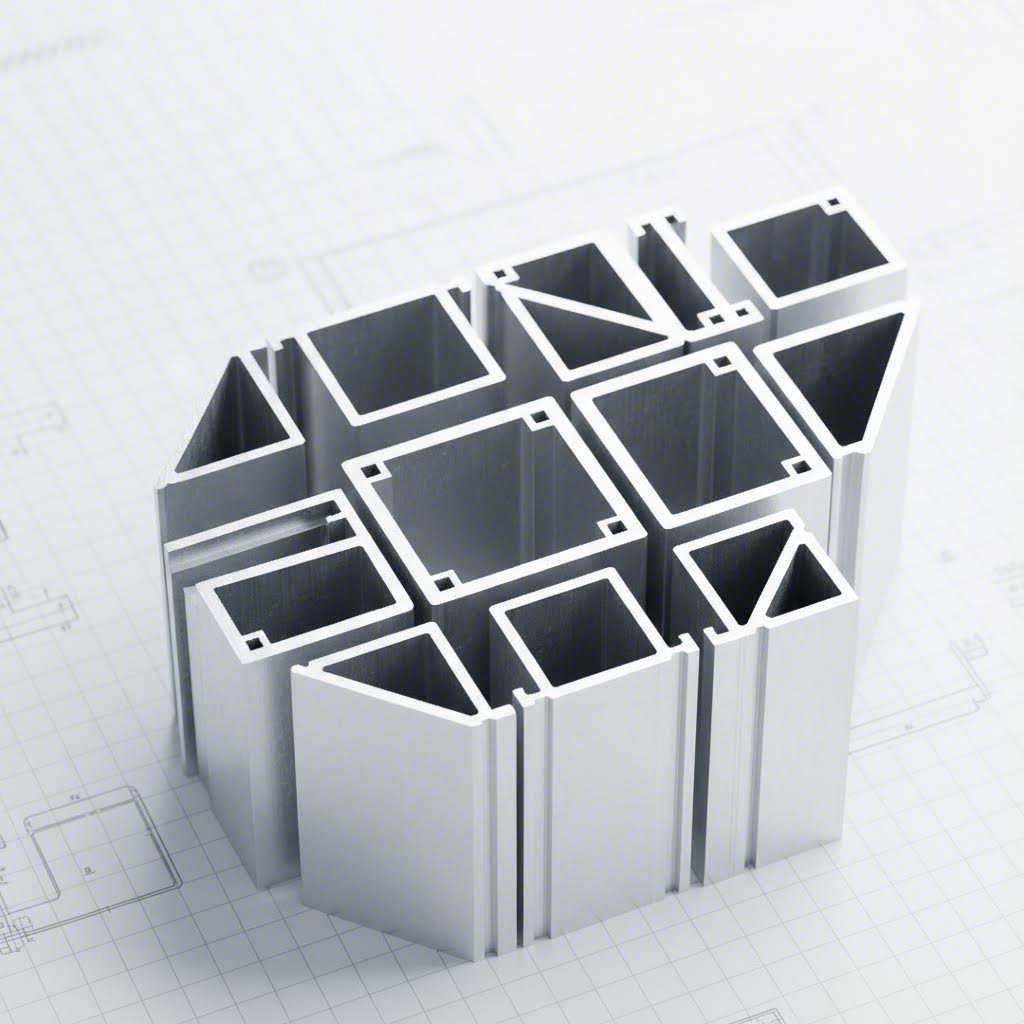
When you're designing a machine frame, specifying structural components, or selecting materials for a critical load-bearing application, one question rises above all others: how strong is aluminum extrusion, really? It's not a simple question, and the answer matters more than you might expect.
Choosing the wrong material can lead to structural failures, costly redesigns, or overbuilt systems that waste resources. Yet finding reliable, consolidated strength data for aluminum extrusions often feels like searching for a needle in a haystack. Marketing claims abound, but engineers need numbers they can trust.
Imagine you're designing an industrial workstation frame. You need it strong enough to support heavy equipment, yet light enough for workers to reposition. Or perhaps you're engineering an architectural facade that must withstand wind loads for decades. In both cases, understanding how strong aluminum really is becomes the foundation of your entire design process.
Material selection isn't just about picking something "strong enough." It involves balancing multiple factors:
When you understand the precise strength characteristics of aluminum structural framing, you gain the confidence to optimize designs rather than simply over-engineering them.
Aluminum extrusions have earned their place in applications ranging from aerospace components to 8020 aluminum material systems used in countless industrial settings. According to the Aluminum Extruders Council, engineers prefer aluminum extrusion for its exceptional strength-to-weight ratio, a characteristic that makes it a game-changer across transportation, defense, and manufacturing sectors.
But here's what most manufacturer content won't tell you: the strength of an aluminum extrusion isn't a single number. It depends on alloy composition, temper designation, profile geometry, and real-world operating conditions. An aluminum framing material system rated for one application may perform entirely differently in another context.
This resource is designed specifically for engineers, fabricators, and designers who need more than marketing claims. In the sections ahead, you'll find consolidated technical specifications, comparative data across common alloys, and practical guidance on how profile geometry affects load capacity. Whether you're evaluating aluminum extrusion with iron-based alternatives or optimizing a custom profile design, the data-backed information here will support confident engineering decisions.
Now that you understand why strength matters, let's get into the numbers. When engineers evaluate aluminum extrusions, they rely on three primary strength metrics: tensile strength, yield strength, and shear strength. Each tells you something different about how the material will perform under load—and confusing them can lead to serious design errors.
Tensile strength measures how much pulling force an aluminum extrusion can withstand before it fractures. Think of it as the material's ultimate breaking point when stretched. This property becomes critical when designing components subjected to tension—cables, tie rods, or structural members carrying suspended loads.
The ultimate tensile strength of aluminum varies significantly depending on alloy and temper. For example, the tensile strength of 6061 T6 aluminum reaches approximately 45,000 PSI (310 MPa), making it one of the stronger options for structural applications. In contrast, 6063-T5 aluminum offers around 26,100 PSI (180 MPa)—still useful, but clearly suited for different loading scenarios.
Here's something many engineers overlook: tensile strength represents the absolute maximum load before failure. Designing to this limit provides zero safety margin. That's why understanding yield strength matters just as much.
What's the difference between yield strength and ultimate tensile strength? It comes down to permanent deformation.
Yield strength marks the stress level where aluminum transitions from elastic behavior (it springs back) to plastic deformation (it stays bent). Once you exceed yield strength, your extrusion won't return to its original shape—even if it doesn't break. For most engineering applications, the yield strength of aluminum 6061 serves as the practical design limit, not ultimate strength.
Consider this scenario: you're designing a machine frame that must maintain precise alignment. If the frame yields under load—even slightly—your equipment tolerances are compromised. The ultimate tensile strength of aluminum 6061 might be 45,000 PSI, but the yield strength of approximately 40,000 PSI (276 MPa) is your real constraint.
The gap between yield and ultimate strength also reveals something about material behavior. Aluminum alloys with larger gaps offer more warning before failure—the component deforms visibly before breaking. This ductility provides a margin of safety that brittle materials simply can't offer.
Shear strength often gets overlooked, yet it's absolutely critical for connection design. This metric describes resistance to forces acting parallel to a surface—like the stress on bolts holding two extrusions together, or rivets securing a bracket.
The shear strength of aluminum 6061 typically ranges around 30,000 PSI (207 MPa) for the T6 temper. For 6063-T6, expect roughly 21,800 PSI (150 MPa). These values directly influence how you design joints, fastener patterns, and mechanical connections throughout your assembly.
When designing bolted connections, remember that shear strength determines how much load each fastener can carry. Underestimate this, and your carefully engineered extrusion becomes only as strong as its weakest connection.
Rather than hunting through scattered specification sheets, use this consolidated reference table for the alloys most commonly used in aluminum extrusion applications:
| Alloy | Temper | Yield Strength (PSI) | Ultimate Tensile Strength (PSI) | Shear Strength (PSI) |
|---|---|---|---|---|
| 6061 | T6 | 40,000 | 45,000 | 30,000 |
| 6063 | T5 | 20,300 | 26,100 | 17,400 |
| 6063 | T6 | 30,500 | 34,800 | 21,800 |
Notice the significant jump in 6061 T6 tensile strength compared to 6063 variants. This al 6061 tensile strength advantage makes it the go-to choice for structural applications requiring maximum load capacity. Meanwhile, 6063 alloys excel in architectural applications where extrudability and surface finish take priority over raw strength.
Here's where many engineers get tripped up: stiffness and strength are not the same thing. Confusing them leads to designs that either deflect excessively or use more material than necessary.
Strength tells you how much load a component can bear before it yields or breaks. Stiffness—quantified by the modulus of elasticity (Young's Modulus)—tells you how much it will deflect under that load. A component can be incredibly strong yet still deflect too much for your application.
For aluminum alloys, the modulus of elasticity remains remarkably consistent at approximately 10,000 ksi (68.9 GPa), regardless of alloy or temper. According to engineering reference data, this value stays essentially unchanged whether you're using 6061-T6 or 6063-T5. The T6 heat treatment dramatically increases yield strength but does virtually nothing to change stiffness.
Why does this matter for your designs? Consider a long spanning beam:
When deflection control is critical, geometry becomes your primary tool. Increasing the moment of inertia through profile design—deeper sections, strategic wall placement—reduces deflection far more effectively than simply choosing a stronger alloy.
For stiffness-critical applications, remember: the 6061 T6 aluminum tensile strength advantage won't reduce deflection. Your design must address geometry and moment of inertia, not just material selection.
This distinction becomes especially important when calculating beam deflection, natural frequencies for vibration analysis, or buckling resistance for slender columns. In all these cases, the modulus of elasticity drives the math—not yield or tensile strength.
With these fundamental strength properties established, you're ready to explore how temper designations transform these values through heat treatment processes.

You've seen the numbers—6061-T6 aluminum yield strength reaches 40,000 PSI while 6063-T5 sits around 20,300 PSI. But why such a dramatic difference between alloys that share the same aluminum family? The answer lies in two factors: chemical composition and temper designation. Understanding both gives you the power to select materials with precision rather than guesswork.
When you spot a temper code like T5 or T6 after an alloy name, you're looking at a shorthand description of exactly how that aluminum was heat-treated. These aren't arbitrary labels—they represent fundamentally different processing paths that transform material properties.
Here's the core distinction: T5 temper skips a critical step that T6 includes. According to technical comparison data, T5 aluminum is cooled from an elevated temperature shaping process and then artificially aged. T6 aluminum undergoes an additional solution heat treatment before aging, which dramatically restructures the metal at a molecular level.
The practical impact? Consider these differences:
| Property | T5 Temper | T6 Temper |
|---|---|---|
| Strength Level | Medium | High |
| Hardness | Medium | High |
| Ductility/Flexibility | Higher | Lower |
| Processing Cost | Lower | Higher |
| Solution Heat Treatment | No | Yes |
T5 aluminum bends more easily without cracking, making it suitable for profiles requiring post-extrusion forming. T6 aluminum resists deformation under load but becomes more challenging to shape after treatment. If you attempt to bend T6 profiles aggressively, you risk cracking the material—something T5 tolerates far better.
What actually happens inside the aluminum during heat treatment? The process involves sophisticated metallurgy that fundamentally changes the material's microstructure through a mechanism called precipitation hardening.
Here's the sequence for T6 temper:
According to research on aluminum heat treatment, these precipitates create internal stress fields that dramatically impede dislocation movement—the mechanism by which metals deform. The result? The aluminum 6061 T6 ultimate tensile strength climbs from the annealed condition's roughly 18,000 PSI to a formidable 45,000 PSI.
T5 temper follows a simpler path. The aluminum cools from the extrusion process and goes directly to artificial aging without solution treatment. This creates precipitates, but with a less uniform distribution and larger particle sizes. The internal structure contains mixed particle sizes rather than the fine, evenly distributed precipitates achieved through T6 processing.
Why does particle size matter? Smaller, uniformly distributed precipitates create more effective barriers to deformation. The 6061 aluminum ultimate tensile strength achieved through T6 processing reflects this optimized microstructure—more obstacles for dislocations to navigate means higher resistance to yielding and breaking.
Sounds complex? Here's the practical decision framework. Match your temper selection to your actual application requirements rather than defaulting to "strongest available."
Choose T5 temper when:
Choose T6 temper when:
Here's what many designers miss: 6063-T6 exists as a middle ground. While 6063-T5 delivers around 20,300 PSI yield strength, stepping up to 6063-T6 reaches approximately 30,500 PSI—a 50% improvement while retaining 6063's superior extrudability and surface finish characteristics. When you need better strength than T5 provides but don't require 6061's maximum capacity, 6063-T6 often represents the optimal choice.
The alloy matters just as much as the temper. According to alloy comparison research, 6061 contains higher percentages of magnesium (0.8-1.2%) and silicon (0.4-0.8%) compared to 6063's lower concentrations. These additional alloying elements enable greater precipitation hardening response—which is why 6061-T6 strength consistently exceeds 6063-T6 despite identical heat treatment processes.
The strongest aluminum isn't always the right aluminum. Match temper and alloy to your actual requirements—not theoretical maximums.
With temper selection clarified, the next critical factor in determining real-world strength becomes profile geometry. Even identical alloys in identical tempers can perform vastly differently depending on cross-sectional design.
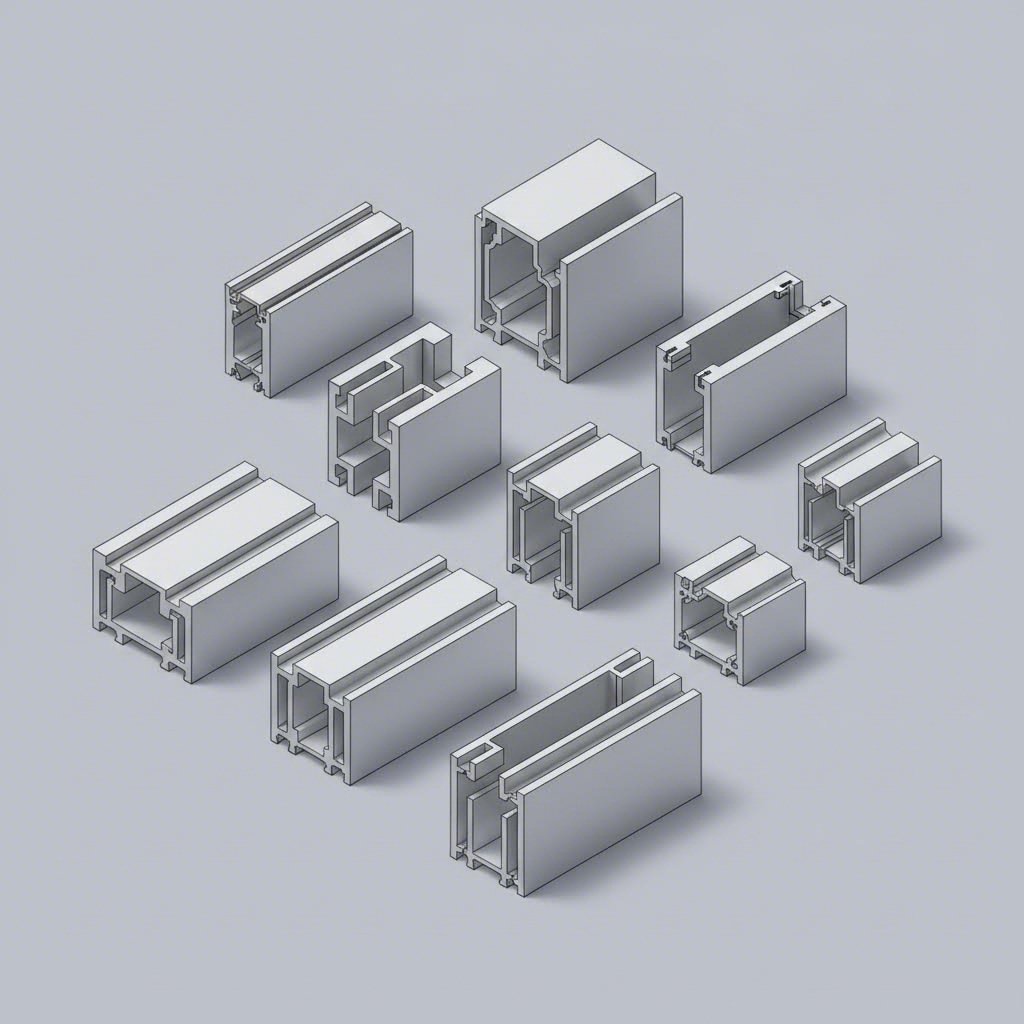
Here's a scenario that surprises many engineers: two aluminum extrusions made from identical 6061-T6 alloy, with the same outer dimensions, can have drastically different load capacities. How much weight can aluminum hold? The answer depends less on the alloy than you might expect—and far more on what's happening inside that cross-section.
Profile geometry is the hidden multiplier in aluminum extrusion strength. While alloy selection and temper designation set the material's baseline properties, the cross-sectional design determines how effectively those properties translate into real-world performance. Understanding this relationship separates adequate designs from truly optimized ones.
When you load a beam, it doesn't just resist force—it resists bending. The property that quantifies this resistance is called the area moment of inertia (also known as the second moment of area). This value, measured in mm⁴, describes how the material is distributed relative to the bending axis.
Think of it this way: imagine holding a ruler flat and trying to bend it versus holding it on edge. Same material, same cross-sectional area—but dramatically different bending resistance. That difference is moment of inertia in action.
According to engineering data from Vention, two 45 x 45 mm extrusion profiles can have moments of inertia ranging from 107,780 mm⁴ to 162,325 mm⁴—a 50% difference despite identical outer dimensions. Under a 1500 N cantilever load at 500mm, that translates to deflections varying from 5.58 mm to 8.28 mm. Same size, same application, vastly different performance.
The formula governing maximum deflection reveals why geometry matters so much:
Maximum deflection = (Force × Length³) ÷ (3 × Elastic Modulus × Moment of Inertia)
Notice that length cubed appears in the numerator while moment of inertia sits in the denominator. This means doubling your span increases deflection eightfold—but doubling your moment of inertia cuts deflection in half. For structural aluminum extrusions spanning any significant distance, optimizing moment of inertia becomes your most powerful design lever.
Where exactly should you place material within an extrusion's cross-section? Not all locations contribute equally to strength and stiffness.
Material positioned far from the neutral axis (the geometric center for symmetric sections) contributes exponentially more to moment of inertia than material near the center. This explains why I-beams outperform solid rectangles of equal weight—the flanges concentrate material where it provides maximum bending resistance.
For T-slot extrusions, this principle plays out through:
Consider the 80 20 metal framing systems popular in industrial applications. Their profiles are engineered with precisely calculated wall thicknesses and web configurations to maximize the strength-to-weight ratio. A well-designed 4040 aluminium extrusion doesn't simply scale up a smaller profile—it redistributes material to optimize performance at the larger size.
How do common T-slot profiles actually compare? The 2020 aluminum extrusion strength differs substantially from larger profiles, but not in a simple linear relationship. Based on technical analysis of 2020 profiles and comparative extrusion data, here's how popular sizes stack up:
| Profile Size | Approximate Moment of Inertia (mm⁴) | Relative Load Capacity | Weight per Meter | Best Applications |
|---|---|---|---|---|
| 20 x 20 mm | ~8,000 - 10,000 | Baseline (1x) | ~0.4 - 0.5 kg | Light frames, 3D printer enclosures, electronics housings |
| 22.5 x 22.5 mm | 8,885 | ~1.1x | ~0.45 kg | Light-duty structures, low-load applications |
| 40 x 40 mm | ~100,000 - 110,000 | ~12x | ~1.5 - 1.7 kg | Machine frames, workstations, medium-duty structures |
| 45 x 45 mm | 107,780 - 162,325 | ~13-20x | 1.55 - 2.06 kg | Industrial frames, robot cells, heavy workstations |
| 45 x 90 mm | 287,967 - 1,111,757* | ~35-135x | ~3.3 kg | Long spans, high-load beams, gantry systems |
| 90 x 90 mm | ~1,850,913 | ~225x | ~5.1 kg | Heavy-duty frames, large machine bases |
*Note: Rectangular profiles like 45 x 90 mm have different moments of inertia depending on orientation (Ix vs Iy).
The table reveals something crucial: doubling profile dimensions doesn't double load capacity—it increases it by roughly an order of magnitude. A 45 x 45 mm profile doesn't carry twice the load of a 22.5 x 22.5 mm profile; it carries approximately 12-18 times more while weighing only about 4 times as much.
This non-linear scaling explains why psi extrusions rated for industrial applications often seem "oversized" to those unfamiliar with structural engineering. The geometry-to-strength relationship rewards moving up to the next profile size far more than it penalizes the added weight.
When you need performance beyond standard catalog profiles, custom extrusion design opens powerful optimization opportunities. The goal: maximize moment of inertia while minimizing weight and material cost.
Effective cross-section design follows these principles:
The Vention data illustrates this beautifully: their V2 45 x 45 mm profile achieves an area moment of inertia to surface area ratio of 213 mm²—compared to competitors ranging from 184 to 192 mm². That 10-15% advantage in efficiency translates directly to lighter structures that perform equally well, or stronger structures at equal weight.
For custom applications, working with experienced extrusion engineers allows you to specify wall thicknesses, web locations, and overall geometry tailored precisely to your loading conditions. A profile optimized for vertical compression will differ significantly from one designed for horizontal bending or combined loading scenarios.
With geometry's role in load capacity now clear, the next question becomes: how does aluminum's strength-to-weight ratio compare against steel and other structural materials engineers commonly specify?

You've seen aluminum's strength numbers. Now comes the question that drives real-world material selection: how does aluminum strength vs steel actually stack up when you factor in weight? Raw strength tells only part of the story. For many engineering applications, the aluminum strength to weight ratio determines whether a design succeeds or fails.
Steel wins the absolute strength contest—no question. According to comparative analysis data, common structural steel delivers tensile strength ranging from 400 to 500 MPa (58,000-72,500 PSI), while aluminum typically reaches around 90 MPa (13,000 PSI) for standard grades. That's roughly a 5:1 advantage for steel in raw pulling resistance.
But here's what changes the equation: steel weighs nearly three times as much as aluminum. When you divide strength by density, the gap narrows dramatically—and in some cases, aluminum pulls ahead.
Consider the aluminum weights compared to steel alternatives:
| Material | Density (g/cm³) | Yield Strength (PSI) | Strength-to-Weight Ratio |
|---|---|---|---|
| Aluminum 6061-T6 | 2.70 | 40,000 | 14,815 |
| Aluminum 6063-T6 | 2.70 | 30,500 | 11,296 |
| Mild Steel (A36) | 7.85 | 36,000 | 4,586 |
| Stainless Steel 304 | 8.00 | 31,200 | 3,900 |
| High-Strength Steel (HSLA) | 7.85 | 50,000 | 6,369 |
The numbers reveal something striking: 6061-T6 aluminum delivers more than triple the strength-per-pound of mild steel. Even against high-strength low-alloy (HSLA) steel, aluminum maintains a significant advantage when alum weight matters to your application.
This ratio becomes your decision-making tool. When absolute load capacity drives the design—and weight is irrelevant—steel often makes sense. When every pound counts, aluminum's efficiency advantage compounds across your entire structure.
Where does aluminum's weight advantage translate into tangible performance gains? According to U.S. Department of Energy research, a 10% reduction in vehicle weight can result in a 6%-8% fuel economy improvement. Replacing traditional steel components with aluminum can directly reduce a vehicle's body and chassis weight by up to 50 percent.
The applications where aluminum consistently outperforms heavier alternatives include:
The stainless steel prop vs aluminum prop debate in marine applications illustrates this perfectly. While stainless boat props offer superior durability and edge retention, aluminum propellers deliver adequate performance at significantly reduced weight—translating to better acceleration and improved fuel efficiency for recreational applications.
Choose aluminum when weight reduction delivers compounding benefits—in fuel savings, handling improvements, or reduced structural demands. Choose steel when absolute strength, cost, or environmental factors like high temperatures outweigh the advantages of lighter construction.
Making the right choice requires evaluating your specific constraints. Here's a practical framework for deciding between aluminum extrusion and steel alternatives:
Favor aluminum extrusion when:
Favor steel when:
The decision rarely comes down to a single factor. A machine base might use steel for its stationary frame while incorporating aluminum extrusion for adjustable fixtures and guards. An architectural system might specify aluminum for exposed elements requiring corrosion resistance while using steel connections hidden within assemblies.
Understanding these trade-offs positions you to make material selections based on engineering requirements rather than assumptions. But real-world performance involves more than just static load comparisons—temperature, fatigue, and connection design all affect how aluminum extrusions actually perform in service.
Laboratory strength values tell you what aluminum can do under ideal conditions. But your extrusions won't operate in a laboratory. They'll face temperature swings, repeated loading cycles, and the inherent inefficiencies of bolted or welded connections. Understanding how these real-world factors affect aluminium strength separates reliable designs from those that fail unexpectedly in service.
Aluminum doesn't maintain its room-temperature strength when the heat rises. Unlike steel, which holds its properties until reaching much higher temperatures, aluminum begins softening at relatively modest elevations—a critical consideration for applications near heat sources, in outdoor environments, or within enclosed machinery.
According to research on aluminum temperature behavior, fatigue strength drops significantly as operating temperature increases. Testing on 1100 aluminum alloy showed that at 10⁴ cycles, fatigue strength decreased from 56.68 MPa at room temperature to just 36.2 MPa at 200°C—a reduction of approximately 36%.
Here's what this means for your designs:
The softening mechanism relates directly to the precipitation hardening that creates T6 temper strength. Elevated temperatures cause those carefully formed precipitates to coarsen and dissolve—reversing the heat treatment that created the strength in the first place. Sustained exposure matters more than brief temperature spikes; a component briefly touching 350°F differs dramatically from one operating continuously at that temperature.
What happens when your aluminum extrusion faces not one load, but millions of loading cycles? This is the realm of fatigue strength—and it's where aluminum behaves quite differently from its static properties might suggest.
Static strength values assume a single, slowly applied load. Fatigue loading involves repeated stress cycles: machinery vibrations, thermal expansion cycles, wind loads on architectural facades, or the constant flexing of a robot arm. Under these conditions, materials can fail at stress levels far below their yield strength.
Research findings illustrate the severity of this effect. The fatigue transition life studies established relationships between stress amplitude and cycles to failure, with the Basquin equation describing this behavior: σ = 385Nf^(-0.208) at room temperature. This exponential relationship means small increases in cyclic stress produce dramatic reductions in fatigue life.
The toughness of aluminum under fatigue loading depends on several factors:
For critical fatigue applications, the 6061 shear strength and tensile values from specification sheets represent starting points, not design limits. Fatigue analysis requires applying significant knockdown factors—often reducing allowable stresses to 30-50% of static values for high-cycle applications.
Here's the factor that most strength discussions overlook entirely: your aluminum extrusion is only as strong as its weakest connection. The aluminum 6061 shear strength of 30,000 PSI means nothing if your bolted joint transfers only 60% of that capacity.
Connection efficiency describes the percentage of base material strength that a joint actually delivers. According to structural engineering analysis, effective joining methods are essential to maintain aluminum's structural performance, with each connection requiring careful evaluation for durability under various load and environmental conditions.
Common connection methods and their typical efficiencies:
| Connection Type | Typical Efficiency | Key Considerations |
|---|---|---|
| T-slot hardware (drop-in fasteners) | 40-60% | Easy assembly/modification; requires proper torque |
| Through-bolted connections | 60-80% | Hole placement critical; bearing stress governs |
| Welded joints (proper filler) | 70-95% | Heat-affected zone softening reduces local strength |
| Corner brackets with gussets | 50-70% | Bracket geometry and fastener count determine capacity |
| Adhesive bonding | 60-90% | Surface preparation critical; temperature-sensitive |
The al 6061 shear strength at the connection point often governs design more than tensile or bending stresses in the member itself. Bolts create stress concentrations around holes; welds introduce heat-affected zones where temper benefits partially disappear. A single undersized fastener can transform a robust extrusion into the limiting element of your entire assembly.
How do engineers account for all these real-world degradation mechanisms? Through safety factors—multipliers that create margins between calculated stresses and allowable material strength.
Typical safety factor guidelines for aluminum extrusion applications:
These factors compound the effects of temperature, fatigue, connection efficiency, and uncertainty in loading. A machine frame operating at 150°F with bolted connections and cyclic loads might require an effective safety factor of 3.0 or higher—meaning your 6061 t6 shear strength of 30,000 PSI translates to an allowable design stress of just 10,000 PSI at the joint.
Real-world aluminum extrusion strength is the minimum of: base material capacity, temperature-reduced values, fatigue-limited stresses, and connection efficiency—all divided by an appropriate safety factor.
Understanding these performance factors prepares you to evaluate not just what aluminum extrusions can theoretically achieve, but what they'll reliably deliver in your specific application environment.

You've seen the strength data, understood the temper designations, and learned how geometry affects load capacity. Now let's connect those theoretical properties to real engineering solutions. How do designers actually apply aluminum extrusion strength in projects you might encounter—or even specify yourself?
From factory floors to commercial facades, aluminum extrusions carry loads that would surprise those unfamiliar with the material's capabilities. The key lies in matching alloy selection, temper designation, and profile geometry to each application's specific demands.
Imagine walking through a modern manufacturing facility. Those modular workstations, safety enclosures, and equipment frames surrounding you? Many rely on aluminum extrusion frame systems that combine strength with remarkable flexibility.
According to industry application data from Proax, the backbone of manufacturing operations relies on aluminum extrusions for machine bases, frames, and custom equipment builds. These aren't lightweight decorative elements—they're structural components supporting CNC machines, robotic welders, and heavy assembly equipment.
What makes aluminium framing systems so prevalent in these environments?
For these applications, 6063-T5 often provides adequate strength while offering excellent surface finish and extrudability. When loads increase—supporting heavier machinery or spanning longer distances—engineers step up to 6063-T6 or 6061-T6 to access higher yield strength values.
Beyond basic framing, aluminum extrusions enable specialized industrial solutions where strength requirements vary dramatically based on function.
Industrial applications include:
Each application demands different performance characteristics. A conveyor support primarily resists bending under distributed loads—making moment of inertia critical. An impact-resistant safety enclosure needs energy absorption capacity that relates more to yield strength and ductility. Matching the right aluminium section to each requirement prevents both under-designed structures that fail and over-designed systems that waste material.
Step outside the factory, and aluminum extrusion strength enables entirely different engineering challenges. Architectural applications demand not just structural performance but also aesthetic quality, weather resistance, and decades-long durability.
Architectural applications leveraging extrusion strength:
For these exposed applications, 6063 alloys dominate due to their superior surface finish and anodizing response. The architectural industry accepts 6063-T5's moderate strength because the profiles are typically designed with adequate section properties—using geometry to achieve required load capacity rather than relying on maximum material strength.
Some applications push aluminum extrusion capabilities into specialized territory where standard catalog profiles won't suffice.
Specialty applications include:
These specialty applications often justify custom extrusion development. When a standard profile provides 80% of required performance, a custom-designed aluminium section can deliver 100%—optimizing weight, strength, and integration features simultaneously.
The common thread across all these applications? Engineers aren't simply asking "how strong is aluminum extrusion?" in abstract terms. They're matching specific strength properties—yield values, fatigue resistance, connection efficiency—to quantified application requirements. That matching process determines whether a project succeeds or requires costly redesign.
With these practical applications in mind, the final consideration becomes selecting the right extrusion partner and specifications for your own strength-critical projects.
You've absorbed the technical data—yield strengths, temper designations, geometry effects, and real-world performance factors. Now comes the practical challenge: how do you translate that knowledge into specifications that ensure your aluminum extrusion parts perform exactly as designed? The gap between understanding strength properties and successfully specifying structural aluminium extrusions often determines project success or failure.
Whether you're building with aluminum extrusion for the first time or refining specifications for a critical application, this section provides the actionable guidance you need to move from concept to confident procurement.
Alloy selection starts with a simple question: what does your application actually demand? Not the theoretical maximum—the real requirements your structure must meet.
According to technical specification guidelines, the most common extrusion alloys serve distinctly different purposes:
Here's the decision framework that experienced engineers use:
Specify 6061-T6 when:
Specify 6063-T5 or T6 when:
Don't overlook the aluminum extrusion bar option for applications requiring solid cross-sections rather than hollow profiles. Solid bars in 6061-T6 deliver consistent properties throughout the section—valuable for machined components or applications where internal webs aren't beneficial.
Standard catalog profiles solve many problems. But when your application demands optimized performance—specific load paths, integrated mounting features, or press fit aluminum framing connections—custom extrusion development becomes the path forward.
What separates capable custom extrusion partners from basic suppliers? According to industry evaluation criteria, several factors determine whether a manufacturer can deliver consistent strength and quality:
Press capacity and equipment range:
A supplier with multiple press capacities can match equipment to your specific profile requirements—ensuring optimal extrusion conditions rather than forcing compromises.
For engineers seeking comprehensive capabilities, Shengxin Aluminium's deep processing services illustrate what full-service extrusion support looks like. Their facility operates 35 extrusion presses ranging from 600T to 5500T capacity—covering everything from precision architectural profiles to heavy structural sections. This press diversity means your project gets matched to appropriate equipment rather than being squeezed through whatever's available.
Beyond extrusion itself, integrated CNC machining capabilities matter enormously for strength-critical applications. Precise cutting, drilling, and bending performed in-house—rather than subcontracted across multiple facilities—maintains dimensional control and prevents handling damage. Shengxin's state-of-the-art CNC machining centers deliver this precision while their technical team provides end-to-end support from die development through mass production.
Specifying the right alloy and temper means nothing if manufacturing quality varies from batch to batch. For aluminum extrusion alloys to deliver their rated strength, several quality control factors must align.
Critical quality checkpoints include:
Surface treatments also affect long-term structural performance. Anodizing creates a hard oxide layer that resists corrosion and wear. Powder coating provides thicker protection for harsh environments. PVDF coatings deliver exceptional weathering resistance for architectural applications. Shengxin Aluminium offers all these options—including custom anodizing colors like champagne and rose gold—ensuring your 6063 aluminum profiles meet both aesthetic and durability requirements.
When evaluating extrusion partners, prioritize these factors:
The difference between adequate and excellent extrusion partners often shows up in consistency. A factory with ERP-based production systems and automated process monitoring delivers repeatable results that simpler operations cannot match—especially critical when your application demands tolerance control within ±0.1 mm.
Before submitting your extrusion order, verify your specification covers all strength-relevant details:
| Specification Element | Why It Matters for Strength | Typical Requirement |
|---|---|---|
| Alloy designation | Determines base material properties | 6061, 6063, or 6082 |
| Temper requirement | Sets actual strength values achieved | T5 or T6 with property verification |
| Dimensional tolerances | Ensures fit and load distribution | EN755-9 or tighter for critical features |
| Surface finish | Affects fatigue life and corrosion | Mill, anodized, or coated per environment |
| Length and cut precision | Impacts assembly accuracy | Standard ±1mm or precision as needed |
| Mechanical testing | Verifies strength compliance | Tensile/hardness per lot or per order |
For complex projects, engage your extrusion partner early in the design phase. Experienced manufacturers provide valuable DFM (Design for Manufacturability) feedback—identifying wall thickness concerns, suggesting geometry modifications for better extrusion consistency, and optimizing your profile for both performance and cost.
The strongest aluminum extrusion specification combines correct alloy and temper selection with tight quality control and a manufacturing partner capable of delivering consistent results across your entire production run.
With these selection and specification principles established, you're equipped to confidently specify aluminum extrusions that meet your strength requirements—not as a leap of faith, but as a data-driven engineering decision.
You've navigated the complete landscape of aluminum extrusion strength—from raw material properties through real-world performance factors to specification best practices. Now let's crystallize everything into the actionable knowledge you'll carry into your next project.
Understanding aluminum tensile strength psi values and yield strength specifications isn't about memorizing numbers. It's about building the engineering judgment to match materials confidently to applications. When someone asks "how strong is aluminum?" you now have the context to answer: it depends on alloy, temper, geometry, and operating conditions—and here's exactly how each factor matters.
Before you close this resource, anchor these essential values in your engineering toolkit:
These figures represent starting points, not design limits. Real-world applications demand safety factors, connection efficiency derating, and consideration of environmental conditions before you arrive at allowable stresses.
Aluminum extrusion strength is never a single number—it's the intersection of alloy chemistry, heat treatment, cross-sectional geometry, connection design, and operating environment. Master these relationships, and you transform from someone specifying materials to someone engineering solutions.
The path from understanding to application follows a clear progression. When your next project requires aluminum strong enough for structural duty, work through this decision sequence:
First, quantify your requirements:
Then, match materials to those requirements:
This engineering-first approach replaces assumptions with calculations and guesswork with data. Just as selecting the right aluminum prop for a marine application requires balancing weight savings against operational demands, every extrusion specification benefits from systematic analysis rather than defaulting to "strongest available."
Your next steps for strength-critical projects:
The difference between adequate designs and optimized solutions often comes down to working with manufacturers who speak the language of engineering rather than just sales. When you partner with extrusion providers offering comprehensive capabilities—from die design through precision machining and surface treatment—you gain access to expertise that complements your own.
Armed with consolidated strength data, clear understanding of performance factors, and a systematic approach to specification, you're positioned to make aluminum extrusion decisions with confidence. The question is no longer whether aluminum extrusion is strong enough—it's how to leverage that strength most effectively for your specific engineering challenge.
Load capacity depends on alloy, temper, and profile geometry. A 6061-T6 extrusion with 40,000 PSI yield strength can hold significantly more than 6063-T5 at 20,300 PSI. Profile size matters even more—a 45x45mm T-slot profile carries roughly 12-20 times the load of a 20x20mm profile due to increased moment of inertia. For precise calculations, consider working with manufacturers like Shengxin Aluminium who provide technical support for load-bearing applications.
A 2020 aluminum extrusion (20x20mm T-slot profile) typically offers tensile strength between 230-270 MPa and yield strength around 215 MPa when made from 6061-T6 alloy. While suitable for light frames, 3D printer enclosures, and electronics housings, these profiles have limited moment of inertia compared to larger sections. For heavier loads, stepping up to 40x40mm profiles increases capacity by approximately 12 times.
Yes, extruded aluminum is generally harder and stronger than die-cast aluminum. The extrusion process aligns the grain structure and eliminates porosity common in castings, resulting in more consistent mechanical properties. Extruded 6061-T6 achieves 45,000 PSI tensile strength, while cast aluminum typically ranges lower. Extrusions also offer smoother surface finishes and tighter dimensional tolerances.
T6 temper includes solution heat treatment before artificial aging, while T5 skips this step. This difference results in T6 achieving significantly higher strength—6063-T6 reaches 30,500 PSI yield strength versus 20,300 PSI for T5. However, T5 offers better ductility for post-extrusion bending and lower processing costs. Choose T6 for structural applications requiring maximum strength; select T5 for architectural profiles where surface finish and formability matter more.
Steel has higher absolute strength (400-500 MPa vs aluminum's 90-310 MPa depending on alloy), but aluminum delivers 3x better strength-to-weight ratio. A 6061-T6 extrusion achieves a strength-to-weight ratio of 14,815 compared to mild steel's 4,586. This makes aluminum ideal for transportation equipment, portable systems, and overhead structures where weight savings translate to fuel efficiency or reduced supporting structure requirements.



 dịch vụ trực tuyến
 0086 136 3563 2360
 sales@sxalu.com
 +86 136 3563 2360
 Việt
Việt English
 français
 Deutsch
 русский
 español
 português
 العربية
 ไทย
ไทย Українська