
Imagine rolling out of bed on a freezing January morning and finding water streaming down every window in your home. You grab a towel, wipe them dry, and head off to work. The next morning? Same thing. If you're wondering why is there moisture on the inside of my windows, you're not alone — and you're asking exactly the right question.
Here's the thing most people miss: window condensation is not actually the problem. It's a signal. Those foggy, dripping panes are your home telling you something about humidity levels, airflow, or insulation — sometimes all three at once. Chasing the water with a cloth every morning is like silencing a smoke alarm without checking for fire.
Condensation on windows in winter forms because excess moisture inside your home has nowhere to go. Every household has a unique moisture profile shaped by how many people live there, how often they cook and shower, the building materials used in construction, and the local climate. Wiping the glass treats the effect while the cause quietly persists — potentially encouraging mold growth and damaging window frames over time.
A true winter window condensation solution starts with understanding what's driving that moisture, not just mopping it up.
This article follows a diagnose-first approach. You'll learn the science behind condensation on inside of windows, identify which type of condensation you're dealing with, and then match the right fix to your room, window type, and budget. No generic tips — just a clear action plan.
Condensation on the inside of windows always signals that indoor humidity is meeting a cold surface — and both variables can be managed.
Ready to learn how to stop windows from sweating for good? It starts with understanding exactly what's happening on that cold glass surface.

That cold glass you touched this morning? It's doing something invisible to the air around it. The warm air inside your home carries moisture in the form of water vapor — an invisible gas you can't see or feel. When that vapor-laden air drifts against a window pane cold enough to cross a critical temperature threshold, the moisture transitions from gas to liquid. Tiny water droplets appear on the glass. That's condensation in a nutshell, and it's pure physics — not a defect in your home.
So what causes condensation on windows, exactly? Two factors collide: the amount of moisture suspended in your indoor air and the temperature of the glass surface. When the glass temperature drops to or below what's known as the dew point, vapor can no longer stay invisible. It condenses into the water you see trickling down your windows every morning.
The term "dew point" sounds technical, but the concept is something you've already experienced. Picture a tall glass of ice water sitting on your kitchen counter during a hot summer afternoon. Within minutes, the outside of that glass is dripping wet — even though no one spilled anything. The cold glass chilled the surrounding air below its dew point, forcing moisture out of the air and onto the surface.
Your windows do the exact same thing in winter. The dew point isn't a fixed number — it shifts based on how much moisture is in the air. Higher indoor humidity pushes the dew point higher, meaning condensation starts forming even on relatively warm glass. Lower humidity drops the dew point, so the glass has to be much colder before water appears. This is why two homes on the same street with identical windows can have completely different condensation levels. The difference often comes down to indoor humidity.
Winter creates the perfect storm for condensation on the inside of windows. Freezing outdoor temperatures chill your window glass from the outside, dragging the inner surface temperature down with it. Meanwhile, your heating system warms the indoor air, which increases its capacity to hold moisture. The result is a steep temperature gradient — warm, humid air on one side of the glass and frigid air on the other.
There's a second factor that makes the season especially problematic. You naturally seal your home tighter in cold weather. Windows stay shut, weatherstripping blocks drafts, and fresh air exchange drops to a minimum. The EPA notes that a tight, energy-efficient house holds more moisture inside, and that you may need to run ventilating fans or briefly open a window to release it. All the moisture generated by daily living — cooking, bathing, breathing — stays trapped indoors with no escape route. Humidity climbs, the dew point rises, and your cold window glass becomes a magnet for condensation.
If you've ever asked why is there condensation on my windows inside only during the colder months, this seasonal double punch is your answer.
Understanding what causes moisture in windows also means understanding where that moisture originates. Most homeowners recognize that a steamy shower fogs up the bathroom mirror, but they underestimate the cumulative effect of everyday activities happening throughout the house. Here are the most common indoor moisture sources and their approximate contributions:
Each of these sources is perfectly normal on its own. The issue arises when several combine in a sealed-up winter home with limited ventilation. Moisture accumulates faster than the home can release it, indoor humidity spikes, and the dew point climbs until even moderately cold glass starts dripping.
What causes condensation on the inside of windows, then, is never just one thing. It's the relationship between your home's total moisture load and the temperature of its coldest surfaces. That relationship shifts from room to room — and understanding those differences is the key to targeting fixes where they'll actually work.
Your kitchen window and your bedroom window might sit on the same wall, yet one fogs up every morning while the other stays perfectly clear. Why? Because each room in your home generates a different amount of moisture, at different times, through completely different activities. Treating every room the same way — cracking a window here, running a fan there — wastes effort where it isn't needed and falls short where it matters most. A smarter winter window condensation solution targets each room based on its actual moisture profile.
These two rooms are your home's biggest moisture factories. Boiling water, simmering sauces, steaming vegetables — cooking alone can push up to 3 liters of moisture into the air daily, according to household moisture research. Add dishwashing, and that figure climbs another liter per load. Bathrooms deliver a similar punch: a single hot shower releases roughly 1.5 liters of water vapor into a small, enclosed space.
The good news? Moisture buildup on inside of windows in kitchens and bathrooms is often the most manageable type because the source is concentrated and predictable. The fix is equally direct: run your range hood or extractor fan before you start cooking or showering, not after steam already fills the room, and keep it running for 15 to 20 minutes afterward. That post-activity period matters because moisture continues evaporating from wet surfaces long after you've turned off the stove or stepped out of the shower.
If your kitchen or bathroom lacks mechanical extraction, even opening a window slightly during and after these activities makes a measurable difference — especially when it creates cross-ventilation with another opening in the house.
Ever notice that moisture on inside of house windows shows up worst in bedrooms? There's a very specific reason. When you close the bedroom door at night, you create a sealed box. Inside that box, one or two people breathe continuously for seven to eight hours, each exhaling warm, moist air with every breath. Research shows that each person generates 0.8 to 1.7 kg of water vapor daily through breathing and perspiration alone — and a significant portion of that output happens overnight.
Meanwhile, the bedroom temperature drops as heating cycles off or thermostat setbacks kick in. Cooler air holds less moisture, so the dew point threshold shrinks. Your window glass, already chilled by outdoor temperatures, doesn't stand a chance. By morning, you wake up to condensation streaming down the panes.
So how can you stop condensation on windows overnight? Two simple changes make the biggest impact. First, leave your bedroom door slightly ajar. This allows moisture to disperse into the rest of the house rather than concentrating in one small room. Second, if your windows have trickle vents, open them. These small, controllable openings in the window frame allow a gentle stream of fresh air to enter without creating a noticeable draft or major heat loss. For homes without trickle vents, even cracking the window a fraction of an inch provides enough air exchange to keep humidity from spiking overnight.
Figuring out how to stop condensation on windows overnight often doesn't require any equipment at all — just a shift in nighttime habits.
Of all the moisture sources in a typical home, indoor laundry drying is the one most people underestimate. Hanging a full load of wet clothes on an indoor rack releases approximately 2,000 grams of water as the fabric dries — and during the first two hours, that moisture pours out at rates exceeding 100 grams per hour, with peaks reaching 360 grams per hour. That volume of water vapor flooding a single room, often with the door closed and no ventilation, practically guarantees condensation on every cold surface in sight.
The study published in Indoor Environments also found that indoor laundry drying can drop room temperature by 0.5 to 3.8 degrees Celsius as evaporating water absorbs heat from the surrounding air. Colder room air means a lower dew point threshold, which means condensation forms even faster — a vicious cycle that many homeowners never connect back to the drying rack in the corner.
If outdoor drying or a tumble dryer isn't an option, ventilate the drying room aggressively. Open a window, run an extractor fan, or at a minimum, keep the door open so moisture can disperse rather than saturate one space.
| Room | Primary Moisture Source | Relative Intensity | Recommended Ventilation Approach |
|---|---|---|---|
| Kitchen | Cooking steam, boiling water, dishwashing | High | Range hood or extractor fan during and 15-20 min after cooking |
| Bathroom | Hot showers and baths | High | Extractor fan during and 30 min after showering |
| Bedroom | Breathing and perspiration overnight | Moderate | Cracked door, trickle vents, or slightly opened window overnight |
| Laundry Room | Indoor clothes drying | Very High (peak) | Open window plus extractor fan, or relocate drying outdoors |
Each room tells a different moisture story — and each demands a different response. But knowing where your moisture comes from is only half the diagnostic picture. The next question is whether the condensation you're seeing falls within normal seasonal behavior or signals something more serious hiding behind the glass.
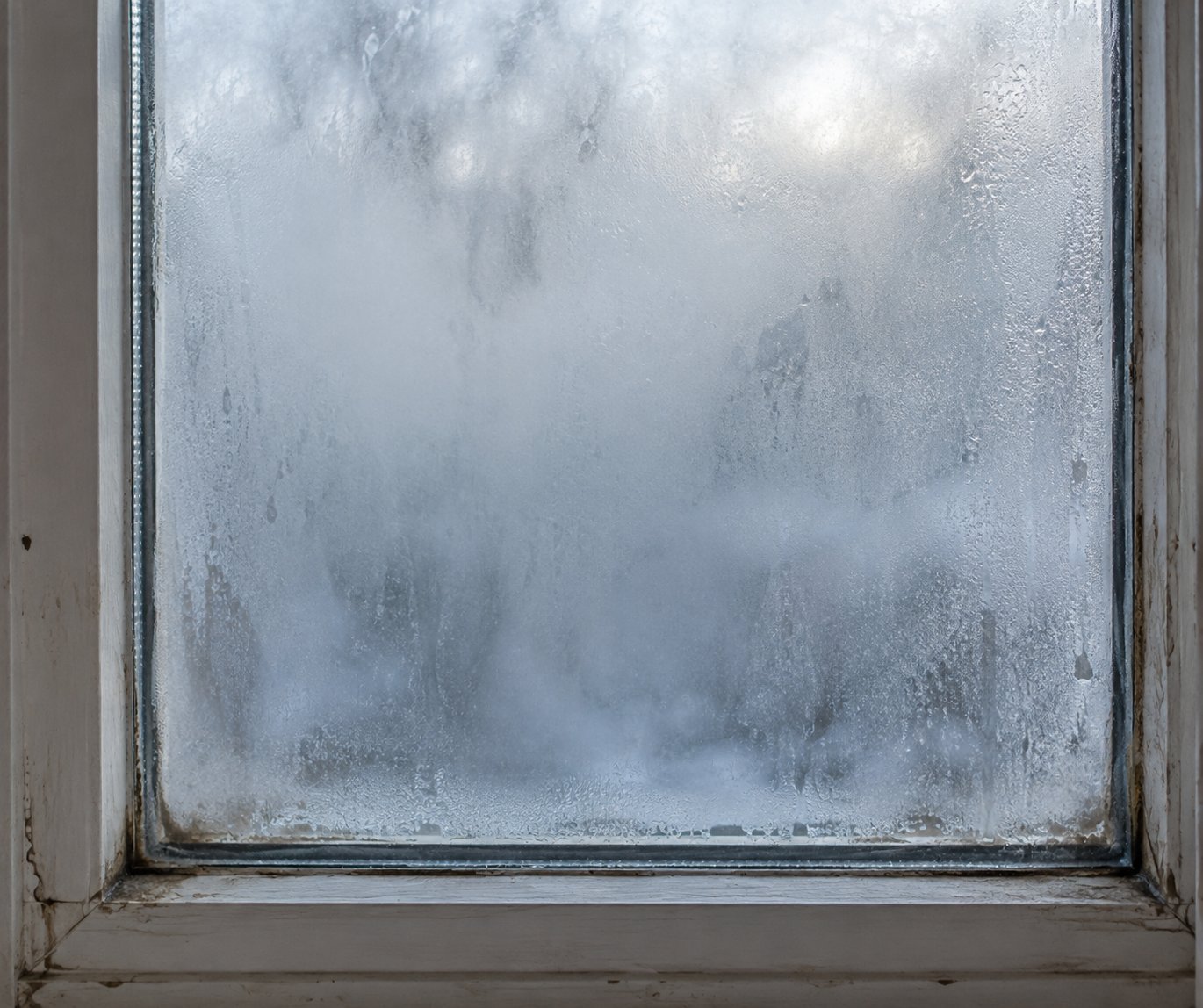
Not all condensation on interior windows means the same thing. Some moisture on cold glass is a perfectly predictable winter occurrence — physics doing its job. Other patterns point to failing seals, hidden structural damage, or health hazards quietly developing behind window frames. The difference between a simple humidity adjustment and a costly repair often comes down to where the moisture appears and how it behaves over time.
When you see water droplets forming on the room-facing side of the glass — the surface you can touch and wipe — you're looking at the most common and least alarming type of condensation inside the window. It simply means that indoor humidity is high enough, and the glass is cold enough, for moisture to transition from vapor to liquid right there on the pane.
This is the scenario covered throughout the previous sections: warm, moisture-laden air meets a cold surface, and water appears. It tends to be worst in the morning, heaviest in high-moisture rooms, and most noticeable on older or single-pane windows. The encouraging part? It's almost always solvable with the ventilation and humidity-control strategies you'll find later in this guide. No window replacement required — just better moisture management.
Mist inside windows — that cloudy, foggy haze trapped between the two panes of a double- or triple-glazed unit — tells an entirely different story. You can't wipe it away because it's sealed inside the insulated glass unit (IGU). This fog signals that the perimeter seal has failed, allowing the insulating gas (typically argon) to escape and moisture-laden outside air to infiltrate the cavity.
Once that seal breaks, the window's thermal performance plummets. The unit essentially behaves like a single pane of glass, losing the insulating benefit it was designed to provide. No amount of dehumidifying, ventilating, or adjusting indoor habits will fix it — this is a mechanical failure of the window itself.
A related warning sign is desiccant leaking from window spacer bars. IGUs contain small desiccant beads inside the spacer that absorb residual moisture during manufacturing. When seals degrade, those beads can become saturated or even start shedding fine white or sandy granules visible along the frame edge. If you spot this residue, the seal has been compromised and the glazing unit needs replacement.
Sometimes condensation is more than a humidity issue or a spent seal. Certain patterns suggest problems embedded in the building envelope or HVAC system — issues that won't resolve with any single fix.
Watch for these red flags that warrant professional inspection:
Mold from window condensation deserves particular attention. You can scrub surface mold from a sill, but until the underlying moisture source is eliminated, regrowth is inevitable. Persistent mold also raises indoor allergen levels, making the issue a health concern — not just a cosmetic one.
If condensation persists after reducing indoor humidity below 40-45% relative humidity and ensuring adequate ventilation, the issue is likely with the window itself or the building envelope.
That diagnostic rule draws a clear line. Behavioral and environmental fixes handle the vast majority of seasonal condensation on interior windows. But when those efforts fall short, the glass, the seal, or the surrounding structure is telling you it needs professional attention. Knowing which side of that line your situation falls on determines whether your next step is a ventilation adjustment — or a conversation about window performance and construction.
Your ventilation could be excellent, your humidity perfectly managed, and your extractor fans running on cue — yet condensation inside window glass still appears every cold morning. Why? Because the window itself plays a starring role in what causes window condensation. The type of glazing and the material surrounding it determine how cold that inner surface gets, and that surface temperature is half of the condensation equation. Two homes with identical indoor humidity levels can have wildly different condensation experiences based solely on window construction.
Understanding where your windows fall on the performance spectrum sets realistic expectations and reveals whether better habits alone will solve the problem — or whether the glass and frame need upgrading too.
Think of your window glazing as a thermal barrier between your heated living space and the freezing air outside. The thicker and more layered that barrier, the warmer the inner glass surface stays — and the harder it becomes for condensation to form.
Single-pane windows offer almost no insulation. A single sheet of glass conducts cold so efficiently that the inner surface temperature closely tracks the outdoor temperature. On a 20°F night, the interior face of a single-pane window can drop low enough to trigger condensation on glass even when indoor humidity sits at a modest 25-30%. If your home still has single-pane windows, interior window condensation during winter is practically guaranteed regardless of how well you ventilate.
Double-pane windows change the game significantly. Two sheets of glass separated by an insulating gap — typically filled with air or argon gas — create a thermal buffer that keeps the inner pane substantially warmer. This insulated glass design raises the humidity threshold at which condensation begins, meaning your home can maintain comfortable moisture levels without water forming on the glass. Most modern homes with double-pane windows only experience inside window condensation during extreme cold snaps or in rooms with unusually high moisture loads.
Triple-pane and Low-E coated windows push that inner surface temperature even higher. The additional pane and gas-filled cavity create a second insulating barrier, while Low-E coatings reflect radiant heat back into the room. The result is an inner glass surface that stays close to room temperature even when it's bitterly cold outside. Condensation on glass becomes rare under normal living conditions — though not impossible if humidity climbs unchecked.
The takeaway is straightforward: your condensation experience is partly determined by the number of panes between you and the winter air. Single-pane owners face a much steeper challenge than those with modern insulated glazing, and no amount of behavioral change fully compensates for a window that simply can't keep its inner surface warm enough.
Here's the detail nearly everyone overlooks: you can install the most advanced triple-pane, argon-filled, Low-E glazing available, and still find condensation forming around the edges. The culprit? The frame itself.
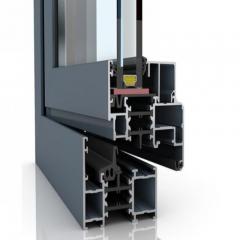
Thermal bridging occurs when heat travels rapidly through a conductive material, bypassing the insulating glass entirely. Aluminum frames are the worst offenders — metal conducts heat hundreds of times faster than vinyl or wood, creating ice-cold frame surfaces that act as condensation magnets even when the glass center stays dry. Touch an aluminum frame on a freezing morning and it feels like ice. Touch a uPVC frame under identical conditions and it stays near room temperature.
This matters because frames can represent 15-35% of a window's total area. That's a significant percentage of cold surface capable of collecting moisture, encouraging mold growth on sills, and degrading the frame structure over time.
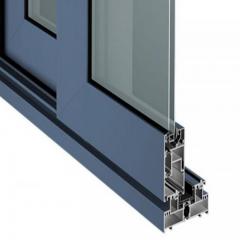
Modern aluminum windows address this through thermal break technology — an insulating plastic barrier separating the interior and exterior sections of the frame, interrupting the conductive path. A thermally broken aluminum frame performs respectably, though it still doesn't match the inherent insulation of uPVC or fiberglass. Wood frames insulate naturally thanks to their cellular structure, but they demand ongoing maintenance to prevent moisture damage — a particular irony when the problem you're solving is excess moisture.
Where the condensation appears on your window tells you a lot about what needs to change. Try this quick self-assessment the next time fog appears on a cold morning:
The table below compares common frame materials to help you evaluate whether your current frames are contributing to your condensation problem:
| Frame Material | Thermal Conductivity Tendency | Condensation Risk Level | Maintenance Considerations |
|---|---|---|---|
| Aluminum (no thermal break) | Very high — conducts cold rapidly | High | Low maintenance, but poor thermal performance undermines efficiency |
| Aluminum (with thermal break) | Moderate — insulating barrier reduces transfer | Moderate | Low maintenance; thermal break quality varies by manufacturer |
| uPVC (vinyl) | Low — naturally resists heat transfer | Low | Minimal; no painting or sealing required |
| Wood | Low — cellular structure insulates well | Low (if maintained) | High; requires regular painting, staining, or sealing to prevent moisture damage |
| Fiberglass | Very low — excellent insulator | Very low | Minimal; dimensionally stable across temperature swings |
If your self-assessment reveals that frame edges are your condensation hot spots — or that single-pane glass is simply outmatched by your climate — you now have a clear sense of the upgrade path. But window replacement sits at the top of the cost ladder. Before committing to that investment, it's worth exploring the full range of solutions available at every budget level, from free behavioral changes you can implement tonight to professional upgrades that deliver permanent results.
You've diagnosed the type of condensation, identified which rooms generate the most moisture, and assessed whether your windows and frames are working for or against you. The question now becomes practical: what exactly should you do about it — and how much will it cost?
Most guides dump a random list of tips with no sense of priority or progression. That approach leaves you guessing. Instead, the solutions below are organized into four tiers based on cost and complexity. Start at Tier 1 — the changes you can make tonight for free — and work your way up only as far as your situation demands. Many homeowners discover that learning how to fix condensation on windows doesn't require spending a cent. Others find that a modest investment at Tier 2 or 3 eliminates the issue entirely. Only persistent, structural problems typically require Tier 4 intervention.
These behavioral changes cost nothing but consistently deliver noticeable results within days. They work by reducing indoor humidity and improving air circulation — the two levers that control whether moisture ever reaches your glass.
These actions alone resolve mild to moderate condensation for many households. If your windows still fog up after consistently following every Tier 1 step for a week or two, it's time to add some affordable hardware.
When free behavioral changes aren't enough, a modest budget opens up several effective tools. Think of these as targeted reinforcements — each one addresses a specific weak point in your home's moisture balance.
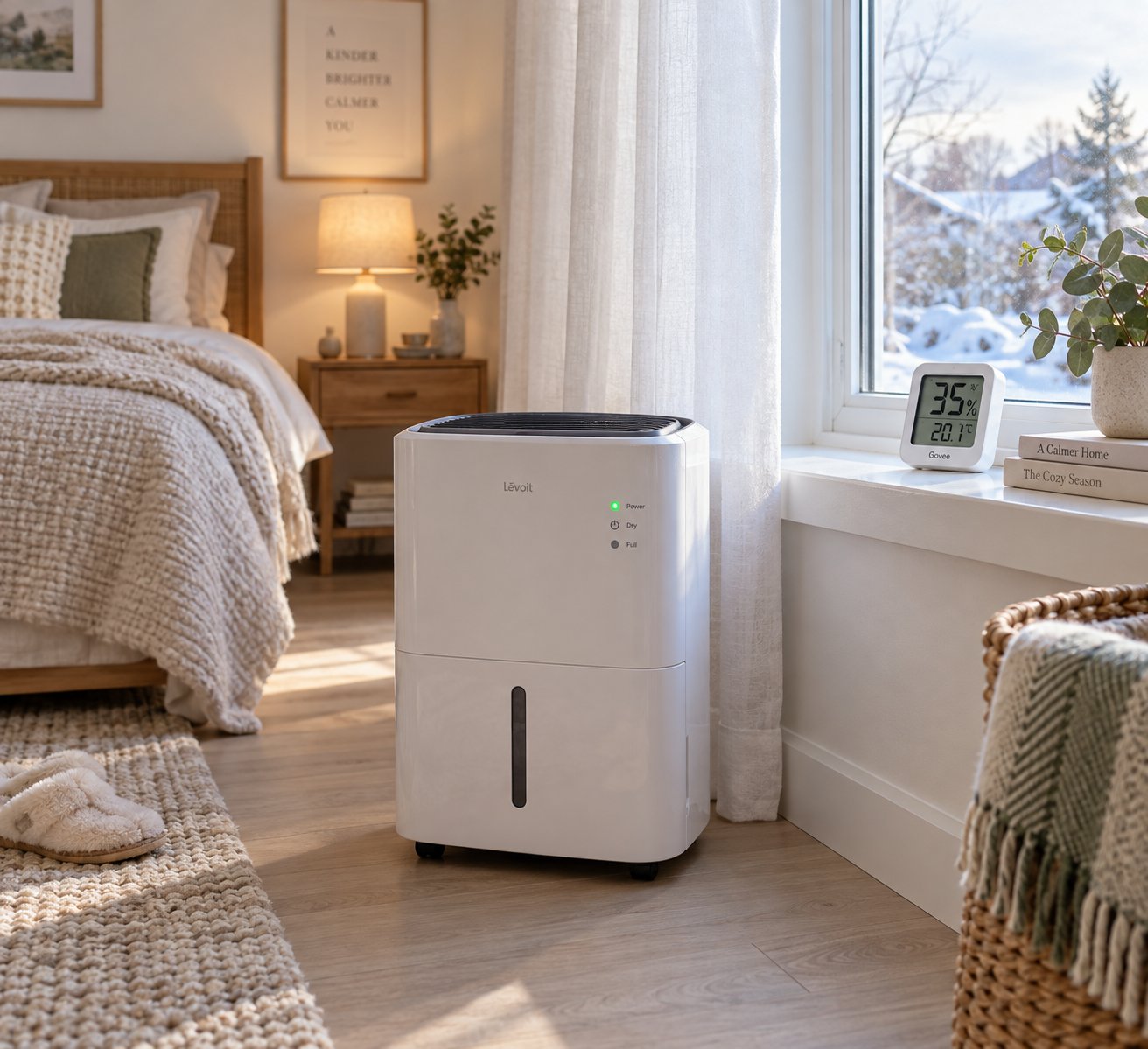
Standalone dehumidifiers. A portable dehumidifier placed in a high-moisture room pulls excess water vapor directly out of the air before it ever reaches your windows. Dehumidifier condensation collection is straightforward: the unit draws in humid air, cools it to condense the moisture into a tank, and returns drier air to the room. For persistent window condensation driven by high baseline humidity, a dehumidifier window condensation fix is often the most immediate and satisfying upgrade. Units sized for a single room are widely available and relatively affordable.
Secondary glazing film and shrink-wrap insulation kits. These clear plastic films adhere to the interior window frame, creating a still-air pocket between the film and the glass. That air pocket mimics the insulating effect of double glazing — on a fraction of the budget. The inner surface stays warmer, which raises the condensation threshold. They won't match real double-pane performance, but for single-pane windows, the improvement is dramatic.
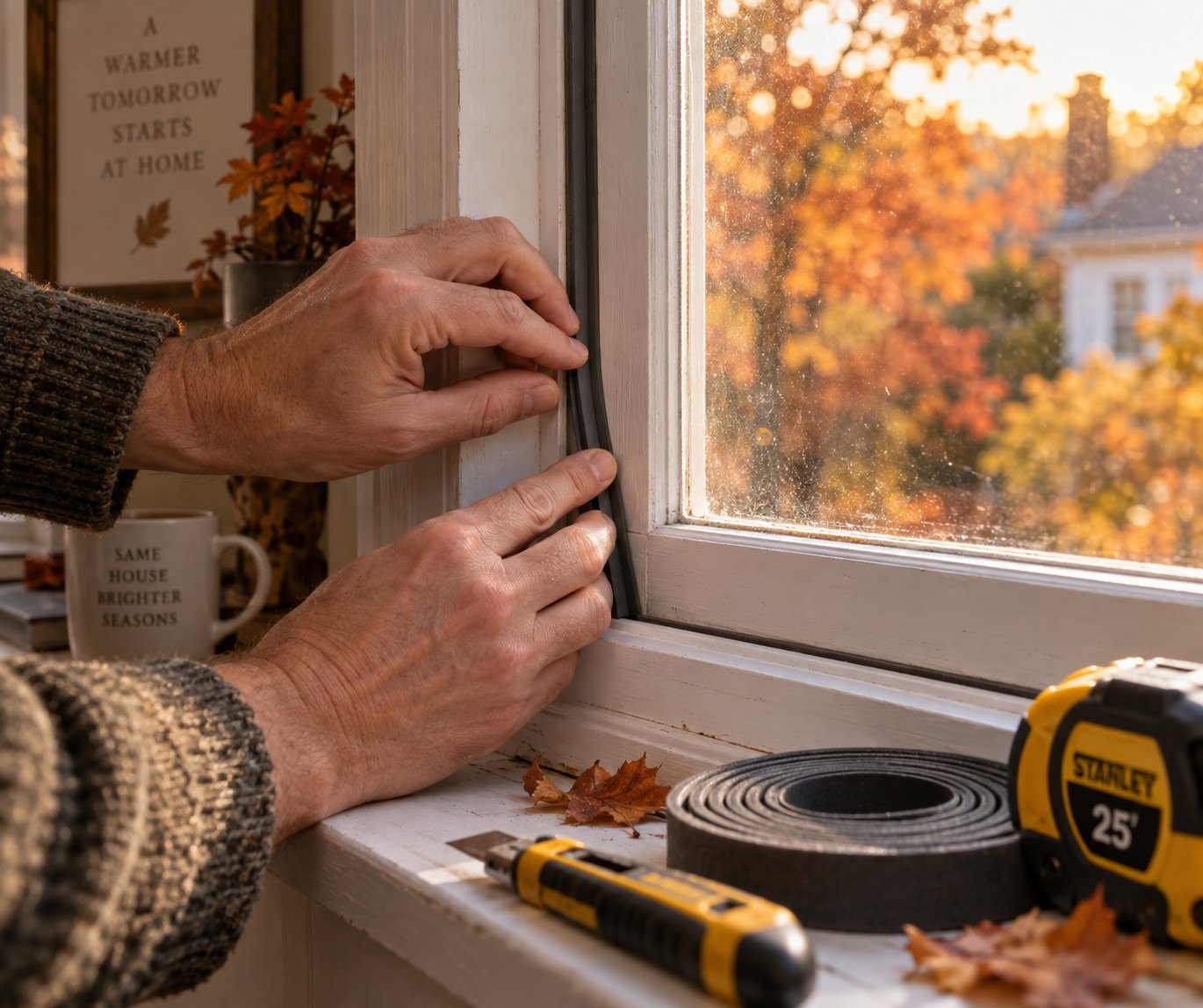
Weather stripping maintenance and replacement. Here's a practical step that most condensation guides overlook entirely. Worn, cracked, or compressed weather stripping around window frames creates cold drafts that chill the glass edges and surrounding frame — exactly where condensation loves to form. Inspect your weather stripping each fall. If you can see daylight around a closed window, or feel cold air seeping through, replace the stripping. Fresh foam, rubber, or V-strip weatherseal costs very little and takes minutes to install, yet it can noticeably reduce condensation at the frame perimeter by eliminating those localized cold spots.
Moisture-absorbing products on windowsills. Small containers of silica gel or calcium chloride crystals placed on sills absorb ambient moisture in the immediate vicinity of the glass. They won't solve a whole-room humidity problem, but they can help manage light condensation on specific windows — particularly in spots where ventilation is limited, like a basement window or a window behind heavy curtains.
If Tiers 1 and 2 reduce your condensation but don't eliminate it, the root cause is likely systemic — your home needs better continuous ventilation or improved thermal performance at the window itself. These mid-range upgrades address exactly that.
Trickle vents installed into existing window frames. Trickle vents are small, adjustable openings integrated into the top of a window frame that allow a constant flow of fresh air even when windows are fully closed. They're one of the most effective ways to prevent condensation on windows because they provide continuous background ventilation rather than relying on you to remember to open a window. The airflow is gentle enough that heat loss stays minimal and security isn't compromised. Trickle vents can be retrofitted into many existing uPVC and aluminum frames without replacing the entire window — making them a cost-effective bridge between DIY fixes and full window replacement.
Whole-house dehumidifier integrated with HVAC. If portable dehumidifiers are doing heavy lifting in multiple rooms, a whole-house unit connected to your existing ductwork handles the job centrally. It maintains consistent humidity throughout the home — typically in the ideal 30-50% relative humidity range — without requiring you to empty tanks or move equipment between rooms. This is especially valuable in homes with chronically high moisture loads from large families, indoor pools, or poorly ventilated basements.
Storm windows or interior window inserts over single-pane glass. For homeowners who aren't ready for full window replacement — particularly in older or historic homes — storm windows or compression-fit interior inserts add a second layer of glass or acrylic to the existing window. This raises the inner surface temperature significantly, making it much harder for condensation to form. Many modern inserts are removable for cleaning and ventilation during warmer months.
When condensation persists despite managing humidity and improving ventilation, the building itself needs attention. Tier 4 solutions represent significant investment but deliver permanent, structural results.
Replacement windows with high-performance glazing and thermally broken frames. Upgrading to double- or triple-pane windows with Low-E coatings and insulating gas fills addresses the condensation problem at the glass surface itself — the coldest point in your wall assembly. Paired with thermally broken aluminum, uPVC, or fiberglass frames, the entire window unit stays warm enough to resist condensation under virtually all normal living conditions. If your earlier self-assessment revealed that single-pane glass or aluminum frames without thermal breaks are driving your condensation, this is the definitive fix. As one guide from Albany Windows puts it, double glazing works by allowing the inner glass to retain more heat — directly raising the surface above the dew point.
Mechanical ventilation with heat recovery (MVHR) systems. An MVHR system extracts stale, moisture-laden air from kitchens and bathrooms and simultaneously pulls in filtered fresh air from outside — but passes both streams through a heat exchanger first, recovering up to 90% of the outgoing warmth. The result is continuous, controlled ventilation with minimal energy penalty. For airtight modern homes or deep energy retrofits, MVHR is often the only way to how to remove condensation from windows permanently without sacrificing the energy efficiency you've invested in.
Building envelope insulation improvements. Sometimes the problem isn't the window at all — it's the wall surrounding it. Poorly insulated wall cavities, missing vapor barriers, or air gaps around the rough opening can create cold zones that attract condensation. Addressing these deficiencies with spray foam, rigid insulation, or improved air sealing at the window-to-wall junction can eliminate stubborn condensation that no other fix touches.
Understanding how to fix condensation on windows ultimately means matching the severity of your problem to the right tier of response. The quick-reference summary below helps you identify where to start:
Most readers will find their winter window condensation solution somewhere in Tiers 1 through 3. The key is working upward through the tiers rather than jumping straight to expensive replacements. Free behavioral changes combined with a dehumidifier and proper weather stripping resolve the majority of cases — and cost a fraction of what a full window upgrade demands.
Yet across all four tiers, one theme keeps surfacing: ventilation. Every tier includes some form of it — from cracking a window in Tier 1 to installing a full MVHR system in Tier 4. That pattern isn't a coincidence. Ventilation is the thread connecting every effective condensation strategy, and one specific type of ventilation sits in a sweet spot that most homeowners never even consider.
Every tier of condensation solutions — from free habits to professional upgrades — circles back to one principle: get moisture-laden air out and drier air in. Crack a window, run an extractor fan, install a whole-house MVHR system — they're all variations on the same theme. But here's the gap most homeowners fall into: they rely on intermittent ventilation in a situation that demands continuous air exchange. You remember to turn on the bathroom fan during a shower, but what about the other 23 hours in the day when cooking vapors linger, breathing adds moisture, and sealed windows hold it all inside? That quiet, around-the-clock accumulation is what makes background ventilation the single most effective — and most overlooked — way to stop condensation on windows.
This is the paradox that catches so many homeowners off guard. You invest in high-performance, energy-efficient replacement windows specifically to reduce drafts and cut heating bills. And they deliver on that promise beautifully — modern airtight windows with thermal transmittance values below 0.9 W/(m2K) provide excellent insulation. But those same tight seals eliminate something your old, drafty windows provided for free: incidental air exchange.
Older windows leaked. Gaps around frames, worn weather stripping, and loose-fitting sashes allowed a constant trickle of outdoor air to infiltrate while indoor air escaped. Nobody planned it that way — it was just sloppy construction by modern standards. But that uncontrolled leakage served an accidental purpose: it carried moisture out of the house before it could accumulate to problematic levels.
Replace those leaky windows with precision-sealed modern units, and suddenly your home becomes a thermos. Moisture from cooking, showering, breathing, and indoor drying has no escape route. Humidity climbs day after day. The dew point rises. And those beautiful new windows — the very ones you bought to improve your home — start dripping with condensation every morning.
This problem is especially common in retrofitted homes where new windows replace older ones without adding any compensating ventilation. The windows didn't create the moisture — they revealed it by sealing off the accidental airflow that used to mask the problem. If you want to prevent condensation on windows in a tightly sealed home, you need to deliberately reintroduce the air exchange that weatherization removed.
Imagine a ventilation method that works 24 hours a day, doesn't require electricity, doesn't compromise your home's security, and introduces so little cold air that you barely notice a difference in comfort or heating costs. That's exactly what trickle vents deliver.
Trickle vents are small, controllable openings — typically around 10 to 12 inches long — integrated into the head of a window frame. They allow a calibrated stream of fresh outdoor air to enter the room continuously, even when the window is fully closed and locked. Unlike micro-ventilation (tilting a window handle to the 45-degree position), trickle vents use a calibrated nozzle and flow-regulating mechanism that controls exactly how much air passes through. You can open them, close them, or leave them partially adjusted depending on conditions.
The effect on condensation is straightforward. By maintaining gentle, continuous air circulation even when every window in your home is shut tight against the cold, trickle vents prevent indoor humidity from creeping upward into the condensation danger zone. Fresh outdoor air — which carries far less moisture in winter — dilutes the humid indoor air, lowering the dew point and keeping glass surfaces dry.
For homeowners and fabricators looking for a practical component that works across frame types, the Shengxin Aluminium uPVC Window Trickle Vent is designed for both aluminium and uPVC window frames — a relevant detail given the earlier discussion of how frame materials influence condensation. That dual compatibility means fabricators can source a single vent component for mixed-frame projects, and replacement-window buyers can specify background ventilation regardless of whether their home uses vinyl or aluminum window systems.
How can you prevent condensation on windows without remembering to crack open a window every few hours or running fans around the clock? Trickle vents answer that question by making ventilation passive and automatic. Once installed, they require virtually zero ongoing effort — just a quick visual check each fall to ensure they're open and unobstructed.
It's worth noting that trickle vents work most effectively when paired with a functioning extract ventilation system. A simple test confirms whether your extract is working: hold a sheet of paper against the grille in your bathroom or kitchen. If the paper is drawn in and stays, your extract is pulling air properly. If it falls away, you may need to address the exhaust side of the equation before trickle vents can deliver full results.
Trickle vents aren't the only way to reduce condensation on windows through ventilation. But when you compare the available options side by side, they occupy a uniquely practical middle ground — especially for homeowners who need a reliable, low-maintenance way to how to stop window condensation without major renovation or ongoing energy costs.
| Ventilation Method | Continuous Operation | Heat Loss Impact | Installation Complexity | Cost Level |
|---|---|---|---|---|
| Trickle Vents | Yes - operates 24/7 with no electricity | Minimal - calibrated airflow limits thermal impact | Low - retrofits into existing frames or factory-installed | Low |
| Extractor Fans | No - runs only when switched on manually or by timer | Moderate - pulls heated air directly outside during operation | Moderate - requires wall or ceiling penetration and wiring | Low to moderate |
| MVHR Systems | Yes - runs continuously with filtered, tempered air | Very low - recovers 50-90% of outgoing heat | High - requires ductwork throughout the home | High ($4,000-$6,500+) |
| Opening Windows | No - practical only for short periods in cold weather | High - uncontrolled heat loss during use | None | Free |
Opening windows costs nothing but delivers uncontrolled heat loss and works only when you remember to do it. Extractor fans handle high-moisture events well but run intermittently — leaving gaps in ventilation coverage during the quiet hours when humidity silently builds. MVHR systems offer the gold standard of continuous, heat-recovering ventilation, but their price tag and installation complexity put them out of reach for many homeowners, particularly those retrofitting older properties.
Trickle vents land in the sweet spot. They provide the continuous operation that opening windows and extractor fans lack, at a fraction of the cost and complexity of MVHR. The heat loss penalty is minimal because the airflow volume is calibrated — just enough to keep moisture levels in check without chilling the room. For the majority of homes battling seasonal condensation, this balance of simplicity, continuous performance, and affordability makes trickle vents the highest-impact upgrade relative to what you spend.
Of course, installing the right ventilation is only one piece of a year-round strategy. Condensation prevention isn't a one-time fix — it's an ongoing process that shifts with the seasons. Knowing when to prepare, monitor, and assess keeps your windows dry not just this winter, but every winter that follows.
The best strategies for dealing with moisture on windows in winter share a common trait: they work far better when you start before the first cold snap — not after you're already wiping puddles off your sills every morning. Condensation prevention is a year-round cycle, not a one-time project. Each season carries a specific set of tasks that, taken together, keep indoor humidity in check and your windows clear from October through March and beyond.
Think of this timeline as a maintenance rhythm. Fall is your preparation window. Winter is active management. Spring is your chance to assess what worked, repair any damage, and plan improvements before the next cold season rolls around. Below are season-by-season checklists you can follow — print them, bookmark them, or set calendar reminders so nothing slips through the cracks.
September and October are your window of opportunity — literally. Once freezing temperatures arrive, condensation on the windows in winter becomes a daily reality, and retrofitting solutions in the cold is far less comfortable and convenient. Tackle these tasks while the weather is still mild:
Preparation only goes so far. Condensation on windows during winter requires ongoing attention because conditions shift — outdoor temperatures fluctuate, holiday cooking ramps up moisture output, and guests increase the number of people breathing and showering under your roof. Stay proactive with these in-season habits:
As temperatures warm and windows start staying dry on their own, it's tempting to move on and forget about condensation until next year. Don't. Spring is your debrief season — a chance to evaluate what worked, repair any damage winter left behind, and set yourself up for an even smoother run next year. Here's how to prevent moisture on windows in winter from becoming a recurring headache:
This seasonal rhythm turns condensation management from a reactive scramble into a proactive routine. Each cycle builds on the last: fall preparation gets smoother, winter monitoring becomes second nature, and spring assessments show fewer problems year over year. The goal isn't perfection in a single season — it's steady progress toward a home where clear, dry windows are the norm rather than the exception.
With the science understood, the diagnostics complete, the solutions tiered, and a maintenance calendar in place, only one step remains: pulling it all together into a personalized action plan that fits your specific home, your specific windows, and your specific budget.
Every dripping window in your house is telling you something specific — and now you have the tools to listen. The diagnose-first framework covered throughout this guide exists for one reason: there is no single universal fix for how to stop condensation on windows in winter. The right solution depends entirely on what kind of condensation you're seeing, what type of windows you have, which rooms are affected, and how much you're prepared to invest. Skipping the diagnosis and jumping straight to a product or trick is how homeowners end up spending money on fixes that never stood a chance of working.
Here's how to connect your specific situation to the tier that addresses it most effectively:
Interior glass condensation driven by high humidity — the most common scenario — responds well to Tier 1 behavioral changes and Tier 2 low-cost tools like portable dehumidifiers and window insulation film. If you identified kitchens, bathrooms, or bedrooms as your primary moisture zones, targeted extraction and overnight ventilation habits often eliminate the problem without spending more than a modest amount on equipment.
Frame-edge condensation caused by thermal bridging — particularly on aluminum frames without thermal breaks — points toward Tier 3 or Tier 4 upgrades. Better weather stripping helps at the margins, but the frame material itself is the weak link. Thermally broken aluminum, uPVC, or fiberglass frames address the root cause.
Condensation between double-pane glass — that foggy, trapped moisture you can't wipe away — means the sealed unit has failed. No behavioral change or ventilation upgrade fixes a broken seal. This is a Tier 4 situation: the glazing unit needs professional replacement.
Persistent condensation accompanied by mold, musty odors, or wall moisture demands professional inspection. These warning signs suggest building envelope deficiencies that extend beyond the window itself, and DIY interventions risk masking a problem that continues causing structural damage behind the scenes.
Addressing root causes — humidity control, ventilation, and insulation — delivers permanent results, while surface treatments provide only temporary relief.
That distinction is the thread running through every section of this guide. Wiping windows dry each morning is a surface treatment. Installing a trickle vent that quietly prevents humidity from ever reaching problematic levels is a root-cause solution. The difference in long-term results is enormous.
If you're wondering how do you stop condensation on windows in winter without tearing your home apart, the answer is layered action — not a single dramatic intervention. Start with Tier 1 free behavioral changes tonight. Open bedroom doors, run extractor fans longer, and ventilate briefly each morning. These habits alone resolve mild seasonal condensation for many households.
While those habits take effect, evaluate whether your home needs Tier 2 or 3 reinforcements. A hygrometer reading consistently above 50% relative humidity tells you a dehumidifier belongs in the plan. Cold frame edges or single-pane glass tell you the window hardware itself needs attention. And if your home has modern airtight windows with no passive airflow path, background ventilation deserves top priority.
Across every budget level, continuous background ventilation consistently delivers the highest impact relative to cost and effort. It's the one upgrade that works around the clock without requiring you to remember anything, flip any switches, or sacrifice meaningful warmth. Trickle vents — small, controllable openings in the window frame head — fill this role precisely. They prevent window condensation winter after winter by maintaining gentle, constant air exchange that keeps indoor humidity below the condensation threshold.
For homeowners specifying replacement windows or fabricators sourcing ventilation components, the Shengxin Aluminium uPVC Window Trickle Vent offers a practical starting point — a background ventilation component designed for both aluminium and uPVC frames, connecting the condensation-control principles in this guide directly to an actionable product solution.
How to avoid condensation on windows in winter ultimately comes down to three actions. Nail these three, and you'll spend far fewer mornings reaching for a towel:
How to prevent condensation on windows in winter isn't a mystery — it's a system. Diagnose accurately, control moisture at the source, and ventilate continuously. Every section of this guide feeds into that framework, and every tier of solutions supports it. Start where you are, work upward only as far as your situation requires, and let the results guide your next step. Your windows will tell you when you've found the right balance — by staying dry.
Winter creates a steep temperature gradient between your heated indoor air and the freezing glass surface. Cold outdoor temperatures chill the window pane while your heating system warms indoor air, increasing its capacity to carry moisture. At the same time, homes are sealed tighter during cold months, trapping vapor from cooking, showering, breathing, and indoor laundry drying. This combination pushes indoor humidity higher, raises the dew point, and turns your cold glass into a condensation magnet. The effect is most pronounced on single-pane windows and aluminum frames without thermal breaks, which conduct cold rapidly and keep the inner surface well below room temperature.
Bedrooms are the most common site for morning condensation because closed doors trap moisture from breathing in a sealed space while the room cools overnight. Two changes make the biggest difference: leave your bedroom door slightly ajar so moisture disperses into the rest of the house, and open trickle vents in the window frame if your windows have them. These small controllable openings allow gentle fresh-air exchange without noticeable drafts. If your windows lack trickle vents, cracking the window even a fraction of an inch provides enough airflow to keep humidity from spiking. Products like the Shengxin Aluminium uPVC Window Trickle Vent can be retrofitted into aluminium and uPVC frames to provide continuous background ventilation that works while you sleep.
Yes. Fog or moisture trapped between the two panes of a sealed insulated glass unit indicates the perimeter seal has failed. Once broken, the insulating gas escapes and humid air infiltrates the cavity. The window essentially performs like a single pane and loses most of its thermal benefit. No ventilation strategy, dehumidifier, or behavioral change can fix a failed seal — the glazing unit itself needs professional replacement. A related warning sign is desiccant residue (fine white or sandy granules) appearing near the spacer bar, which confirms seal degradation.
Maintaining indoor relative humidity between 30% and 45% during winter significantly reduces the risk of condensation forming on window glass. An inexpensive digital hygrometer placed in your most condensation-prone room gives you real-time feedback. If readings consistently exceed 50%, increase ventilation by running extractor fans longer, opening windows briefly for cross-ventilation, or using a portable dehumidifier. Continuous background ventilation through trickle vents also helps keep humidity stable around the clock without requiring you to manually open windows in freezing weather.
Trickle vents and open windows both introduce fresh air, but they differ in consistency and heat loss. Opening windows provides effective but intermittent ventilation with significant, uncontrolled heat loss — and only works when you remember to do it. Trickle vents operate 24 hours a day without electricity, using a calibrated nozzle that controls airflow to minimize thermal impact while maintaining constant air exchange. This continuous operation prevents the slow humidity buildup that happens during the hours you are not actively ventilating. For most homes battling seasonal condensation, trickle vents offer the best balance of simplicity, continuous performance, and energy efficiency compared to periodically cracking windows in freezing weather.



 dịch vụ trực tuyến
 0086 136 3563 2360
 sales@sxalu.com
 +86 136 3563 2360
 Việt
Việt English
 français
 Deutsch
 русский
 español
 português
 العربية
 ไทย
ไทย Українська