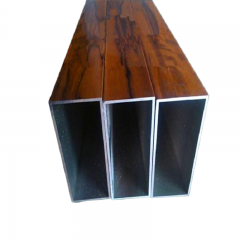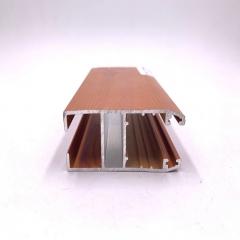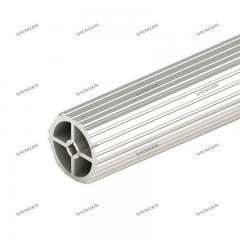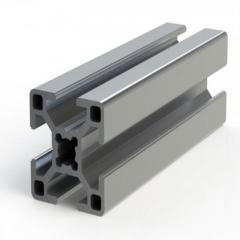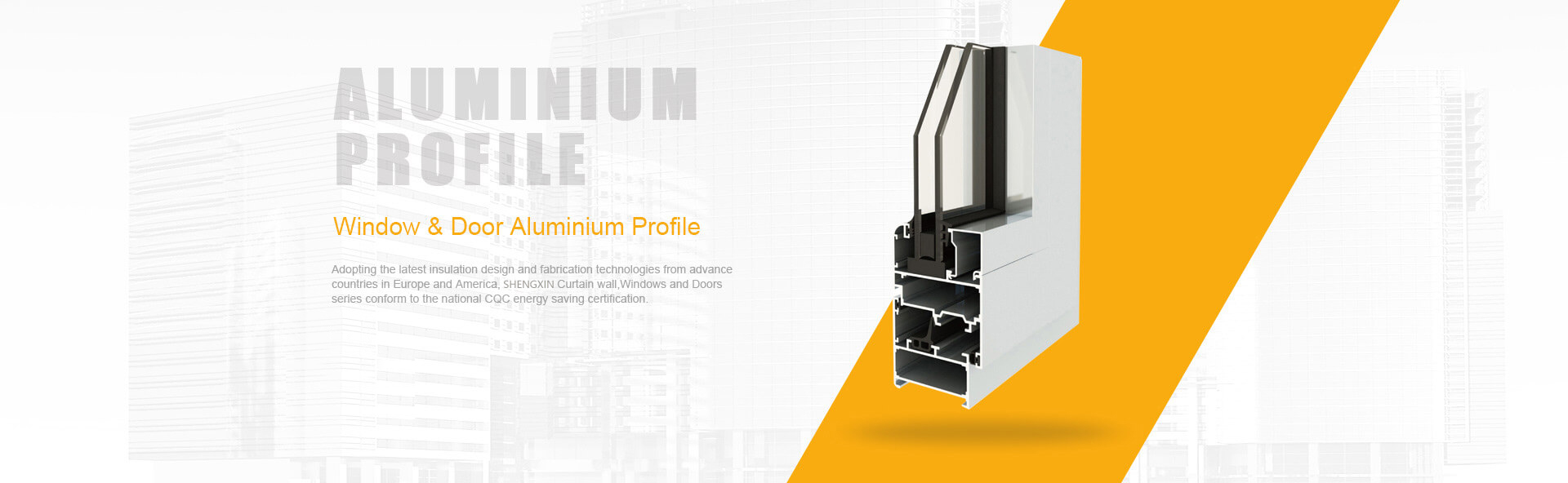
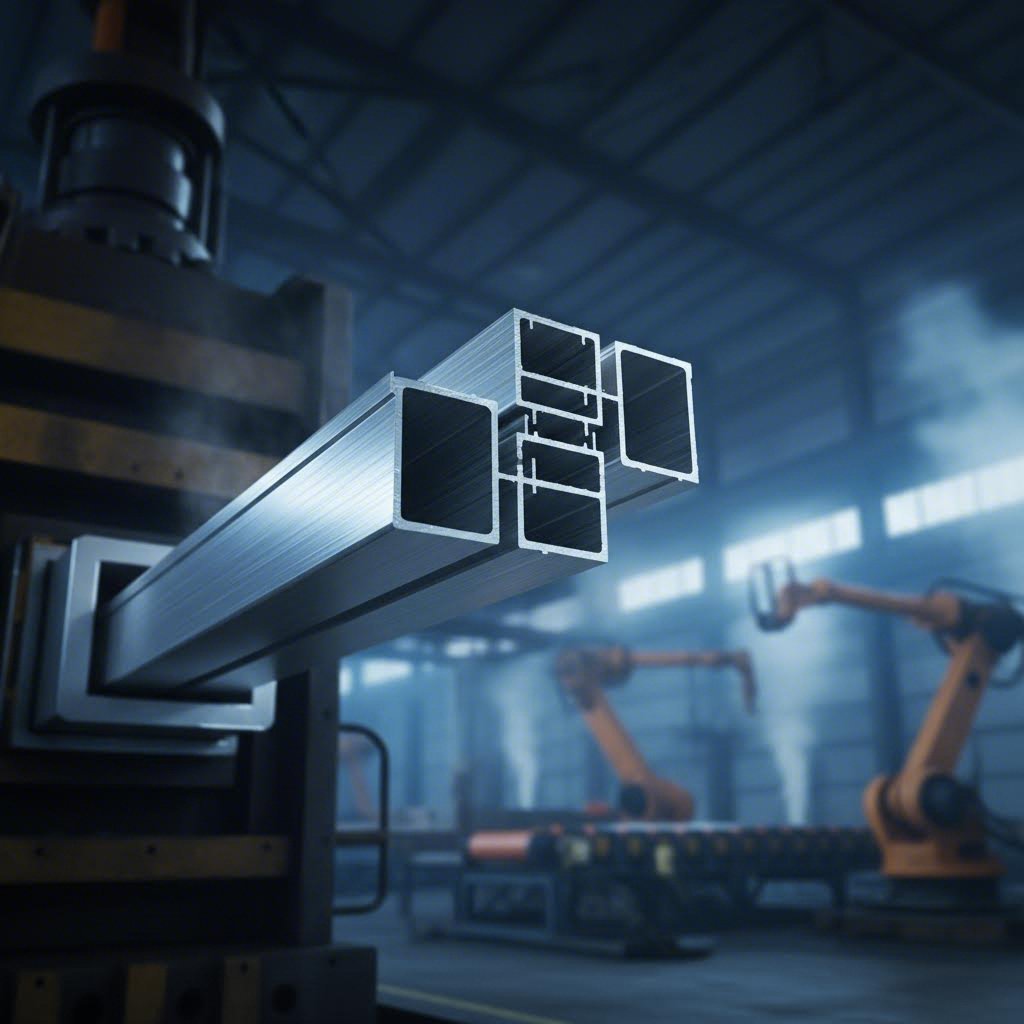
When you need aluminum profiles that fit together perfectly without gaps, wobbles, or assembly headaches, standard extrusions often fall short. That is where precision aluminum extrusions enter the picture. But what exactly makes an extrusion "precision-grade"? Surprisingly, many manufacturers use this term without clearly defining it.
Precision aluminum extrusions are profiles manufactured to tighter dimensional tolerances than standard industry specifications, typically achieving tolerances 30-35% stricter than conventional extrusions, with enhanced surface finish requirements and rigorous quality control at every production stage.
The difference between standard and precision extrusion comes down to three critical factors: dimensional accuracy, surface quality, and process control.
Consider dimensional tolerances first. According to The Aluminum Association's tolerance tables, both "standard" and "precision" tolerance categories exist for extruded profiles. For a dimension between 0.250 and 0.499 inches, a standard tolerance allows plus or minus 0.008 inches of deviation. The precision tolerance for that same dimension? Just plus or minus 0.005 inches. That 37.5% reduction in allowable variation makes all the difference when components must mate precisely or operate within tight assemblies.
Surface finish requirements also separate these categories. Precision aluminum profiles demand smoother surfaces with minimal die lines, handling marks, and other imperfections. For thinner sections under 0.063 inches, allowable surface condition depths max out at 0.0015 inches for precision work.
Finally, enhanced quality control processes ensure consistency. While standard extrusions undergo routine inspections, precision extrusion manufacturing implements additional checkpoints throughout production. This means tighter monitoring of temperature, pressure, and cooling rates.
So when does an extrusion qualify as precision-grade? The answer lies in measurable specifications across multiple dimensions:
Why does profile precision matter so much in modern manufacturing? Imagine assembling electronic enclosures where heat sinks must contact circuit boards uniformly. A standard extrusion with looser tolerances might create air gaps that reduce thermal transfer efficiency. Or consider aerospace components where weight savings depend on thinner walls that still meet exact dimensional requirements.
Many manufacturers discuss precision extrusion capabilities without specifying actual tolerance values. When evaluating suppliers, always request specific tolerance commitments referenced against published standards like those in Aluminum Standards and Data. This approach ensures you receive genuinely precision-grade profiles rather than marketing language without technical backing.
Understanding what makes profile precision extrusions special is one thing. Knowing how manufacturers actually achieve those tight tolerances? That requires a deeper look at the production process itself. Surprisingly, most industry content glosses over these manufacturing details, leaving engineers and buyers without the technical knowledge they need to evaluate suppliers effectively.
The journey from raw aluminum billet to finished precision profile involves carefully controlled steps where temperature, pressure, and timing work together. Get any of these factors wrong, and tolerances slip from precision-grade back to standard territory.
Every precision extrusion starts with a cylindrical aluminum billet, typically cut from a longer log of alloy material. But here is where precision manufacturing diverges from standard production: the attention to detail begins before aluminum ever touches the extrusion press.
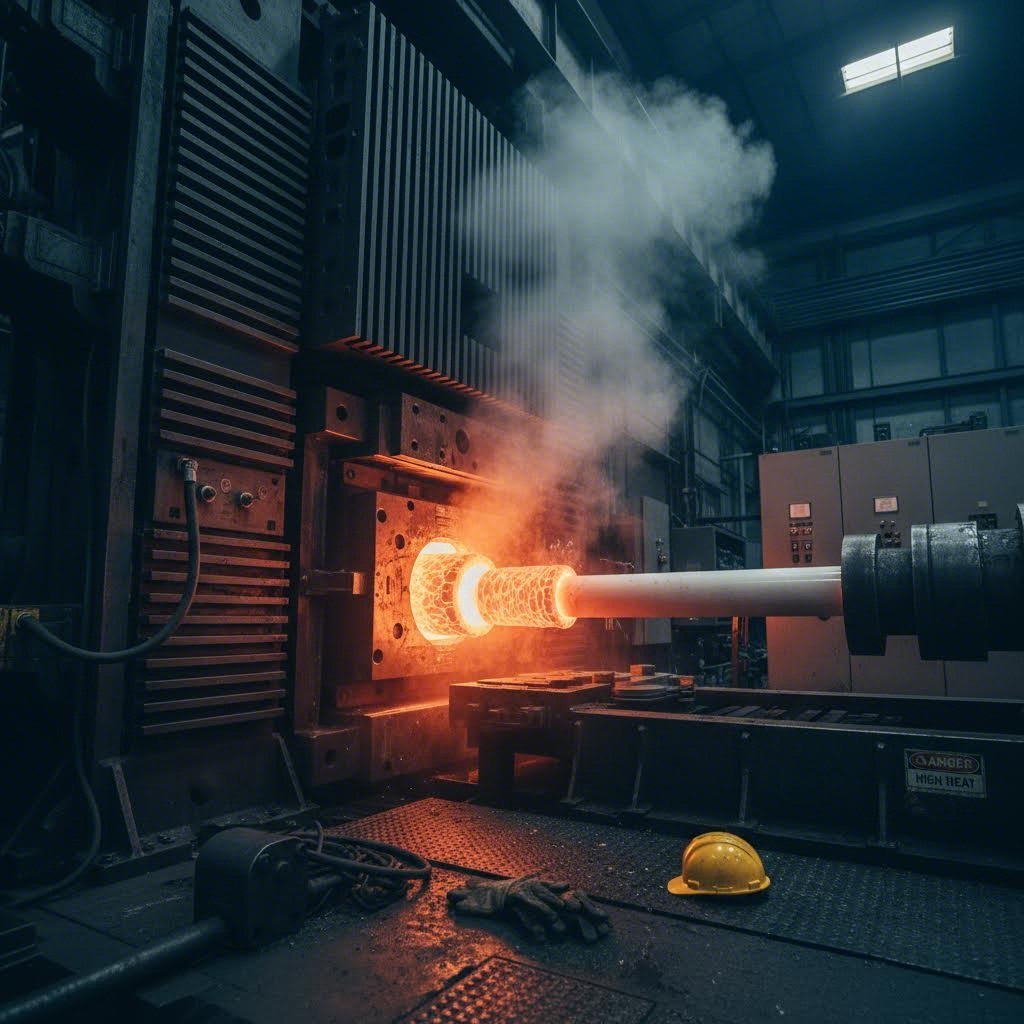
First, the billet undergoes preheating in specialized ovens to temperatures between 400-500°C. This makes the aluminum malleable enough for extrusion without becoming molten. For precision work, temperature control within ±8-10°F along the billet's length proves critical. Why such tight thermal control? Uneven temperatures cause inconsistent material flow through the die, resulting in dimensional variations that push tolerances beyond precision specifications.
Meanwhile, the extrusion die itself receives preheating to approximately 450-500°C. This step maximizes die life while ensuring even metal flow. Think of aluminum extrusion tooling as the heart of the entire operation. The die's internal geometry determines the profile's cross-sectional shape, and any imperfections transfer directly to every meter of extruded material.
The actual extrusion happens remarkably fast. A hydraulic ram applies tremendous pressure, up to 15,000 tons on larger presses, forcing the heated billet through the die opening. The aluminum emerges in the exact shape of the die cavity, traveling along a runout table where controlled cooling begins immediately.
Achieving precision extrusions demands quality interventions at every manufacturing stage. Here is the sequential process with the specific checkpoints that separate precision work from standard production:
Equipment capacity also influences precision capabilities significantly. Press tonnage determines the maximum profile size and complexity that can be extruded with proper material flow. Larger presses ranging from 3,000 to over 5,500 tons handle wider, more complex profiles while maintaining the pressure consistency needed for tight tolerances. According to industry data, the period between 2022 and 2024 saw approximately 8-10 new presses slated specifically for automotive applications requiring tight tolerance lineals, primarily in the 10-inch or larger billet diameter range.
The critical takeaway? Precision aluminum extrusions result from controlled processes at every stage, not just one exceptional step. From billet temperature to final inspection, each checkpoint builds upon the previous one. When evaluating potential suppliers, asking about their quality control protocols at each manufacturing stage reveals far more about their true precision capabilities than simply accepting claims at face value.
You have learned how precision aluminum extrusions are manufactured. But here is a question many engineers overlook until problems arise: does the aluminum alloy itself affect your ability to achieve tight tolerances? Absolutely. The metallurgical composition of your chosen alloy directly influences extrudability, dimensional stability during cooling, surface finish quality, and how well the profile responds to secondary machining operations.
Not every aluminum alloy extrudes equally well. Some flow smoothly through complex die geometries while maintaining dimensional accuracy. Others fight the process, making precision aluminum extrusion far more challenging and expensive. Understanding these differences before specifying materials saves headaches during production.
The 6000 series aluminum alloys dominate precision extrusion applications for good reason. These alloys use magnesium and silicon as their primary alloying elements, creating a composition that responds exceptionally well to the extrusion process. According to Clinton Aluminum, the 6000 series offers excellent extrudability combined with heat treatability at the extrusion temperature itself, resulting in profiles that are strong, easily weldable, and corrosion resistant.
What makes certain alloys better suited for precision work? Consider these metallurgical factors:
The 7000 series alloys, which use zinc as the primary alloying element, offer exceptional strength but present trade-offs for precision applications. While 7000 series alloys provide excellent weldability in heat-affected zones, they sacrifice the corrosion resistance and formability that make 6000 series alloys so versatile for aluminium precision work.
When specifying precision aluminum extrusion, the choice often narrows to two workhorses: 6063 and 6061 aluminum. Both belong to the 6000 series and share magnesium and silicon as alloying elements, yet they serve distinctly different purposes.
Aluminum 6063 stands as the most popular alloy for extrusion applications worldwide. Why? Its unique properties allow it to be formed into complex shapes with remarkably smooth surfaces. This makes 6063 ideal for visible architectural profiles, precision trim components, window and door frames, and applications where surface appearance matters alongside dimensional accuracy. The alloy accepts anodizing exceptionally well, producing consistent, attractive finishes.
Aluminum 6061, developed in 1935, emerged as a precipitation-hardened alloy offering greater structural strength. During heat treatment, particles disperse evenly throughout the metal's grain structure, preventing displacement and increasing durability. According to Eagle Aluminum, 6061-T6 achieves ultimate tensile strength of at least 42,000 psi and yield strength of at least 35,000 psi. Compare that to 6063-T6's ultimate tensile strength of 28,000 psi and yield strength of 23,000 psi.
For machined aluminum extrusion applications, 6061 often wins out. Its higher strength allows thinner walls while maintaining structural integrity, and it responds well to CNC machining operations that add features after extrusion. However, 6063 offers better formability and acceptance of anodized finishes, making it the preferred choice when visual appeal ranks highly alongside precision requirements.
| Alloy | Typical Applications | Precision Capability | Surface Finish Quality | Machinability |
|---|---|---|---|---|
| 6063 | Architectural trim, window frames, door frames, furniture, pipe and tubing, visible profiles | Excellent - ideal for complex shapes with tight tolerances | Superior - smooth surfaces, excellent anodizing response | Good - softer material cuts easily but may require careful tool selection |
| 6061 | Structural components, bicycle frames, marine parts, aircraft structures, heavy-duty framing | Very Good - slightly less formable than 6063 but maintains accuracy | Good - acceptable finish, responds well to applied coatings | Excellent - higher strength allows aggressive machining with good chip formation |
| 7075 | Aerospace components, military applications, high-stress structural parts, racing components | Moderate - high strength can complicate extrusion of complex profiles | Fair - may require additional surface treatment for uniform appearance | Challenging - high hardness (HB 150 in T6) increases tool wear and requires greater cutting forces |
The 7075 alloy deserves consideration for applications demanding extreme strength. With tensile strength approximately 1.5 to 2 times that of 6061, this zinc-based alloy approaches steel-like performance at a fraction of the weight. However, Wellste notes that 7075 presents challenges for precision work: it is more difficult to weld, prone to cracking during processing, and may be unstable when anodized. The alloy costs approximately 20-40% more than 6061, and its processing demands stricter controls to achieve comparable precision.
So which alloy should you specify? The decision hinges on your project's priorities. If surface appearance, formability, and excellent anodizing response matter most, 6063 aluminum delivers optimal precision results for architectural and industrial profiles. When structural strength takes precedence and secondary machining will add features, 6061 provides the balance of extrudability and performance most projects require. Reserve 7075 for aerospace, military, or high-performance applications where its exceptional strength justifies the added cost and processing complexity.
With your alloy selected, the next critical decision involves understanding exactly what tolerances you can realistically specify and how profile design affects achievability.
You have selected the right alloy for your project. Now comes the question that separates successful precision aluminum extrusion projects from frustrating ones: what tolerances can you actually specify, and when do standard tolerances simply fall short?
Understanding tolerance specifications requires more than scanning a table of numbers. You need to know how different dimensional characteristics interact, what trade-offs exist between profile complexity and achievable accuracy, and when pushing for tighter tolerances makes sense versus when it simply inflates costs without meaningful benefit.
Tolerance specifications for extruded aluminum CNC applications follow standards established by The Aluminum Association. These standards define two primary categories: standard tolerances and precision tolerances. According to Keymark Corporation's tolerance documentation, these specifications apply to the "average profile," meaning that aggressive profile characteristics may require wider than standard tolerance while simpler designs may achieve closer than precision tolerance.
What does this mean practically? The tolerance you can hold depends on multiple interrelated factors:
When specifying tolerances, remember that dimensions composed of two or more component dimensions carry cumulative tolerance. If you specify both an overall width and internal feature locations, the applicable tolerance equals the sum of tolerances for each component dimension. This stacking effect catches many designers off guard when assemblies do not fit as expected.
Here is how standard and precision tolerances compare across key dimensional characteristics:
| Dimensional Characteristic | Standard Tolerance | Precision Tolerance | Notes |
|---|---|---|---|
| Wall Thickness | ±10% of nominal | ±5% to ±7% of nominal | Minimum wall depends on circumscribed circle diameter and alloy |
| Angular Dimensions | ±1° to ±2° | ±0.5° to ±1° | Varies based on dimension location within profile |
| Straightness | 0.0125" per foot | 0.006" to 0.008" per foot | Must be met in all orientations including non-self-supporting |
| Twist | 0.5° per foot | 0.25° per foot | Measured with profile on flat surface, deviation from straightness subtracted |
| Flatness | ±0.004" per inch of width | ±0.002" per inch of width | Critical for heat sinks and mating surfaces |
| Cross-Sectional Dimensions | ±0.008" per inch | ±0.005" per inch | Based on derived cross section size |
Notice how precision tolerances consistently run 30-50% tighter than standard specifications. For CNC aluminium extrusion applications where profiles feed directly into automated machining operations, these tighter tolerances reduce setup time, minimize fixturing complexity, and improve first-article pass rates.
Standard extrusion tolerances work perfectly well for many applications. Structural framing, general-purpose channels, and decorative trim rarely demand precision-grade accuracy. But certain applications absolutely require tighter specifications.
Sounds straightforward? Here is where it gets interesting. Between standard precision and what some manufacturers call "ultra-precision," exists a capability gap that competitors rarely explain clearly.
Ultra-precision extrusions, as described by Taber Extrusions, push tolerances even further. Their micro-extrusion capabilities achieve wall thicknesses down to 0.020 inches with key characteristic tolerances of ±0.001 inches in some cases. These capabilities serve specialized industries including aerospace, medical devices, electronics, and military applications where standard precision tolerances still cannot meet requirements.
When should you specify beyond standard tolerances? Consider these scenarios:
Achieving precision tolerances requires designing profiles that extrusion processes can actually produce consistently. Several geometric factors directly impact tolerance capability:
Minimum wall thickness: According to Engineers Edge, minimum extrudable wall thickness for aluminum depends on the profile shape and the smallest circumscribed circle enclosing the cross-section. Smaller circumscribed circles allow thinner walls. For 6063 alloy, walls as thin as 0.040 inches are achievable in smaller profiles, while micro-extrusion presses push this boundary to 0.020 inches for specialized applications.
Corner radii: Sharp corners create stress concentrations in extrusion dies, reducing tool life and potentially causing material flow problems. Using generous radii wherever possible improves both die longevity and dimensional consistency. A good practice? Specify the largest radius your design can accommodate.
Section thickness transitions: Extreme changes in wall thickness within a single profile complicate metal flow through the die. Where thin sections meet thick sections, material velocity differs, potentially causing distortion. Gradual transitions between thick and thin areas improve extrudability and tolerance control.
Profile complexity: The more intricate the cross-sectional geometry, the harder it becomes to maintain precision tolerances throughout. Complex hollow profiles with multiple voids present greater challenges than simple solid shapes. When precision matters most, simplifying geometry often proves more effective than specifying tighter numbers on a complex design.
Remember this principle from Engineers Edge: "Tolerances are advised to be liberal enough to avoid secondary drawing operations, if possible." In other words, design profiles that can achieve required tolerances directly from extrusion rather than requiring expensive post-processing to meet specifications.
With tolerance specifications clarified and design considerations addressed, the next step involves understanding how secondary operations like CNC machining and surface treatments can enhance precision after extrusion or, if not properly managed, compromise the dimensional accuracy you worked so hard to achieve.
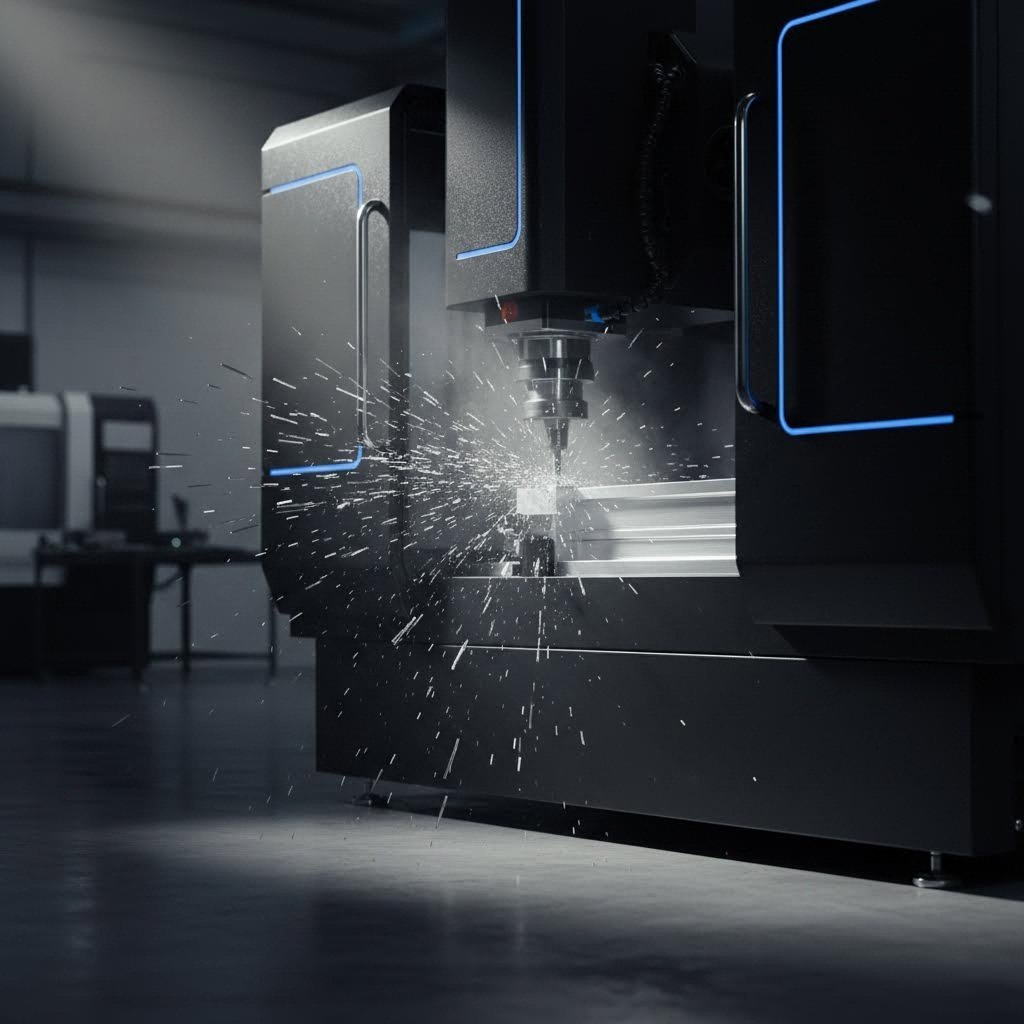
Your precision aluminum extrusion has emerged from the press with tight tolerances and excellent surface quality. But here is the reality most manufacturers do not explain clearly: what happens next can either enhance that precision or compromise everything you achieved during extrusion.
Secondary operations transform raw extrusions into finished components. Holes get drilled, ends get machined, surfaces receive protective coatings. Each step introduces variables that affect final dimensions. Understanding these effects before production begins prevents costly surprises when parts do not fit as expected.
Aluminum extrusion CNC operations add features that extrusion alone cannot create: threaded holes, precise counterbores, complex pockets, and tight-tolerance mating surfaces. When executed properly, CNC machining actually improves dimensional accuracy beyond what extrusion achieves.
According to Yaji Aluminum's tolerance design guide, standard CNC milling tolerances range from ±0.05 mm for general work to ±0.01 mm for high-precision machining. Turning operations typically achieve even tighter tolerances because rotating symmetry reduces many sources of distortion.
What makes aluminum extrusion CNC work different from machining solid stock? The extruded profile already contains the basic geometry, meaning less material removal and reduced machining time. However, extrusions carry inherent profile tolerances that require secondary machining to refine. As the reference notes, understanding material origin helps select appropriate machining tolerances for final features.
Several factors affect achievable precision during post-extrusion machining:
For critical features, GD&T (Geometric Dimensioning and Tolerancing) provides accurate control over form, orientation, and position. This approach proves especially useful in assemblies requiring exact alignment, such as robotics, aerospace devices, and precision housings.
Here is something that catches many engineers off guard: surface treatments change your part dimensions. Anodizing, powder coating, and PVDF finishes each affect tolerances differently. Failing to account for these changes during initial machining means your finished parts may not meet specifications.
According to VMT CNC's technical documentation, anodizing does not simply add a coating to the surface. Instead, it converts the outer layer of aluminum itself into aluminum oxide. Because aluminum oxide is less dense than the original aluminum, it takes up more space, causing dimensional growth.
The growth happens in two directions: inward and outward. A general rule states that roughly half of the total anodized film thickness penetrates into the base metal, while the other half builds on the original surface. Therefore, dimensional growth on a single surface equals approximately half of the total film thickness.
How much compensation do you need? For hard anodizing, VMT recommends reducing single-side dimensions by 0.008-0.012mm to account for oxide buildup. Standard anodizing requires approximately 0.01mm reduction per side. These figures depend on the acid soaking cycle and anodizing duration, so confirm expected oxide thickness with your surface treatment vendor before finalizing machining programs.
Different surface treatments require different allowances:
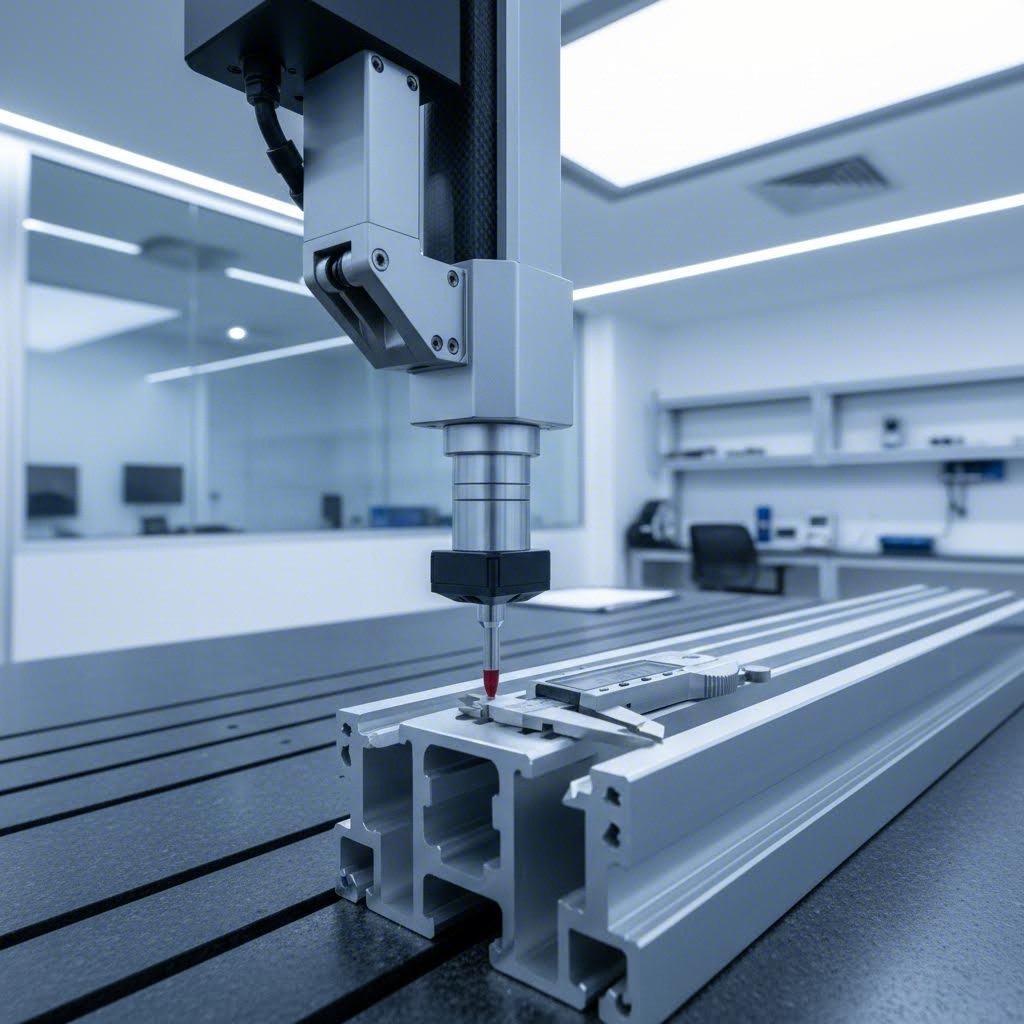
Post-treatment inspection validates whether programmed allowances matched actual coating behavior. Using CMMs, bore gauges, or pin gauges after finishing enables closed-loop process refinement for future production runs.
Beyond machining and surface treatment, precision profiles often require additional fabrication steps. According to the Aluminum Extruders Council, aluminum extrusions rarely leave the press ready for final use. They typically undergo numerous secondary operations to transform them into functional components.
Common secondary operations for precision profiles include:
The critical advantage of integrated processing? When extrusion and secondary operations occur under one quality system, dimensional control flows seamlessly from raw material to finished component. Separate vendors using different measurement methods may yield slightly different results. Establishing consistent measurement datums and procedures ensures repeatability throughout the manufacturing chain.
Many extruders now offer extensive fabrication, finishing, and assembly capabilities, providing a single source for ready-to-assemble or complete components. This integration eliminates the tolerance variations that occur when parts transfer between multiple facilities with different quality standards.
With secondary operations and surface finishing understood, the next consideration involves understanding which industries actually demand these precision capabilities and what specific requirements drive their tolerance specifications.
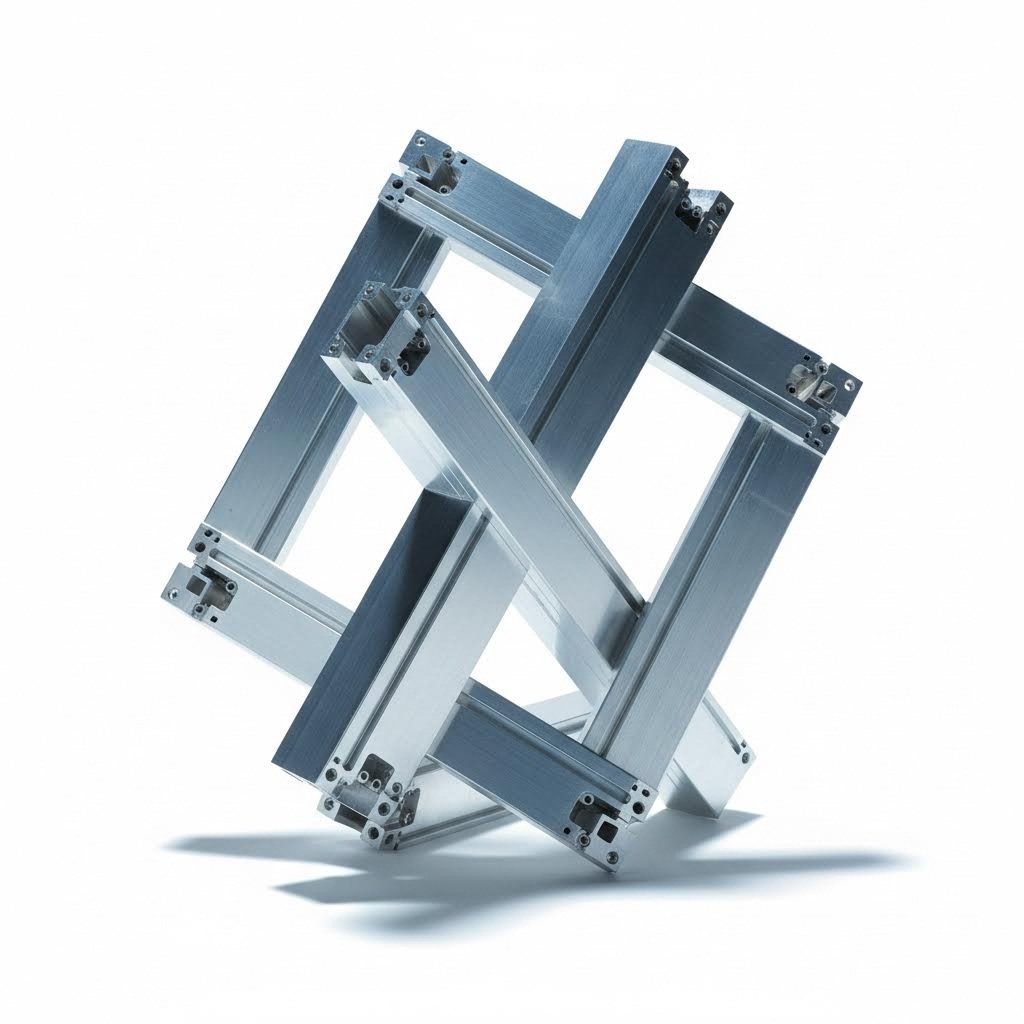
You now understand how precision aluminum extrusions are manufactured, which alloys work best, what tolerances you can specify, and how secondary operations affect final dimensions. But here is a question worth exploring: which industries actually need these capabilities, and what drives their specific requirements?
Different sectors demand precision for entirely different reasons. Aerospace manufacturers obsess over weight savings that require exact-fit components. Medical device makers need profiles that meet biocompatibility standards while maintaining dimensional accuracy for critical instruments. Electronics designers require thermal management solutions where even minor tolerance variations affect heat dissipation performance.
Understanding these industry-specific demands helps you evaluate whether your project truly requires precision-grade extrusions or whether standard tolerances might suffice.
When it comes to precision requirements, aerospace and defense applications set the bar highest. According to Taber Extrusions, aluminum has helped make human flight possible from the Wright brothers through NASA's space exploration programs. The material's minimal maintenance requirements, lightweight strength, flexibility at low temperatures, and engineering versatility make it the obvious choice for aircraft and aerospace applications.
What makes aerospace precision demands unique? Consider that a commercial aircraft contains thousands of extruded aluminum components. Each one must fit perfectly with mating parts while withstanding extreme temperature variations, vibration, and pressure differentials. Weight optimization drives designers to specify the thinnest possible walls while maintaining structural integrity. This combination of thin walls, complex geometries, and exact fit requirements pushes tolerances to their tightest achievable limits.
Typical aerospace applications for precision aluminum profiles include:
Defense applications demand equally rigorous precision. According to Mifa's precision extrusion documentation, their profiles serve defense markets with dimensional tolerances starting from ±0.02 mm. These components appear in waveguides, radar system components, wing parts, countermeasure system hardware, guidance systems, drones, launch rails, and electronic housings.
Microextrusions play an increasingly important role in both sectors. Taber's miniature extrusion capabilities achieve cross-sectional areas down to 0.075 square inches with minimum wall thicknesses of 0.010 inches and key characteristic tolerances of ±0.001 inches in select cases. These submillimeter-scale profiles function invisibly throughout aircraft and weapons systems, serving crucial roles in communications, thermal management, and guidance systems.
The medical sector presents precision challenges that differ fundamentally from aerospace requirements. According to the Aluminum Extruders Council, aluminum extrusions prove well suited for healthcare environments thanks to the material's light weight, corrosion resistance, design flexibility, ease of machining, speed to market, and durability.
What makes medical precision requirements unique? Biomedical devices must meet stringent dimensional specifications while also satisfying biocompatibility, sterilization, and regulatory requirements. A surgical instrument component that falls outside tolerance specifications might not just fail to function properly. It could potentially harm patients.
The extrusion process delivers near-net shapes that reduce cost and time compared to alternative manufacturing methods. More importantly for precision applications, extruded profiles can achieve the tight tolerances needed for medical components and instruments. Mifa notes that their precision extrusion capabilities serve medical applications including:
Electronics applications share the medical industry's need for miniaturization but add thermal management as a primary driver. Heat sinks represent perhaps the most tolerance-critical electronic application. When a heat sink's mating surface deviates from flatness specifications, air gaps form between the aluminum and heat-generating components. These gaps dramatically reduce thermal transfer efficiency, potentially causing component failure.
Additional electronics applications requiring precision profiles include:
Miniature aluminum extrusions serve both electronics and medical instruments where component size continues shrinking. Profile dimensions as small as 3 mm diameter with weights from 0.003 kg/m enable applications that previously required more expensive machining from solid stock.
Beyond high-tech sectors, precision aluminum profiles serve essential functions in industrial machinery and architectural systems. These applications often surprise people who assume precision tolerances only matter for aerospace or medical devices.
Industrial applications demanding precision include:
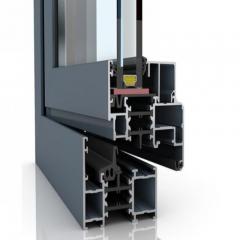
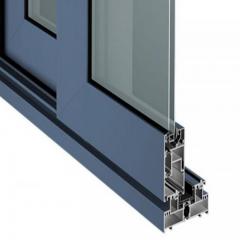
Architectural applications demonstrate how precision affects everyday functionality. Window frames and door systems represent classic examples where profile precision directly impacts performance. When frame profiles meet exact specifications, weatherstripping compresses uniformly, glazing fits properly, and hardware operates smoothly. Deviations from tolerance create air gaps that reduce energy efficiency, misaligned hardware that binds during operation, and inconsistent aesthetics that detract from building appearance.
The mobility market, including automotive applications, increasingly relies on precision aluminum profiles. According to Mifa, this sector demands innovation supported by automated processes ensuring consistency and quality. Specialized alloys including 6061, 6082, and high-strength variants serve applications in cars, race vehicles, trucks, motorcycles, and trains where weight reduction improves performance and fuel efficiency.
Understanding which industries require precision capabilities helps you make informed decisions about specification requirements. When your application shares characteristics with aerospace, medical, or electronics demands, precision-grade tolerances likely justify their added cost. When your needs align more closely with general industrial or architectural applications, standard tolerances may provide adequate performance at lower expense.
Speaking of expense, the next critical consideration involves understanding exactly what makes precision extrusions cost more and when alternative manufacturing methods might better serve your project requirements.
You have explored industry applications and tolerance specifications for precision aluminum extrusions. Now comes the question that ultimately drives most manufacturing decisions: what does precision actually cost, and when is it genuinely necessary versus over-specification that inflates your budget without meaningful benefit?
Understanding cost drivers helps you make informed decisions. Sometimes precision-grade tolerances justify their premium. Other times, standard extrusions perform identically for your application at significantly lower expense. And occasionally, alternative manufacturing methods like CNC machining from solid stock or die casting serve your needs better than extrusion altogether.
What makes precision extrusions more expensive than standard profiles? The answer involves every stage of manufacturing, from tooling through final inspection.
According to Gabrian International's cost analysis, custom extrusion dies for normal architectural and industrial applications range from $400 to $1,000. Dies for larger parts produced on 2,000-4,000 ton presses can reach $2,000 or higher. Precision work pushes these costs further because tighter die tolerances require more precise machining and often more expensive tool steels.
Beyond tooling, several factors compound precision extrusion costs:
Surface treatment costs add another layer. According to Gabrian's data, anodizing and powder coating typically range from $1,200 to $1,400 per metric ton depending on profile complexity. Simple drilling operations add $200-$300 per metric ton, while complex machining involves tooling costs plus machining time charges.
Raw material pricing fluctuates significantly. Aluminum has varied anywhere from $1,500 to $3,500 per metric ton in recent years, affected by global demand, political events like the Russia-Ukraine conflict, and environmental restrictions in major producing countries like China. When aluminum prices spike, the base cost for both standard and precision extrusions rises proportionally.
Here is a question worth asking before specifying precision tolerances: does your application genuinely require them?
Many projects over-specify tolerances without meaningful functional benefit. Consider these scenarios where standard extrusions typically perform adequately:
The key question: will tolerance variations within standard specifications affect your product's function, safety, or customer perception? If not, standard tolerances likely serve your needs at lower cost.
Sometimes the choice is not between standard and precision extrusion but between extrusion and entirely different manufacturing approaches. According to ETCN Machining's comparison analysis, understanding when each method excels helps you optimize both cost and performance.
CNC machining from solid aluminum stock offers exceptional precision. Computer-controlled processes achieve tolerances as tight as ±0.001 inches, significantly better than even precision extrusion specifications. However, machining removes material from solid billets, generating substantial waste and requiring longer production times per part.
Die casting provides an alternative for complex three-dimensional shapes that extrusion cannot produce. The process forces molten aluminum into reusable steel molds, creating near-net-shape parts quickly. However, die casting typically achieves looser tolerances than precision extrusion and requires expensive tooling that only makes sense at high volumes.
| Factor | Precision Extrusion | CNC Machining from Solid | Die Casting |
|---|---|---|---|
| Achievable Tolerances | ±0.005" typical; ±0.001" for micro-extrusion | ±0.001" to ±0.0005" achievable | ±0.010" to ±0.020" typical |
| Cost Per Unit at Low Volume | Higher due to die costs | Competitive; no tooling investment | Very high due to mold costs |
| Cost Per Unit at High Volume | Lowest; die costs amortize quickly | Higher; machining time per part unchanged | Competitive once mold costs amortize |
| Design Flexibility | Limited to constant cross-sections | Nearly unlimited 3D geometry | Complex 3D shapes possible |
| Material Waste | Minimal; near-net-shape process | Significant; subtractive process | Low; near-net-shape process |
| Lead Time for First Parts | 3-4 weeks for die fabrication | Days to weeks depending on complexity | 8-12 weeks for mold fabrication |
| Ideal Application | Long profiles, consistent cross-sections, medium to high volumes | Complex features, tight tolerances, prototypes, low volumes | Complex 3D parts, very high volumes |
As ETCN notes, combining extrusion with CNC machining often provides the best of both approaches. Extruding basic profiles saves material and reduces base cost, then CNC machining adds complex features, holes, threads, or tight-tolerance surfaces. This hybrid approach proves especially beneficial when parts are long or repetitive in cross-section but require per-part precision or detailed features.
The cost-effectiveness of each method depends heavily on production volume and part complexity. For runs exceeding several hundred pieces with consistent cross-sections, precision extrusion typically offers the lowest per-unit cost. For low volumes, prototyping, or parts requiring features impossible to extrude, CNC machining from solid stock often makes more economic sense despite higher per-part machining time.
Before specifying precision tolerances or choosing between manufacturing methods, consider these questions:
The answers guide you toward the most cost-effective approach. When precision genuinely matters for function or safety, the premium proves worthwhile. When standard tolerances suffice, accepting them saves money without sacrificing performance. And when your geometry or volume requirements favor alternative methods, recognizing this early prevents costly manufacturing decisions.
With cost factors understood, the final consideration involves selecting a manufacturing partner with the capabilities, equipment, and quality systems to deliver your precision requirements consistently.
You understand tolerance specifications, alloy selection, manufacturing processes, and cost factors. Now comes the decision that brings all this knowledge together: choosing the right precision extrusion partner who can consistently deliver the quality your project demands.
Finding a custom aluminum extrusion supplier involves more than comparing prices on quotes. The wrong partner means missed deadlines, out-of-spec parts, and frustrating communication gaps. The right partner functions as an extension of your engineering team, offering technical guidance from initial design through production ramp-up.
What separates a capable aluminum extrusion manufacturer from one that merely claims precision capabilities? Let's break down the evaluation criteria that matter most.
When assessing potential suppliers, dig beyond marketing claims into specific, verifiable capabilities. According to Inquivix Technologies' supplier selection guide, a supplier's production capacity must align with your project scope and technical demands. Start by examining equipment range and press capabilities.
Press tonnage directly affects what profiles a manufacturer can produce with precision tolerances. Larger presses ranging from 3,000 to over 5,500 tons handle wider, more complex profiles while maintaining the pressure consistency needed for tight specifications. Ask potential suppliers about their press range and whether their equipment matches your profile requirements.
Consider this: a manufacturer operating 35 extrusion presses spanning 600T to 5500T capacity, like Shengxin Aluminium, demonstrates the equipment diversity needed to handle everything from miniature precision profiles to large architectural sections. This range matters because your future projects may require different press capabilities than your current needs.
Beyond press capacity, evaluate these technical capabilities:
Quality certifications provide third-party validation of manufacturing discipline. According to Profile Precision Extrusions, suppliers serving aerospace, medical, automotive, and defense industries must demonstrate awareness of their contribution to product safety and conformity throughout their organization and supply chain. Look for ISO 9001 certification as a baseline, with industry-specific certifications like AS9100 for aerospace or IATF 16949 for automotive when your application demands them.
The best precision extrusion partner does more than manufacture your parts. They help optimize designs for manufacturability before die fabrication begins. According to Aluminum Processing Hub's buyer guide, early design input from experienced suppliers leads to cost savings and improved manufacturability.
What does end-to-end support actually look like? A comprehensive precision extrusion partner provides:
Why does integrated processing matter so much for precision work? When extrusion and secondary operations occur under one roof with consistent quality systems, dimensional control flows seamlessly from raw material to finished component. Transferring parts between multiple vendors introduces measurement variations and communication gaps that compromise tolerance control.
Suppliers with over 30 years of experience, extensive CNC machining centers, and comprehensive surface treatment capabilities under one operation demonstrate the infrastructure needed for complex precision projects. This integration eliminates the handoff problems that plague multi-vendor supply chains.
Before requesting quotes, use this checklist to evaluate potential precision extrusion partners systematically:
According to Inquivix's evaluation criteria, watch for red flags during supplier conversations: refusal to share tolerance matrices, inconsistent answers about secondary operations, or unclear MOQ policies. These warning signs often indicate capability gaps that surface later as quality problems or delivery delays.
Ready to move from evaluation to action? Begin by preparing detailed technical documentation including CAD drawings with dimensional specifications, tolerance callouts, alloy and temper requirements, surface finish specifications, and anticipated production volumes.
Request itemized quotes that separate die costs, per-piece extrusion, secondary operations, surface treatments, and inspection requirements. This breakdown enables fair comparison across suppliers and helps you understand where costs can be optimized.
Ask potential partners to walk through their sample approval process. Understanding how first articles get measured, documented, and approved prevents misaligned expectations when production begins.
The right precision extrusion partner transforms complex tolerance requirements into delivered components that fit perfectly every time. Take time during selection to verify capabilities thoroughly. The investment in careful evaluation pays dividends throughout your project lifecycle through consistent quality, predictable lead times, and responsive technical support when challenges arise.
Ultra-precision aluminum extrusions achieve the tightest tolerances available, with wall thicknesses down to 0.020 inches and key characteristic tolerances of ±0.001 inches. Standard precision extrusions offer tolerances approximately 30-35% tighter than conventional profiles. For extreme accuracy, micro-extrusion presses from specialized manufacturers like Taber or comprehensive facilities such as Shengxin Aluminium with advanced CNC machining centers can refine extruded profiles to meet demanding aerospace, medical, and electronics requirements.
Standard extrusion tolerances allow ±0.008 inches deviation for dimensions between 0.250-0.499 inches, while precision tolerances reduce this to ±0.005 inches—a 37.5% improvement. Precision profiles also require stricter control over straightness (0.006-0.008 inches per foot vs. 0.0125 inches), twist (0.25° vs. 0.5° per foot), and surface finish quality. These tighter specifications require slower extrusion speeds, enhanced temperature control, and additional quality checkpoints throughout manufacturing.
6063 aluminum is the most popular alloy for precision extrusions due to its excellent flow characteristics, superior surface finish, and outstanding anodizing response—ideal for architectural and visible profiles. For structural applications requiring higher strength and secondary machining, 6061 offers better performance with ultimate tensile strength of 42,000 psi compared to 6063's 28,000 psi. Reserve 7075 alloy for aerospace or military applications where exceptional strength justifies higher costs and processing complexity.
Precision extrusions typically cost 15-30% more than standard profiles due to tighter die tolerances, slower extrusion speeds, additional quality checkpoints, and higher rejection rates. Custom die costs range from $400-$2,000+ depending on profile complexity and press size. However, for medium to high volumes with consistent cross-sections, precision extrusion offers lower per-unit costs than CNC machining from solid stock, which generates significant material waste.
Aerospace and defense lead precision demands for aircraft components, supplemental oxygen systems, and guidance system hardware requiring tolerances down to ±0.001 inches. Medical device manufacturers need biocompatible precision profiles for surgical instruments and imaging equipment. Electronics applications demand tight-tolerance heat sinks where dimensional accuracy directly affects thermal performance. Automotive, architectural window systems, and industrial automation also rely on precision profiles for proper sealing, consistent operation, and modular assembly.



 dịch vụ trực tuyến
 0086 136 3563 2360
 sales@sxalu.com
 +86 136 3563 2360
 Việt
Việt English
 français
 Deutsch
 русский
 español
 português
 العربية
 ไทย
ไทย Українська