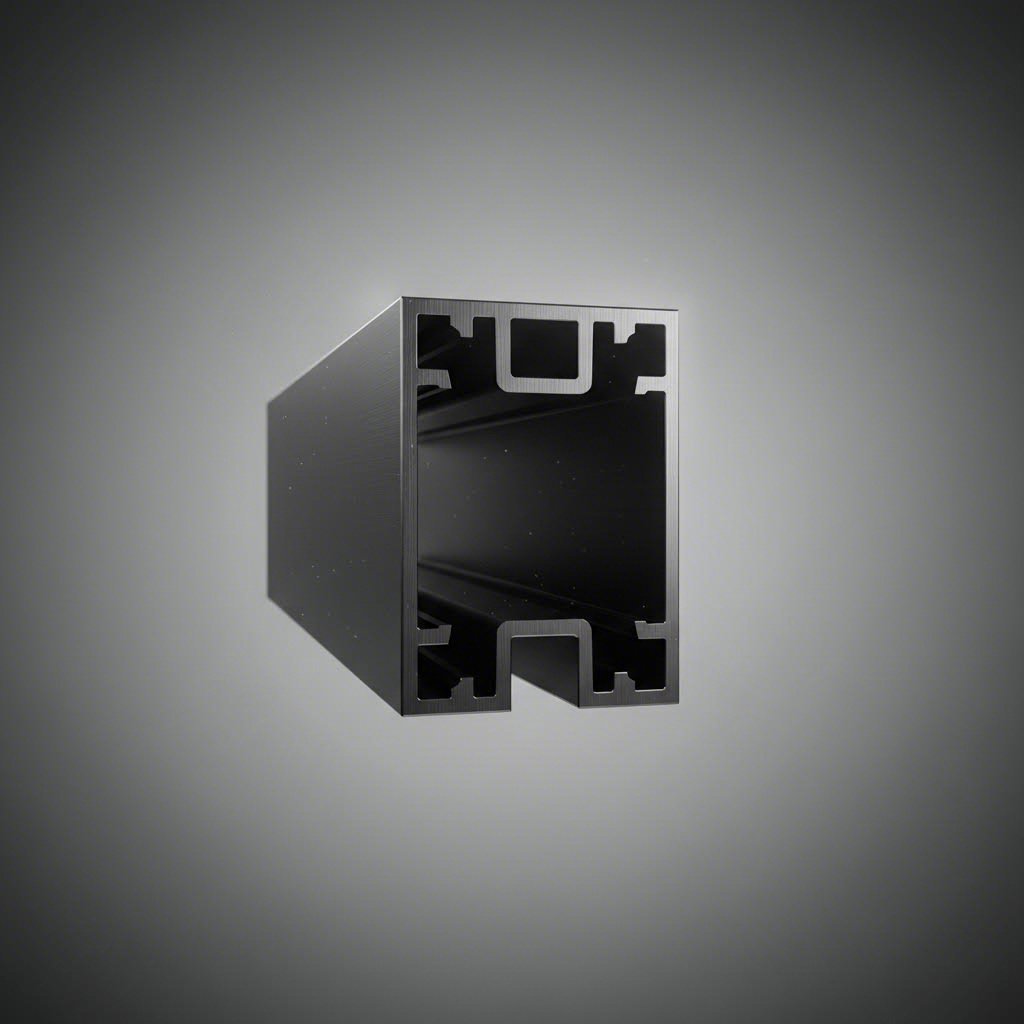
Ever seen a product name like "4080" and wondered what those numbers actually mean? You're not alone. When you're shopping for black aluminum extrusion or planning a build, understanding this naming convention saves you from ordering the wrong parts.
The naming system is refreshingly straightforward once you know the pattern. Those four digits tell you exactly what you're getting in terms of physical dimensions.
A 4080 aluminum extrusion black profile measures 40mm wide by 80mm tall in cross-section. The first two digits represent width, the last two represent height.
This naming convention applies across the entire T-slot profile family. A 2020 profile? That's 20mm x 20mm. A 4040 aluminum extrusion black? You guessed it: 40mm x 40mm square. The rectangular 4080 shape gives you something different: an asymmetrical profile that's twice as tall as it is wide.
You'll also encounter additional letters in full product names. An "L" indicates a light version with thinner walls for non-structural applications, while "S" means a heavy-duty version with maximum wall thickness. No letter typically means standard weight, which balances strength and cost for most projects.
Why choose a rectangular profile instead of a square one? The 4080 sits in a sweet spot that neither the lighter 4040 nor the heavier 8080 can fill.
Imagine you need vertical supports for a workbench. A 4040 profile might flex under heavy loads, while an 8080 adds unnecessary weight and cost. The 4080 gives you that extra rigidity in one direction without doubling your material expense. It resists bending along its taller axis while keeping the footprint compact.
This profile works especially well when your design needs differ between horizontal and vertical planes. Think machine frames where vertical posts need more stiffness than horizontal rails, or enclosures where one dimension matters more than another.
And about that black finish: it's not just for looks. Black anodizing affects corrosion resistance, heat absorption, and surface hardness. Throughout this guide, you'll learn how the T-slot system works, why slot count matters for your design flexibility, what distinguishes quality anodizing from cheap alternatives, and how to choose between profile sizes for your specific project. Whether you're building a 3D printer frame or specifying industrial machine guarding, these fundamentals apply.
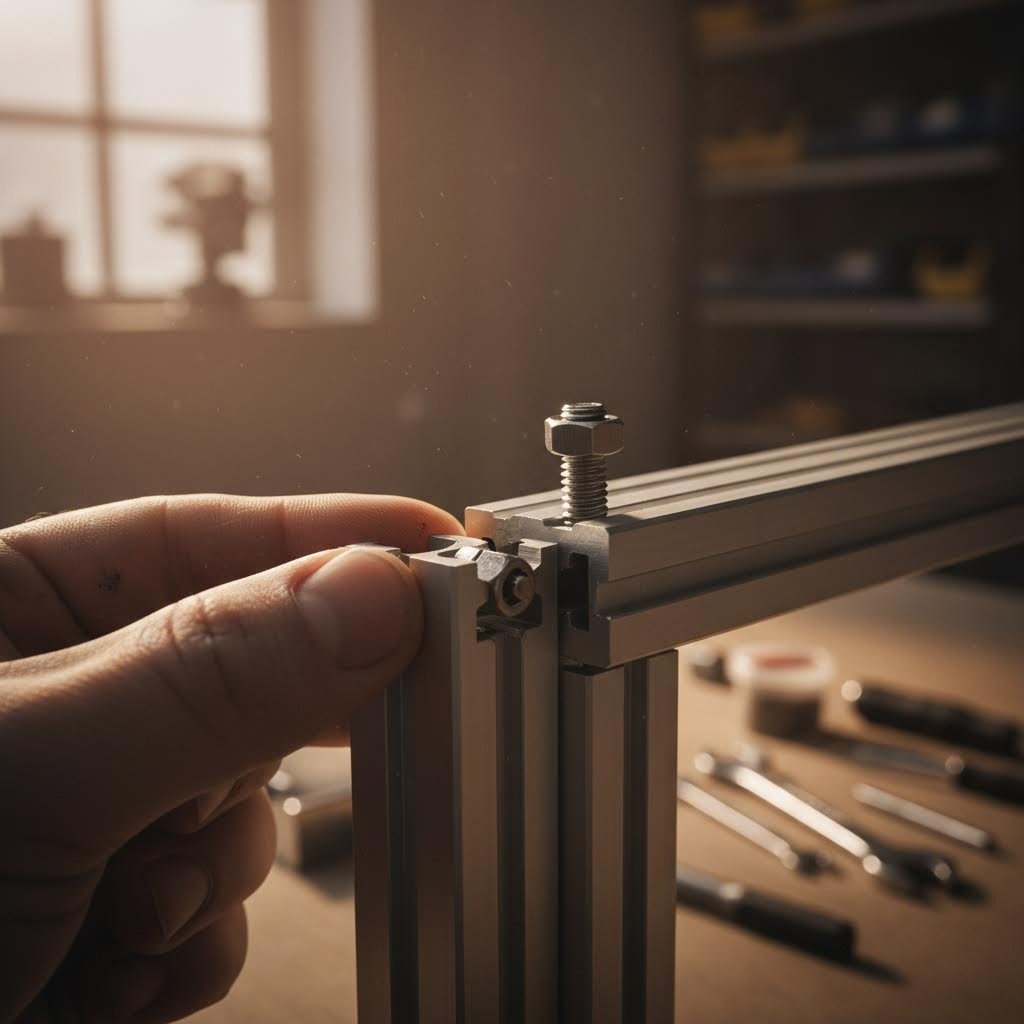
So you've got your 4080 profile picked out. Now what? Understanding how the T-slot channel actually works transforms this aluminum extrusion black bar from a mystery into a building block you can use with confidence.
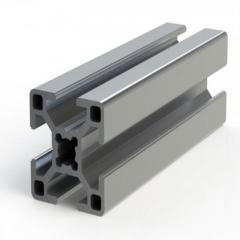
Picture the profile's cross-section. Running along each face, you'll notice channels with a distinctive shape: narrow at the opening, wider inside. That's the T-slot, and it's the reason these profiles are so versatile.
The magic happens when you introduce a T-nut. This small piece of hardware has a head shaped to match the slot's interior width. Slide it in from the end of the profile or drop it through the narrow opening, rotate it 90 degrees, and it locks into place. The nut can't pull out because its head is wider than the slot opening.
Here's the step-by-step assembly sequence for connecting two profiles:
That's it. No welding torch, no drill press, no specialized skills. A single person with a hex key can build surprisingly complex structures. Whether you're working with a compact 2020 aluminum extrusion black for a small project or a larger 2040 aluminum extrusion black for medium-duty frames, the assembly principle stays the same.
When you weld steel, you're making a permanent decision. Made a measurement error? You'll need to cut, grind, and re-weld. Want to add a shelf to your workbench six months later? Break out the welding equipment again, find a skilled technician, and hope you don't warp the existing structure with heat.
T-slot aluminum extrusion black profiles flip that script entirely. Aluminum builds are easier to accomplish in-house because they don't require specialized welding skills or equipment. The modular approach means you can:
This reconfigurability is the core value proposition. Your 4080 profile isn't just a piece of metal; it's an entry point into a broader ecosystem. T-nuts, angle brackets, joining plates, hinges, handles, panel clips, leveling feet: thousands of compatible accessories exist to help you build exactly what you need. Even a t slot aluminum extrusion black 3 by 3 inch frame can incorporate the same hardware family, scaling from desktop projects to industrial installations.
The trade-off? Traditional T-slot connections aren't as rigid as welds. They can loosen over time under vibration, and proper assembly requires careful alignment to maintain precision. For static applications like workbenches, enclosures, or display frames, this rarely matters. For high-vibration environments, you'll want to factor in periodic maintenance or consider advanced self-aligning systems.
Understanding this ecosystem matters because your profile choice affects which hardware you can use. The next section covers why the 4080's six-slot configuration opens up design possibilities that smaller profiles simply can't match.
You've learned how T-slots work. But here's where the 4080 profile starts to separate itself from simpler options: it doesn't just have four slots like a square 4040. It has six. That extra pair of channels changes what you can build and how flexibly you can build it.
Picture the 4080's rectangular cross-section. The 40mm x 80mm profile features six open T-slots: two on each 80mm face and one on each 40mm face. This isn't random. The longer faces get double the mounting options because they have double the surface area.
Compare this to a standard 4040 profile, which offers just four slots, one per face. Or consider a 3030 aluminum extrusion black, which also has four slots but in a smaller package. The 4080 gives you 50% more connection points without jumping to a massive 8080 profile.
Here's what each slot face offers in practical terms:
This layout makes the 4080 particularly useful when you're building frames that need accessories on multiple sides. Imagine a workstation frame where you want monitor arms on one face, tool holders on another, and cable management running along a third. A four-slot profile forces compromises. Six slots give you room to work.
When you're sketching out a project, slot count directly affects your design freedom. More slots mean more places to attach things, but the benefits go deeper than simple math.
With dual slots on the 80mm faces, you can use a black aluminum bracket for extrusion 40mm hardware at multiple points along the same surface. This matters for structural rigidity. Two brackets spaced apart resist twisting forces better than a single bracket, even if both setups use the same total bolt count.
The 8020 t-slot 40 series quarter round aluminum extrusion black and similar specialty connectors also benefit from the extra slots. You can position corner braces exactly where load paths demand them, rather than compromising because your profile only has one slot per face.
For industrial applications, the six-slot configuration supports more complex panel mounting. Safety enclosures often need mesh or polycarbonate panels on multiple faces. With a 3060 aluminum extrusion black or similar rectangular profile, you'd have fewer options for panel retention hardware. The 4080's extra slots let you secure panels at more points, improving both safety and aesthetics.
Here's where things get tricky, and where many buyers run into unexpected problems. Not all T-slots are created equal, and mixing hardware from different suppliers can lead to frustrating fit issues.
The 40 series profiles, including the 4080, typically use an 8mm slot width. This is the European metric standard for this profile size. The actual slot opening is often slightly larger, around 8.2mm, to accommodate bolt heads and T-nut insertion. Smaller profiles like the 20 series commonly use 6mm slots, while larger profiles in the 45 and 50 series often step up to 10mm slots.
The relationship between profile size and slot width follows a logical pattern: larger cross-sections need larger slots to accommodate heavier-duty fasteners that match the profile's load capacity. An 8mm slot accepts M8 bolts and corresponding T-nuts, which provide the clamping force appropriate for 40 series structural applications.
But here's the compatibility challenge. While many manufacturers follow similar dimensional standards, subtle variations exist in slot depth, lip geometry, and tolerance ranges. A T-nut designed for one brand's 8mm slot might fit loosely or too tightly in another brand's profile. The slot shoulders that lock the T-nut in place can vary by fractions of a millimeter, enough to affect joint strength.
If you're sourcing profiles from one supplier and hardware from another, verify these details before committing to large orders:
American fractional-inch systems add another layer of complexity. Profiles designed around inch-based dimensions use entirely different slot sizes and fastener standards. Mixing metric and fractional components simply doesn't work. Stick to one system throughout your project.
The safest approach? Source profiles and hardware from the same supplier whenever possible. If budget or availability forces you to mix brands, invest time in compatibility testing before your build begins. A few sample pieces cost far less than discovering fit problems halfway through assembly.
With slot configuration and compatibility sorted out, the next consideration is surface finish. The black anodizing on your 4080 profile isn't just about appearance. It affects durability, heat behavior, and long-term performance in ways that matter for both maker projects and industrial applications.
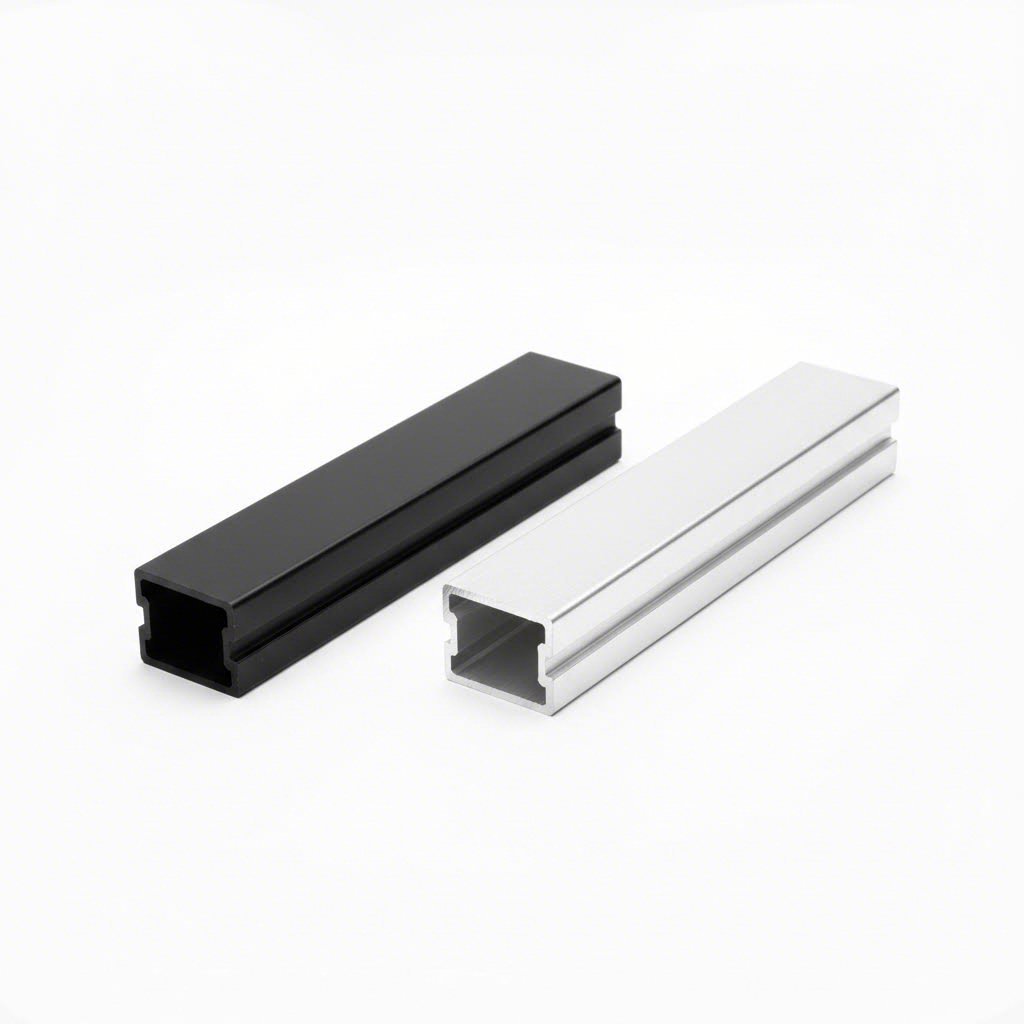
Why pay extra for black anodized aluminum extrusion when natural silver aluminum costs less? It's a fair question. The answer goes beyond aesthetics, touching on corrosion behavior, thermal properties, and surface durability that affect how your build performs over time.
Natural aluminum has a silvery appearance that comes from its thin native oxide layer. This layer forms spontaneously when aluminum contacts air, providing basic protection. But it's only a few nanometers thick, easily scratched, and offers limited defense against harsh environments.
Black anodizing transforms that surface through an electrochemical process that grows a much thicker, harder oxide layer directly into the aluminum. During anodization, the aluminum acts as an anode in an acidic electrolyte bath. Electric current drives oxygen ions into the metal surface, creating a porous aluminum oxide structure. Black dye then fills these microscopic pores, and a sealing step locks everything in place.
The result? A surface that differs from raw aluminum in several practical ways:
For maker projects where appearance matters, like 3D printer frames or display stands, the sleek black finish simply looks better. For industrial applications, the functional benefits often justify the aluminum extrusion price clear vs black difference. You're paying for performance, not just color.
Not all anodizing is created equal. When comparing suppliers, understanding the difference between Type II and Type III anodizing helps you match the finish to your application requirements.
Type II anodizing, also called sulfuric acid anodizing, produces a coating typically between 0.0001" and 0.0005" thick (roughly 2.5 to 12.5 micrometers). This is the standard choice for most T-slot extrusions. It offers good corrosion protection, accepts dyes well for vibrant black coloring, and remains economical for large production runs. Type II works perfectly for general-purpose framing, workbenches, and enclosures where extreme wear resistance isn't the primary concern.
Type III anodizing, known as hard coat or hard anodize, creates a much thicker layer, typically 0.001" to 0.002" (25 to 50 micrometers). This coating is denser, harder, and more abrasion-resistant than Type II. It's the choice for aerospace components, firearms, and industrial equipment exposed to extreme conditions. However, Type III costs more, produces more muted colors, and adds enough thickness to potentially affect tight-tolerance fits.
When evaluating suppliers, ask these questions:
Be cautious when you encounter cheap black anodized aluminum extrusion at prices significantly below market rates. Cutting corners on anodizing thickness or skipping the sealing step saves money but compromises durability. The finish may look identical initially but fade or wear prematurely under real-world use.
For buyers sourcing black anodized aluminum extrusion wholesale, quality consistency across batches matters as much as individual piece quality. Reputable suppliers maintain tight process controls to ensure every meter of profile meets the same standards.
Black powder coated aluminum extrusion offers another path to a dark finish, but the process and results differ substantially from anodizing.
Powder coating works by spraying electrostatically charged powder onto grounded metal, then heat-curing it into a smooth, tough film. The coating sits on top of the aluminum rather than growing into it. This creates a thicker layer, typically 50 to 150 micrometers, compared to anodizing's 5 to 25 micrometers for Type II.
That thickness difference has practical implications. Powder coating can affect dimensional tolerances, potentially interfering with T-nut fit or bracket alignment. You may need to mask slots and critical surfaces before coating. Anodizing adds so little material that it rarely affects assembly.
The table below compares these two surface treatments across key performance factors:
| Finish Type | Thickness Range | Surface Hardness | Corrosion Resistance | Best Use Case |
|---|---|---|---|---|
| Type II Anodizing (Black) | 5-25 µm | High (oxide layer integrated into metal) | Excellent; won't peel if scratched | Precision parts, T-slot profiles, electronics enclosures |
| Type III Hard Anodizing | 35-50 µm | Very high (harder than some steels) | Excellent; enhanced wear resistance | Aerospace, military, extreme-wear applications |
| Black Powder Coating | 50-150 µm | Moderate (softer, more flexible) | Good; chips can expose base metal | Outdoor furniture, industrial enclosures, decorative parts |
Powder coating excels where impact resistance and color variety matter more than precision. It's easier to touch up if damaged and offers textures like matte, gloss, or wrinkle finishes. But for T-slot extrusions where slot geometry and hardware compatibility are critical, anodizing remains the preferred choice.
One more consideration: heat tolerance. Anodized surfaces withstand high temperatures because the oxide layer is essentially ceramic. Powder coating begins breaking down above 200°C, making it less suitable for applications near heat sources or in hot environments.
With surface finish options clarified, the next step is understanding what's inside that black exterior. The alloy grade and temper designation tell you how the profile will perform structurally, and the hardware ecosystem determines what you can actually build with it.
You've seen the dimensions, learned about the slots, and understand the black finish. But what's the profile actually made of? The answer matters whether you're a maker building your first CNC frame or an engineer specifying materials for a production line. The alloy grade and temper designation tell you how the metal will behave when you cut it, drill it, and load it.
When you order a 4080 black profile, you're almost certainly getting 6063 aluminum. This alloy dominates the T-slot market for good reasons that go beyond tradition.
The 6063 alloy belongs to the 6000 series, which means its primary alloying elements are magnesium and silicon. Magnesium adds strength, while silicon lowers the melting temperature and improves how the metal flows through extrusion dies. This combination creates an alloy that's practically designed for the extrusion process.
Here's what makes 6063 the go-to choice for architectural and structural profiles:
You might wonder about 6061, the other popular extrusion alloy. It's stronger, with tensile strength approaching structural steel in the T6 temper. But that extra strength comes with trade-offs. The 6061 alloy is harder to extrude into complex shapes, produces rougher surfaces, and doesn't anodize as cleanly. For T-slot profiles where smooth slot geometry and consistent finish matter, 6063 wins.
This same alloy appears across the profile family, from compact 1010 black aluminum extrusion for lightweight builds to round 6063-T5 aluminum extrusion tube profiles for industry applications. The consistency means you can mix profile sizes and shapes in a single project knowing they'll all behave similarly.
That "T5" after the alloy number isn't random. It tells you exactly how the aluminum was processed after extrusion, and it directly affects the profile's mechanical properties.
Here's what happens during manufacturing. The aluminum billet gets heated and pushed through the extrusion die at high temperature. As the profile emerges, it's still hot. Manufacturers quench it, cooling it rapidly while it's still on the press. This rapid cooling locks the alloying elements in place within the aluminum matrix.
The quenched material then undergoes artificial aging, a controlled heat treatment at temperatures between 325 and 400 degrees Fahrenheit. During aging, the magnesium and silicon atoms form ordered structures called GP zones within the aluminum. These microscopic structures strengthen the metal considerably.
The T5 designation specifically means the profile was cooled from the extrusion temperature and then artificially aged. In practical terms, 6063-T5 delivers an ultimate tensile strength of about 27 KSI (kilopounds per square inch) and a yield strength around 21 KSI.
How does this compare to other tempers? The T6 temper involves a separate solution heat treatment step before aging, producing higher strength: roughly 35 KSI ultimate and 31 KSI yield for 6063-T6. But that extra processing adds cost without providing benefits most T-slot applications need.
For context, consider what those numbers mean in your build:
One practical note: the T5 temper makes the aluminum workable without being soft. You can drill and tap holes cleanly, cut profiles with standard saws, and machine custom features without the metal gumming up your tools. Harder tempers like T6 require more aggressive cutting parameters and wear tooling faster.
Understanding the alloy is only half the picture. Your 4080 profile becomes useful when you connect it to other profiles, panels, and accessories. The T-slot system includes a whole family of hardware designed to work together.
Think of it as a building system rather than just a collection of parts. Each component serves a specific purpose, and knowing your options helps you design better builds. Here are the essential hardware types and what they do:
The beauty of this ecosystem is interchangeability. Hardware designed for 40 series profiles works across the entire 40mm family, whether you're building with 4040, 4080, or specialty shapes. Your aluminum corner extrusions black brackets fit the same way regardless of which profile they're connecting.
When planning a build, start by identifying your connection types. How many right-angle joints do you need? Will you mount panels? Do you need adjustable elements or access doors? Answering these questions helps you create an accurate hardware list before ordering.
Now that you understand what the profile is made of and how to connect it, the next step is comparing it against other profile sizes. Knowing when to choose 4080 over 4040 or 8080 can save you money while ensuring your build performs as intended.
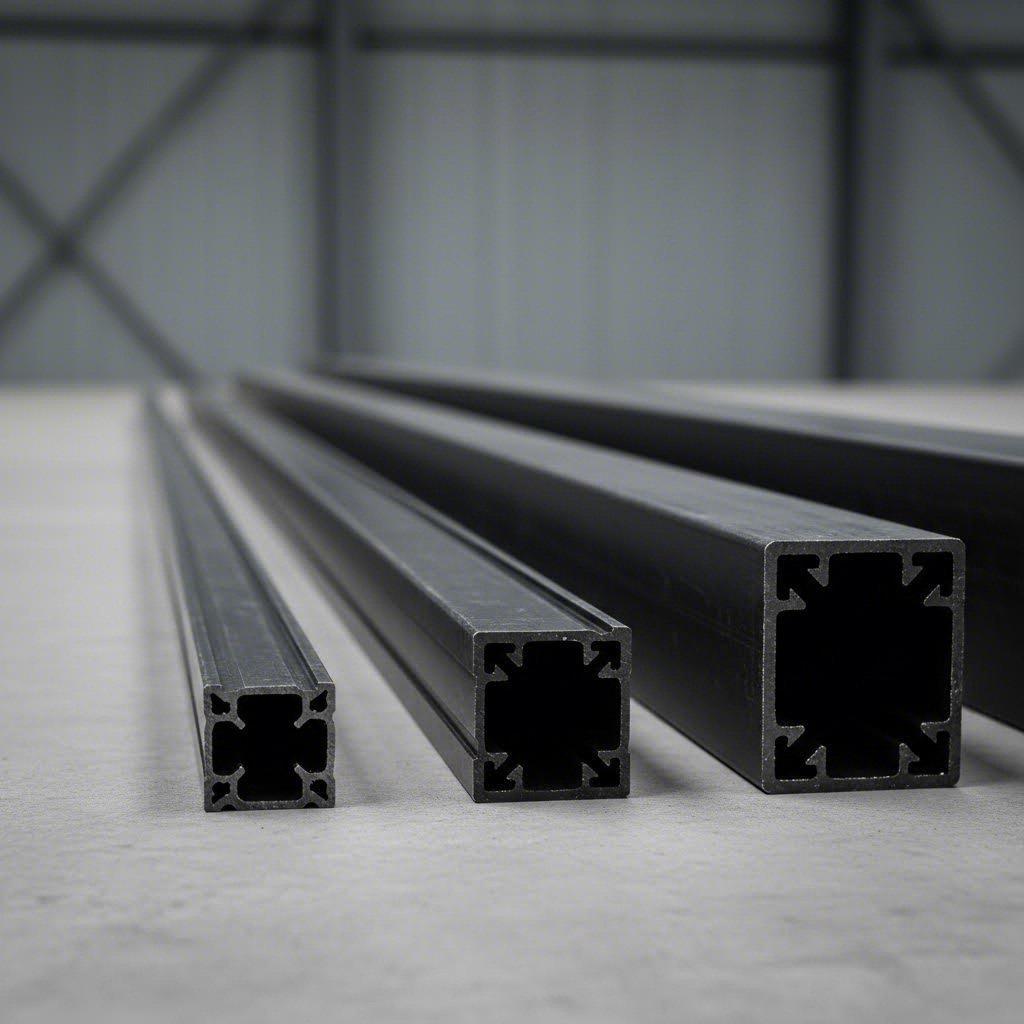
You know what the 4080 is made of and how its slots work. But is it actually the right choice for your project? Maybe a lighter 3030 black aluminum extrusion would save money without sacrificing performance. Or perhaps you need the extra heft of an 8080. Let's break down the options so you can make a confident decision.
When you're standing in front of a catalog or scrolling through product pages, the sheer number of profile sizes can feel overwhelming. This comparison table puts the most common options side by side, with the 4080 highlighted as your reference point.
| Profile | Cross-Section (mm) | Approx. Weight per Meter | Slot Count | Typical Use Case | Relative Cost |
|---|---|---|---|---|---|
| 2020 | 20 x 20 | ~0.5 kg/m | 4 | 3D printer frames, sensor mounts, light fixtures | $ |
| 2040 | 20 x 40 | ~0.9 kg/m | 5 | Printer rails, small enclosures, shelving supports | $ |
| 3030 / Black Aluminum Extrusion 30x30 | 30 x 30 | ~1.0 kg/m | 4 | Medium CNC frames, machine bases, doors | $$ |
| 4080 (Focal Profile) | 40 x 80 | ~2.4 kg/m | 6 | Workbenches, simulators, long rails, conveyor frames | $$$ |
| 4040 | 40 x 40 | ~1.5-1.7 kg/m | 4 | Workstations, carts, machine guards, general framing | $$ |
| 8080 | 80 x 80 | ~4.5 kg/m | 8 | Heavy machinery, structural frameworks, large enclosures | $$$$ |
A few patterns emerge from this data. Weight roughly doubles when you double the cross-sectional area, which makes sense since you're using twice the material. The 40x40 profile weighs approximately 1.5-1.7 kg/m, while the 4080's rectangular shape pushes that to around 2.4 kg/m. Cost follows a similar trajectory, though not always linearly since manufacturing complexity and market demand affect pricing.
Notice how the 4080 sits in a strategic middle ground. It's substantially stiffer than a 4040 in the 80mm direction, yet weighs only about 40% more. Compare that to jumping from 4040 to 8080, where you'd nearly triple your weight and cost for applications that might not need that much capacity.
The slot count column deserves attention too. A 3030w black aluminum extrusion profile gives you four mounting faces, same as a 4040. But the 4080's six slots open up design possibilities that square profiles can't match, especially when you need accessories on multiple sides of the same member.
This is the decision most builders face. Both profiles belong to the 40 series, use the same 8mm slot hardware, and share identical alloy and finish options. So when does the rectangular 4080 make more sense than the square 4040?
Walk through this decision framework to find your answer:
For DIY makers building 3D printer enclosures or small CNC machines, the 4040 often hits the sweet spot. It's rigid enough for most desktop-scale projects, widely available, and keeps costs reasonable. The 4080 becomes the better choice when you're building larger structures like full-size workbenches, sim racing rigs, or equipment frames where specific members need extra stiffness.
Industrial engineers face similar trade-offs at larger scale. Machine guarding, conveyor systems, and automation cells often mix profile sizes strategically. You might use 4080 for main structural rails where deflection control matters, then switch to 4040 or even 3030 for secondary members and internal bracing. This hybrid approach optimizes both performance and cost.
Once you've selected a profile size, you'll need to figure out how much to order. Understanding standard stock lengths helps you minimize waste and shipping costs.
Most manufacturers extrude profiles in 5.8 to 6.0 meter bars as their factory standard. These long pieces get cut down for distribution. Common pre-cut lengths you'll find in stock include:
Buying pre-cut stock lengths saves money when they match your needs. But most projects require specific dimensions that don't align with standard offerings. That's where cut-to-length services come in. Suppliers will cut profiles to your exact specifications, typically with tolerances of plus or minus 0.5mm.
When calculating required lengths for a rectangular frame, remember that corner connections consume some length. If you're building a 1000mm x 600mm frame using corner brackets, your actual profile lengths depend on how you configure the joints. For butt joints where one profile meets the face of another, the outer profile runs the full dimension while the inner profile shortens by the mating profile's width. A 1000mm x 600mm frame using 4080 profiles might need two pieces at 1000mm and two at 520mm (600mm minus two 40mm profile widths).
For complex builds, sketch your frame geometry and label every member with its required length before ordering. Account for any machining operations like end tapping or counterboring that might affect usable length. A few minutes of planning prevents expensive re-orders.
With profile size and lengths sorted out, you're ready to think about real-world applications. The next section explores how makers and industrial users actually put these profiles to work, from 3D printer frames to factory automation cells.
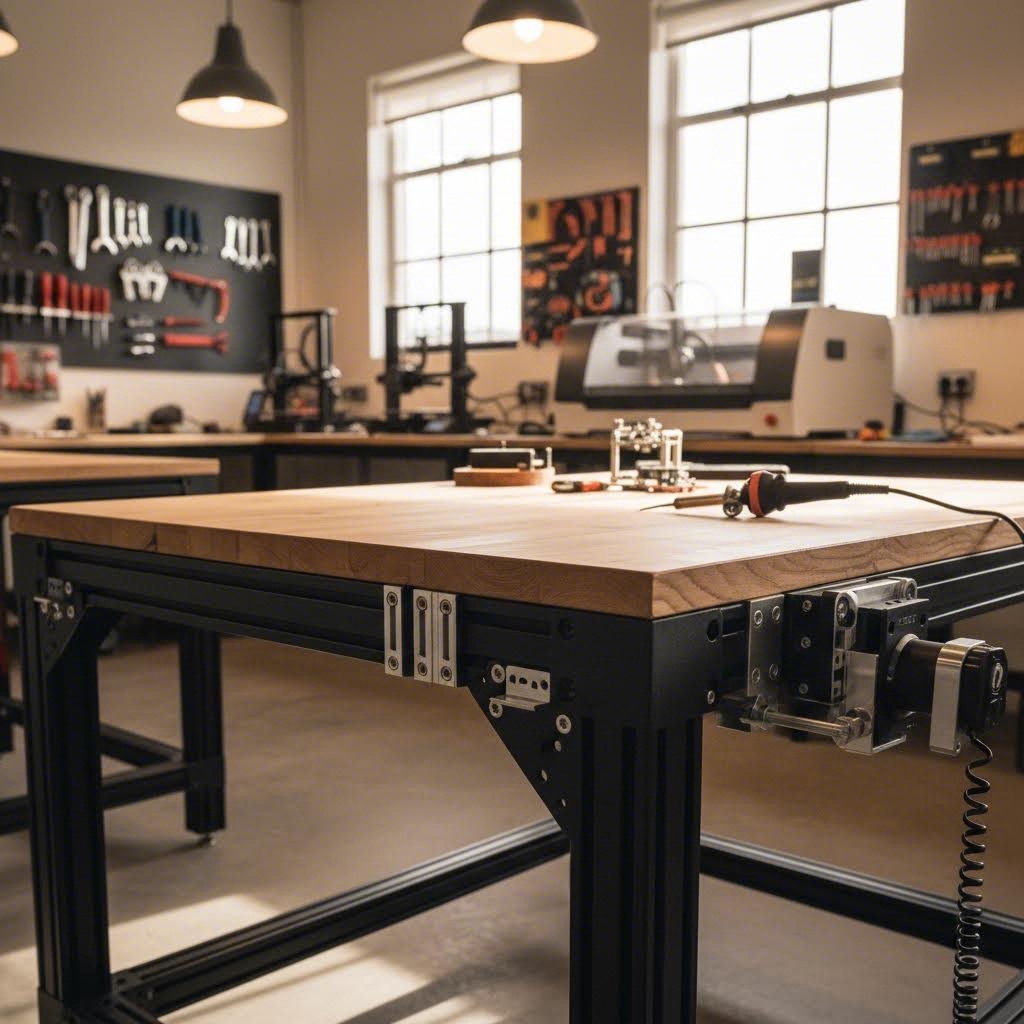
You understand the specs, the slots, and the surface finish. But what do people actually build with this profile? Whether you're a weekend maker or a manufacturing engineer, seeing real applications helps you visualize how the 4080 fits into your own projects.
The maker community has embraced T-slot profiles for good reason. They turn complex fabrication into something you can accomplish in a garage with basic tools. The 4080's combination of rigidity and mounting flexibility makes it particularly popular for projects that demand precision.
Why does the black finish matter so much for maker projects? Aesthetics play a bigger role than you might expect. When you're building something you'll look at every day, or showing off at a maker faire, the sleek black appearance elevates the entire project. It hides fingerprints, masks minor scratches, and photographs beautifully for documentation or social media.
Smaller profiles like the zyltech black 2020 t slot aluminum extrusion work well for compact builds, and buying a 10 pack zyltech black 2020 t slot aluminum extrusion makes sense for projects with many short pieces. But when your design needs the extra rigidity and mounting options the 4080 provides, the larger profile pays for itself in reduced flex and expanded functionality.
Factory floors and engineering departments have different priorities than home workshops, but the 4080 serves both audiences equally well. Industrial applications typically emphasize safety compliance, durability under continuous use, and the ability to reconfigure as production needs change.
Industrial users value the black finish for reasons beyond appearance. In facilities with multiple equipment vendors, standardizing on black anodized profiles creates visual consistency across the production floor. The finish also performs better than natural aluminum in environments with cutting fluids, cleaning chemicals, or high humidity, where the enhanced corrosion resistance prevents degradation over years of service.
For electronics enclosures and control cabinets, the black surface's heat absorption properties become genuinely useful. Rather than reflecting infrared radiation back into the enclosure, the anodized surface absorbs and conducts heat to the frame structure, where it can dissipate through convection. This passive thermal management reduces cooling requirements and extends component life.
Whether you're building a weekend project or specifying equipment for a production line, the 4080 profile adapts to your requirements. The next section covers what to look for when sourcing these profiles, from verifying quality standards to evaluating suppliers.
You've picked your profile size, understand the alloy, and know what finish you want. Now comes the part where many projects stumble: actually buying the stuff. Whether you're ordering ten meters for a home workshop or a thousand meters for a production facility, knowing what to verify before placing an order separates smooth projects from frustrating ones.
Not all black aluminum extrusion for sale meets the same standards. Before you commit to a black aluminum extrusion supplier, work through this checklist to avoid surprises when your profiles arrive.
For industrial buyers placing recurring orders, ask whether the factory provides traceable lot data and QA certificates with each batch. This documentation becomes essential for quality audits and helps identify the source if problems emerge later.
When you start comparing prices, you'll notice a significant gap between local distributors and direct imports from black aluminum extrusion China manufacturers. Understanding the trade-offs helps you make the right choice for your situation.
China accounts for approximately 25.8% of global aluminum extrusion exports. This massive manufacturing base means competitive pricing and extensive customization capabilities. Chinese suppliers routinely offer anodizing, powder coating, CNC machining, cutting, and punching as integrated services. For buyers who need custom profiles or specific surface treatments, a wholesale black aluminum extrusion factory in China often delivers options that local distributors simply can't match.
The cost savings can be substantial, especially at volume. But importing directly requires more work on your end. You'll need to manage shipping logistics, customs documentation, and longer lead times. Sea freight offers the best cost efficiency for large orders but adds weeks to delivery. Air freight speeds things up but erodes your price advantage.
Local distributors charge more per meter but eliminate these complications. They stock common profiles for immediate shipment, handle customs and logistics, and provide easier returns if something goes wrong. For small projects or tight deadlines, the convenience often justifies the premium.
Whether you're sourcing locally or internationally, certain capabilities separate high quality black aluminum extrusion suppliers from basic traders. Knowing what to look for helps you evaluate any potential partner.
Press capacity defines what profiles a supplier can produce. Small presses (600-1800T) handle thin, precise profiles. Medium presses (2000-3500T) suit general industrial profiles like the 4080. Large presses (5000T and above) produce heavy structural components. A supplier with multiple press capacities can handle a wider range of projects and maintain flexibility as your needs evolve.
To illustrate what a well-equipped black aluminum extrusion factory looks like in practice, consider Shengxin Aluminium. With over 30 years of industry experience, they operate 35 extrusion presses ranging from 600T to 5500T. This range means they can produce everything from delicate architectural trim to heavy industrial framing. Their facility includes CNC machining centers for precise cutting, drilling, and bending, plus surface treatment lines for black anodizing, powder coating, and other finishes.
What makes this type of manufacturer particularly valuable? End-to-end support from die development through mass production. If you need a custom profile or non-standard length, a vertically integrated supplier handles the entire process internally. This reduces lead times, ensures consistency between batches, and gives you a single point of contact when questions arise. When evaluating any black aluminum extrusion manufacturer, ask whether they develop dies in-house or outsource this critical step.
For buyers whose requirements go beyond standard stock, factory-direct pricing from capable manufacturers often beats distributor markups significantly. The key is verifying that the supplier actually manufactures what they sell rather than simply trading products from other factories.
With your sourcing strategy sorted out, you're ready to pull everything together and make confident decisions about your next build.
You've covered a lot of ground. From understanding what those four digits actually mean to evaluating anodizing quality and comparing profile sizes, you now have the knowledge to make informed decisions. Let's distill everything into actionable guidance based on your specific situation.
The 4080 profile earns its place in your build when three factors align: you need stiffness in one direction more than another, you want more than four mounting faces, and the black anodized finish serves either aesthetic or functional purposes.
For makers building 2020 black t-slot aluminum profiles extrusion frame projects at desktop scale, the 4080 might be overkill. But step up to a full-size workbench, a sim racing cockpit, or a large-format 3D printer enclosure, and the rectangular profile's advantages become clear. The six slots give you mounting flexibility that square profiles can't match, while the 80mm dimension provides deflection resistance where it matters most.
Industrial users face similar decision points at larger scale. Machine guarding, conveyor systems, and automation cells benefit from mixing profile sizes strategically. Use the 4080 where spans are long and loads concentrate, then step down to lighter profiles for secondary structures. This hybrid approach optimizes both performance and budget.
The 4080 isn't just a piece of aluminum; it's an entry point into a modular ecosystem of connectors, panels, and accessories that lets you build, modify, and rebuild without starting from scratch.
That ecosystem thinking matters more than any single specification. When you choose T-slot profiles, you're investing in flexibility. Projects evolve, requirements change, and the ability to loosen a few bolts and reconfigure beats scrapping welded assemblies every time.
Your next step depends on where you are in the project lifecycle. If you're still in the planning phase, sketch your frame geometry and identify which members need the 4080's extra rigidity versus where lighter profiles suffice. Calculate your total length requirements and add 10-15% for cutting waste and future modifications.
Ready to source? Start by finding a reliable black anodized aluminum extrusion supplier who can verify alloy certification, anodizing thickness, and slot compatibility. Request samples before committing to large orders, especially if you're mixing hardware from different sources. For standard stock lengths and common accessories, local distributors offer convenience and fast shipping.
But what if your project demands something beyond standard offerings? Custom profiles, non-standard lengths, specific surface treatment combinations, or a custom black aluminum extrusion heatsink for thermal management applications require a different approach. Working directly with a black anodized aluminum extrusion factory gives you access to capabilities that distributors simply don't offer.
For projects requiring that level of customization, manufacturers like Shengxin Aluminium provide end-to-end support from custom die development through mass production. Their 35 extrusion presses spanning 600T to 5500T handle everything from precision architectural profiles to heavy industrial framing. CNC machining centers deliver precise cutting, drilling, and bending, while in-house surface treatment lines ensure consistent black anodizing across batches. For buyers seeking wholesale black anodized aluminum extrusion with factory-direct pricing, this vertically integrated approach eliminates middlemen and keeps costs competitive.
Whether you're building your first maker project or specifying materials for a production facility, the fundamentals remain the same: understand your requirements, verify supplier quality, and think in terms of systems rather than individual parts. The 4080 profile delivers when you need that combination of structural rigidity, mounting flexibility, and professional black finish. Now you know exactly what to look for and where to find it.
The numbers 4080 indicate the profile's cross-sectional dimensions in millimeters. The first two digits (40) represent the width, while the last two (80) represent the height. This rectangular shape provides extra rigidity in one direction, making it ideal for applications requiring stiffness along the taller axis without the weight of larger square profiles like 8080.
Black anodizing offers several functional advantages beyond aesthetics. The electrochemical process creates a harder, more corrosion-resistant surface that integrates directly into the metal. Black finishes also absorb heat more effectively, which benefits electronics enclosures and thermal management applications. Additionally, the uniform dark appearance hides fingerprints and minor scratches better than natural aluminum.
A 4080 profile features six T-slots: two on each 80mm face and one on each 40mm face. This configuration provides 50% more mounting points than a standard 4040 profile with four slots. The extra slots allow you to attach multiple accessories side by side, stagger connection points for better load distribution, and connect profiles from any direction without design compromises.
Most 4080 profiles use 6063-T5 aluminum alloy. The 6063 alloy offers excellent extrudability for complex T-slot shapes, produces smooth surfaces ideal for anodizing, and provides adequate strength for framing applications. The T5 temper designation means the profile was cooled from extrusion temperature and artificially aged, delivering approximately 27 KSI ultimate tensile strength while remaining easy to machine and drill.
The choice depends on your project scale and timeline. Chinese manufacturers like Shengxin Aluminium offer competitive pricing, extensive customization options, and integrated services including CNC machining and various surface treatments. However, importing requires managing logistics and longer lead times. Local distributors charge more per meter but provide immediate availability, easier returns, and no customs complications. For large volume orders or custom requirements, factory-direct sourcing often delivers better value.



 dịch vụ trực tuyến
 0086 136 3563 2360
 sales@sxalu.com
 +86 136 3563 2360
 Việt
Việt English
 français
 Deutsch
 русский
 español
 português
 العربية
 ไทย
ไทย Українська