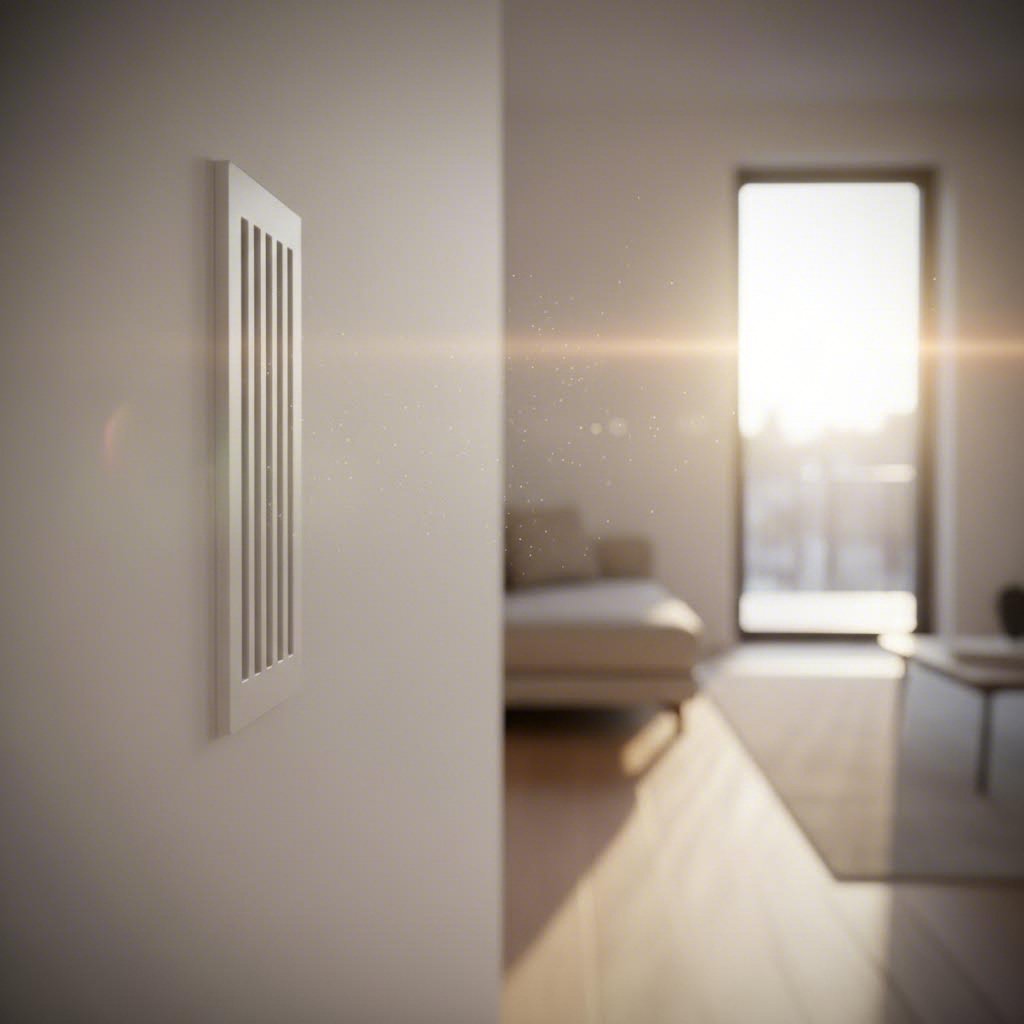
Ever noticed condensation creeping across your windows on a cold morning? Or maybe your home feels stuffy even with the heating running perfectly. These are signs your house needs better airflow, and that's exactly where window vents come in.
A window vent is a small, purpose-built opening integrated into or mounted onto a window frame. It allows fresh outdoor air to enter while letting stale indoor air escape, all without requiring you to crack open a window. Think of it as a controlled breathing system for your home.
Here's where things get confusing for most homeowners. The term "window vents" actually covers several distinct product types:
Each serves a different purpose, and choosing the wrong type means either too much airflow (hello, drafts) or too little (hello, mold).
The core function is simple: window ventilation provides controlled, continuous passive airflow without compromising security or weather protection. Unlike opening a window fully, these systems let you maintain consistent air exchange around the clock.
Why does this matter now more than ever? Modern homes are built tight. Energy-efficient construction, double-glazed ventilation windows, and improved insulation have dramatically reduced air leakage. Great for heating bills, but it creates a sealed environment where moisture, pollutants, and stale air have nowhere to go.
Not all ventilation needs are created equal. Understanding which problem you're solving helps you pick the right solution:
Each problem requires a slightly different approach. A bedroom might need gentle background ventilation for air quality, while a bathroom demands more aggressive moisture removal. The sections ahead will help you match the right window vent type to each room in your home.
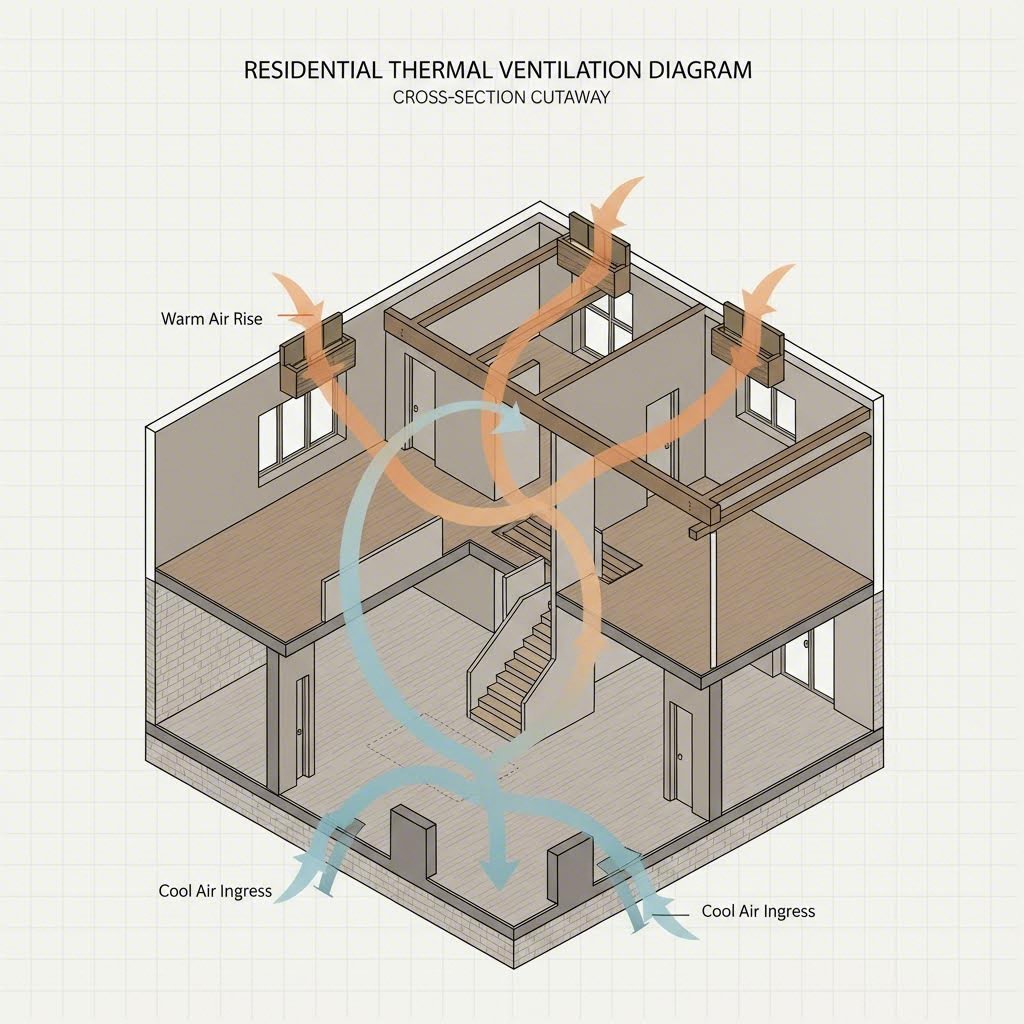
You know that window vents move air, but have you ever wondered why they work without any electricity or moving parts? Understanding the physics behind natural ventilation helps you place vents strategically and get the most out of them. It's simpler than you might think.
Two natural forces do all the heavy lifting: temperature differences and wind pressure. When you understand how these forces interact with your home, you'll see why a ventilation window positioned in the right spot outperforms one placed randomly.
Imagine your house as a giant chimney. Warm air is lighter than cool air, so it naturally rises. This creates what engineers call the stack effect, and it's the engine behind passive air ventilation window systems.
Here's how it works in practice. When warm indoor air rises toward your ceiling, it creates slight positive pressure at higher points in your home. If there's an opening near the top, like a venting window or trickle vent mounted high on a frame, that warm air escapes. As it exits, it creates a small vacuum effect that pulls cooler, fresher air in through lower openings.
The height difference between your inlet and outlet vents matters. A greater vertical separation creates stronger airflow because the pressure differential increases. This is why windows for ventilation work best when you have openings at different heights, not just on the same level.
Placement on the window frame itself also affects performance. A ventilator window with a vent positioned at the head of the frame (the top) will exhaust warm air more effectively than one mounted lower on the sash. For intake, lower positions work better because they capture the cooler replacement air being drawn in.
Wind adds another layer to natural ventilation. When wind hits one side of your house, it creates positive pressure on that facade. The opposite side experiences negative pressure as air flows around the building. This pressure difference drives cross-ventilation when you have openings on both sides.
Think about it this way: air wants to move from high pressure to low pressure. If you install an air ventilation window on the windward side of your home and another on the leeward side, wind naturally pushes fresh air in one side and pulls stale air out the other. No fans required.
The effectiveness depends on several factors: vent size, the distance between openings, interior obstructions like closed doors, and local wind patterns. A window ventilation kit designed for cross-ventilation works best in homes with relatively open floor plans where air can flow freely between rooms.
| Vent Position | Ventilation Effect |
|---|---|
| High on windward wall | Moderate intake; warm air may escape before reaching lower areas |
| Low on windward wall | Strong intake; fresh air enters at floor level and rises as it warms |
| High on leeward wall | Strong exhaust; warm rising air exits efficiently via negative pressure |
| Low on leeward wall | Weak exhaust; works against natural buoyancy of warm air |
| Opposite walls, same height | Good cross-ventilation in windy conditions; less effective in calm weather |
| Opposite walls, different heights | Best overall; combines stack effect with wind-driven flow |
Actual airflow rates vary widely based on vent size, building geometry, and your local climate. A home in a consistently breezy coastal area will see more air movement than one in a sheltered inland valley. The principles remain the same, but outcomes differ.
Now that you understand how air moves through your home, the next step is matching the right vent type to each situation. Different products offer different levels of control, and the best choice depends on where you're installing them.
Shopping for vented windows can feel overwhelming when every product seems to blur into the next. Trickle vents, vent inserts, retrofit kits, casement options, and specialty basement solutions all serve different purposes, yet they're often lumped together as if they're interchangeable. They're not.
Before you spend money on the wrong product, let's break down each category so you know exactly what you're looking at and where it belongs in your home.
A window trickle vent is the most common type you'll encounter in modern construction. These are narrow, slotted openings integrated into or mounted onto the window frame itself. Their job is simple: provide continuous low-level airflow without requiring you to open the window.
You'll find trickle air vents for windows in two main mounting positions:
Most trickle vents include a manual slider or flap that lets you adjust airflow or close the vent entirely during extreme weather. The design typically incorporates internal baffles that deflect rain and reduce wind noise while still permitting air exchange.
What if your existing windows don't have built-in ventilation? That's where retrofit solutions come in.
A window vent insert fits into an existing window opening without requiring full window replacement. Some designs replace a small section of glazing with a vented panel. Others mount onto the existing frame surface. The key advantage is cost: you get improved ventilation without the expense of new windows.
Casement and awning windows offer a different approach. These hinged designs swing outward, creating an adjustable opening that can be set to various positions. Unlike fixed trickle vents, casement configurations give you variable airflow control. Crack them open slightly for background ventilation, or open them wider when you need rapid air exchange.
Older homes sometimes feature wing windows, small pivoting panes adjacent to the main window. These wing windows were common in mid-century construction and served a similar purpose to modern trickle vents. If your home has them, they're worth preserving and maintaining rather than replacing with fixed glass.
Basement window vents deserve their own category because below-grade spaces face unique challenges. Moisture seeps in from surrounding soil. Security matters more when windows sit at ground level. Pests and debris find their way in more easily.
A basement window vent kit typically includes a vented panel with integrated mesh screening to block insects and rodents. Many designs incorporate weather-resistant louvers that shed water while permitting airflow. Some include locking mechanisms for added security.
Specialty vents also exist for garages, utility rooms, and other spaces with specific requirements. These often prioritize durability and pest resistance over aesthetics.
| Type | Best Use Case | Installation Complexity | Airflow Control |
|---|---|---|---|
| Head-frame trickle vent | Living areas, bedrooms, new construction | Low to moderate (often pre-installed) | Manual slider; continuous low-level flow |
| Sash-mounted trickle vent | Retrofit on existing windows | Low (surface mount) | Manual slider; continuous low-level flow |
| Window vent insert | Upgrading older windows without replacement | Moderate (may require glazing modification) | Fixed or adjustable depending on design |
| Casement or awning window | Rooms needing variable airflow | High (full window installation) | Fully adjustable via hinge position |
| Basement window vent kit | Below-grade spaces with moisture and security concerns | Moderate (custom fitting often required) | Fixed louvers with optional closable damper |
With this product map in hand, you're ready to match the right vent type to each room's specific needs. The next section tackles the problem that drives most homeowners to seek better ventilation in the first place: moisture and condensation.

You wake up on a cold morning and notice water droplets streaming down your windows. Maybe there's a faint musty smell in the corner of your bedroom. These aren't just minor annoyances. They're warning signs that moisture is building up inside your home, and if left unchecked, the damage can get expensive fast.
Understanding why condensation happens is the first step toward preventing it. The good news? Window vents offer one of the simplest and most cost-effective solutions available.
Here's the basic science, stripped of jargon. Air holds moisture in the form of invisible water vapor. Warm air can hold more moisture than cold air. When warm, humid indoor air touches a cold surface like a window pane or an exterior wall, it cools rapidly. Once it drops below a certain temperature, called the dew point, the air can no longer hold all that moisture. The excess condenses into visible water droplets.
Sounds technical? Think about it this way. When you take a hot shower, steam fills the bathroom. That steam is just water vapor suspended in warm air. The moment it hits your cold bathroom mirror, it condenses into fog. The same process happens throughout your home, just more slowly and less visibly.
Everyday activities generate surprising amounts of moisture:
In older, drafty homes, this moisture escaped through gaps and cracks. Modern airtight construction traps it inside. Without a deliberate ventilation strategy, humidity accumulates until it finds the coldest surfaces in your home and condenses there.
The solution isn't complicated. You need to exchange humid indoor air with drier outdoor air before moisture levels climb too high. Trickle vents and window air vents do exactly this, maintaining a steady, low-level airflow that keeps relative humidity in check.
Here's what makes passive ventilation so effective for moisture control. Unlike opening a window wide, which creates drafts and wastes heat, a bathroom ventilation window with a trickle vent provides continuous air exchange at a controlled rate. Humid air gradually escapes while fresh air enters, preventing the sudden temperature swings that trigger condensation.
One common misconception: keeping your home warm doesn't solve moisture problems. You can have a perfectly heated house and still see condensation on windows if humidity levels are too high. Temperature ventilation and moisture ventilation are related but distinct. A warm room with poor airflow will still develop condensation on any surface that's even slightly cooler than the surrounding air.
Moisture damage is often invisible until it's expensive — continuous passive ventilation is the lowest-cost prevention strategy available.
Certain rooms face higher moisture loads than others. A bathroom window vent is particularly valuable because bathrooms generate concentrated bursts of humidity during showers and baths. Without adequate ventilation, that moisture soaks into walls, ceilings, and grout lines, creating ideal conditions for mold growth. Kitchen-adjacent rooms face similar challenges from cooking steam.
In spaces where passive ventilation alone can't keep up, you might consider supplementing with an exhaust fan small window installation. This combination approach uses the window exhaust vent for continuous background airflow while the fan handles peak moisture events like hot showers or boiling pasta. A bathroom ventilation fan window setup gives you the best of both worlds: energy-free passive ventilation most of the time, with mechanical backup when you need it.
The key takeaway? Addressing moisture before it becomes visible damage saves money and protects your home's structure. Passive window vents require no electricity, no maintenance beyond occasional cleaning, and work around the clock without any input from you.
Of course, different rooms have different ventilation needs. A bedroom requires a different approach than a basement or garage. The next section breaks down exactly what each space in your home requires.
Not every room in your house needs the same ventilation approach. A bedroom where you sleep eight hours a night has completely different air quality demands than a bathroom where steam builds up in minutes. Getting this wrong means either wasting money on overkill solutions or leaving problem areas underventilated.
Let's walk through each space in your home and match it with the right ventilation strategy.
When you spend hours in a living room or sleep through the night in a bedroom, air quality becomes the priority. These spaces don't generate much moisture compared to bathrooms or kitchens. Instead, the main concern is CO2 buildup and general stuffiness.
Every person in a room exhales carbon dioxide continuously. In a sealed bedroom with two people sleeping, CO2 levels can climb high enough overnight to affect sleep quality and leave you feeling groggy in the morning. Living rooms face similar challenges during gatherings or extended TV sessions.
Trickle vents and head-frame inserts work perfectly here. They provide continuous low-level airflow that dilutes CO2 and refreshes the air without creating noticeable drafts or noise. You won't feel cold air blowing on you while you sleep, and you won't hear wind whistling through the vent.
The key is consistency rather than volume. A small, steady air exchange throughout the day and night keeps these rooms comfortable without the energy penalty of opening windows wide.
These rooms are moisture factories. A single hot shower can release liters of water vapor into the air within minutes. Cooking pasta, boiling water, or running a dishwasher adds even more humidity to kitchens. Without aggressive ventilation, this moisture saturates walls, ceilings, and grout lines.
So when is a bathroom vent window enough, and when do you need something more powerful?
A passive bathroom window vent handles background humidity well. It keeps air moving between showers and prevents that stale, damp feeling from settling in. For bathrooms with windows, a trickle vent provides 24/7 moisture management without any electricity costs.
However, during peak moisture events like hot showers, passive vents often can't keep up. This is where a small window exhaust fan bathroom installation makes sense. The fan kicks in when you need rapid moisture removal, then shuts off when the job is done. Some homeowners install both: a trickle vent for continuous background ventilation and a small exhaust fan for high-humidity moments.
Kitchens follow similar logic. Range hoods handle cooking fumes directly at the source, but a kitchen window vent helps manage residual humidity and keeps air fresh between cooking sessions. If your kitchen lacks a range hood, adequate window ventilation becomes even more critical.
Below-grade spaces face a unique set of challenges. Basement window ventilation isn't just about comfort; it's about protecting your home's structure and your family's health.
Moisture seeps into basements from surrounding soil, especially after rain or during humid seasons. This constant moisture ingress creates ideal conditions for mold growth and musty odors. A basement window vent helps equalize humidity levels by exchanging damp basement air with drier outdoor air.
There's another concern many homeowners overlook: radon. This naturally occurring radioactive gas seeps up from the ground and can accumulate in poorly ventilated basements. While dedicated radon mitigation systems exist for severe cases, adequate basement window ventilation helps dilute radon concentrations in homes with moderate levels.
A basement window with vent provides passive airflow that addresses both moisture and air quality concerns. For basements with persistent humidity problems, a basement exhaust fan window setup adds mechanical assistance when passive ventilation falls short.
Garages present different priorities. Vehicle exhaust fumes, paint vapors, and chemical off-gassing from stored products all need somewhere to go. A garage window vent cover allows airflow while keeping out rain, debris, and pests. During summer months, garage ventilation also helps manage heat buildup that can damage stored items and make the space unbearable.
Matching the right ventilation solution to each room prevents both under-ventilation and unnecessary expense. But how do these passive solutions compare to mechanical alternatives like exhaust fans or whole-house systems? The next section lays out an honest comparison.

You've seen the options: trickle vents, exhaust fans, whole-house systems. But which one actually makes sense for your situation? Most advice either pushes expensive mechanical systems or oversimplifies passive ventilation as a cure-all. Neither approach helps you make a smart decision.
Let's cut through the confusion and compare these ventilation methods based on how they actually perform in real homes.
A window ventilation exhaust fan and a passive trickle vent solve the same problem in fundamentally different ways. Understanding the difference helps you decide when each makes sense.
Exhaust fans actively pull air out of a room. Flip the switch, and the fan motor spins up, creating suction that draws humid or polluted air through the ductwork and expels it outside. A window exhaust fan for bathroom small window installations works well for rapid moisture removal after showers.
Here's the catch. When an exhaust fan removes air from your home, that air has to be replaced from somewhere. This creates negative pressure inside the building. In a tightly sealed modern home, replacement air gets pulled in through any available gap: around door frames, through electrical outlets, via the fireplace flue, or even from attached garages. That replacement air might carry dust, pollutants, or vehicle exhaust along with it.
Window vents work differently. They provide balanced passive exchange, allowing air to flow in and out naturally without creating pressure imbalances. Fresh air enters through the vent while stale air exits through other openings or the same vent under different conditions. No motor, no electricity, no negative pressure problems.
So which should you choose? In most cases, bathrooms benefit from both. A trickle vent handles continuous background ventilation around the clock, keeping humidity from building up between uses. The exhaust fan kicks in during peak moisture events like hot showers, providing rapid removal when passive airflow can't keep pace. This combination approach gives you the best of both worlds without the drawbacks of relying on either system alone.
If you've researched home ventilation, you've probably encountered Heat Recovery Ventilators and Energy Recovery Ventilators. These whole-house mechanical systems represent the high end of residential ventilation technology.
An HRV or ERV works as a centralized fresh air circulation system for your entire home. It continuously exchanges indoor air with outdoor air through dedicated ductwork, but with a clever twist: a heat exchanger transfers thermal energy from the outgoing air stream to the incoming one. In winter, this means the cold fresh air gets prewarmed by the warm exhaust air before entering your living spaces. In summer, the process reverses.
ERV systems add another layer by also transferring moisture between air streams, which helps maintain comfortable humidity levels in both heating and cooling seasons.
Sounds ideal, right? These systems do offer excellent performance, but they come with significant costs. Installation requires dedicated ductwork throughout your home, professional design and commissioning, and ongoing maintenance including filter changes and periodic cleaning. The equipment itself represents a substantial investment, and the system consumes electricity continuously.
Here's what most advice gets wrong: HRV and ERV systems complement window vents rather than replace them. Even in high-performance buildings with mechanical ventilation, passive vents serve important functions. They provide backup ventilation if the mechanical system fails. They allow room-by-room airflow adjustment. They handle localized moisture sources without overworking the central system.
Think of it this way: a house vent system like an HRV handles your baseline whole-house ventilation needs, while window vents provide targeted, adjustable airflow where you need it most. Many modern building codes recognize this by requiring both mechanical ventilation capacity and operable windows or trickle vents in habitable rooms.
Not every home needs a sophisticated air vent system. For many situations, properly sized and positioned window vents handle ventilation requirements perfectly well on their own.
Window vents generally prove sufficient when several conditions align: moderate climate without extreme humidity or temperature swings, standard occupancy levels without overcrowding, and no significant internal moisture sources beyond normal cooking and bathing. A typical family home in a temperate region often falls into this category.
Supplemental mechanical ventilation becomes necessary when conditions push beyond what passive airflow can manage. High-humidity climates where outdoor air is already moisture-laden make passive moisture control difficult. High-occupancy homes generate more CO2 and moisture than trickle vents can dilute. Spaces with heavy cooking activity, commercial-style kitchens, or frequent entertaining need more aggressive air exchange.
Some homeowners wonder about using a window air conditioner with fresh air vent capability as a middle ground. These units can provide some fresh air intake while cooling, but they're not designed as primary ventilation solutions. They work best as supplements to a proper home fresh air system rather than replacements for dedicated ventilation.
| Scenario | Window Vents Sufficient? | Recommended Supplement |
|---|---|---|
| Moderate climate, standard occupancy, typical moisture sources | Yes | None required |
| High-humidity climate with frequent rain | Partial | Bathroom exhaust fans; consider dehumidifier |
| Cold climate with extended heating season | Partial | HRV system for energy-efficient fresh air |
| High occupancy or frequent entertaining | No | Mechanical ventilation with adequate capacity |
| Heavy cooking activity or commercial-style kitchen | No | Powerful range hood with makeup air |
| Basement with persistent moisture or radon concerns | Partial | Dedicated exhaust fan or radon mitigation |
| New construction meeting modern energy codes | Partial | Mechanical ventilation often code-required |
The honest answer? Most homes benefit from a layered approach. Passive window vents form the foundation, providing continuous, energy-free background ventilation. Targeted exhaust fans handle peak loads in bathrooms and kitchens. Whole-house mechanical systems add another layer for homes in challenging climates or with specific performance goals.
Understanding what each option does well helps you build a ventilation strategy that matches your actual needs without overspending on unnecessary equipment. The next consideration? Making sure whatever you install actually meets local building codes and safety requirements.
You've picked the right vent type for each room. You understand how passive airflow works. But here's a question most homeowners skip: does your chosen vent window actually meet local building requirements? Ignoring this step can mean failed inspections, costly replacements, or worse, a ventilation panel that doesn't protect your home when it matters most.
Building codes exist for good reasons. They ensure minimum safety and performance standards that protect both occupants and property. When it comes to vents for windows, these regulations vary significantly depending on where you live and what type of construction project you're undertaking.
Many jurisdictions mandate minimum ventilation provisions in habitable rooms. The logic is straightforward: sealed buildings need deliberate airflow paths to maintain healthy indoor air quality and prevent moisture damage.
In the UK, Part F of the Building Regulations sets specific requirements for background ventilation in new builds and certain renovation projects. This regulation typically requires trickle vents or equivalent background ventilators in habitable rooms, with minimum equivalent area ratings based on room size and function. If you're building new or replacing windows in an existing property, compliance with Part F often means installing trickle vents whether you want them or not.
Similar provisions exist in other markets under different regulatory frameworks. Many European countries have adopted ventilation standards that specify minimum fresh air vent for house requirements. In North America, building codes vary by state, province, and municipality, but most require some form of ventilation provision in bedrooms, living areas, and wet rooms. Some codes specify mechanical ventilation requirements that can be partially offset by operable windows or passive vents.
The key point? Don't assume your project is exempt. Even seemingly minor renovations like window replacements can trigger ventilation requirements if the new windows are more airtight than the originals. A building inspector may require you to add trickle vents or demonstrate equivalent ventilation capacity through other means.
Fresh air vent control also matters from a code perspective. Many regulations require that background ventilators remain at least partially open or include tamper-resistant features to prevent occupants from permanently sealing them. This ensures the building maintains minimum ventilation even when residents prefer to close everything up.
If you live in a wildfire-prone region, standard ventilation products may not be enough. This is a critical gap that most ventilation advice completely ignores.
During wildfires, burning embers can travel significant distances on the wind. These embers seek out any opening in a building envelope, including vents, and can ignite materials inside attics, wall cavities, or living spaces. A standard trickle vent with typical mesh screening may allow embers to pass through, turning your ventilation system into a fire entry point.
Ember-resistant vents address this risk through specialized design features. Fine mesh screens with openings small enough to block ember intrusion while still permitting airflow form the first line of defense. Some products use intumescent materials that expand when exposed to heat, automatically sealing the vent opening during a fire event. Others incorporate baffles and deflectors that prevent direct ember entry.
Here's the challenge: standard trickle vents and side vents on house exteriors typically aren't designed with wildfire resistance in mind. If you live in a designated wildfire interface zone, local fire codes may require specific vent ratings that standard products don't meet. Installing non-compliant vents could void your insurance coverage, fail inspection, or leave your home vulnerable during fire season.
Before purchasing any ventilation product for a home in a high-risk area, verify that it meets applicable wildfire resistance standards. In the United States, look for products tested to standards like ASTM E2886 for ember and flame penetration resistance. In Australia, bushfire attack level ratings determine which products are acceptable in different risk zones.
Navigating building codes and fire safety requirements can feel overwhelming. Before you purchase vents for windows, work through this checklist to avoid costly mistakes:
Taking time to answer these questions upfront saves headaches later. A vent that fails inspection means removal, replacement, and potentially re-inspection fees. A vent that doesn't meet fire code in a wildfire zone could have far more serious consequences.
With regulatory requirements understood, the next step is knowing exactly what features to look for when you're ready to buy. The following section breaks down the practical criteria that separate quality vents from products you'll regret installing.
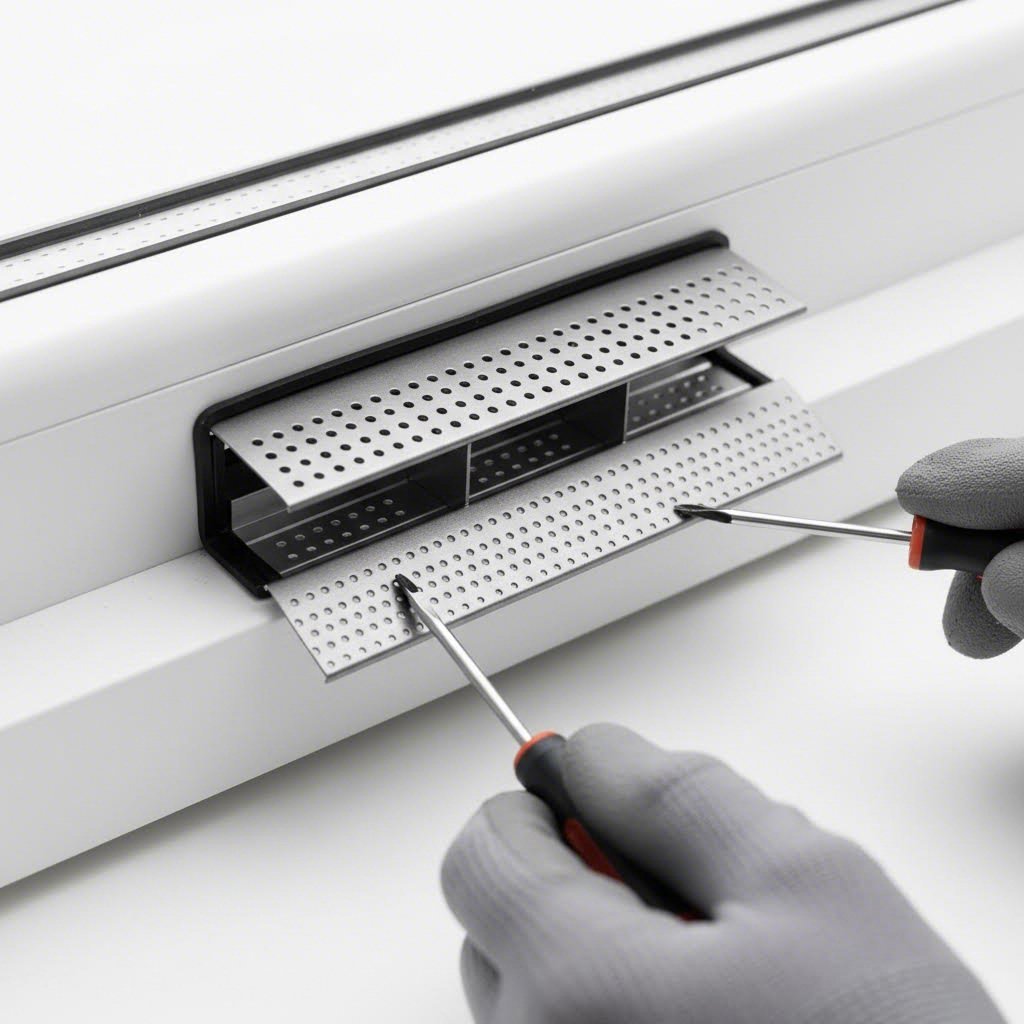
You've done the research. You understand how passive ventilation works, which rooms need what, and what the building codes require. Now comes the part where most homeowners stumble: actually choosing a product. Walk into any building supply store or browse online, and you'll find dozens of options that all look similar but perform very differently.
The difference between a vent that works flawlessly for years and one that causes headaches shows up in the details. Let's break down exactly what to evaluate before you buy.
Ever wondered what those numbers on vent specifications actually mean? The most important figure you'll encounter is the equivalent area rating, typically expressed in square millimeters. This measurement tells you how much open space the vent provides for airflow when fully open.
Why does this matter? A vent with too small an equivalent area won't move enough air to keep your room properly ventilated. Too large, and you might experience drafts or excessive heat loss. The UK Building Regulations specify minimum equivalent area requirements: 8000mm² for habitable rooms and kitchens, and 4000mm² for bathrooms. Standard trickle window vents typically cover ventilation areas ranging from 2000mm² to 8000mm², so matching the right size to your room volume is essential.
Frame compatibility is equally critical. Not every vent fits every window. The two main frame materials you'll encounter are:
Installation method also varies. Surface-mounted vents attach to the face of the frame and are easier to retrofit but sit more visibly on the window. Through-frame installation cuts into the frame itself for a cleaner look but requires more precise fitting. If you're working with a window duct kit for a portable air conditioner or similar setup, you'll need to consider how the vent integrates with any existing window ducting without compromising the seal.
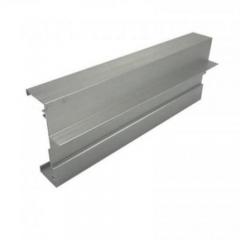
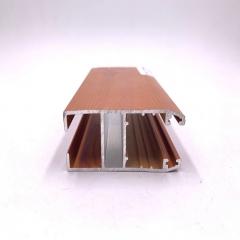
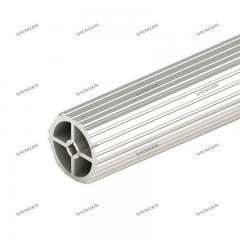
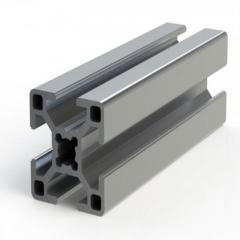
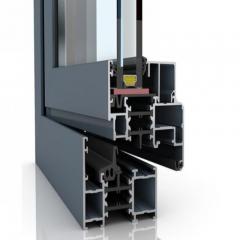
For construction projects requiring reliable, code-compliant options, Shengxin Aluminium's durable window trickle vents offer compatibility with both uPVC and timber window systems. These vents are engineered for continuous passive airflow while maintaining insulation integrity, and they meet international standards including UK Part F requirements.
A vent that lets in rain or howls in the wind defeats the purpose of controlled ventilation. Quality trickle vents incorporate internal baffles that force incoming air through a tortuous path. This design deflects rainwater before it can enter your home and disrupts wind energy to reduce noise transmission.
Acoustic performance matters more than most homeowners realize, especially in urban areas or near busy roads. The sound attenuation of a vent is measured in decibels using the Dn,e,w rating. Higher values indicate better noise reduction. A vent rated at 44 dB provides noticeably better sound blocking than one rated at 35 dB. If you live near traffic, flight paths, or entertainment venues, prioritizing acoustic performance prevents regret later.
Then there's the question of materials. Aluminium-bodied vents offer superior durability and weather resistance compared to plastic alternatives. They resist UV degradation, won't warp in temperature extremes, and typically outlast plastic vents by years. However, plastic vents cost less upfront and work perfectly well in sheltered locations with moderate weather exposure.
Aesthetics shouldn't be an afterthought. A white vent on a dark grey frame sticks out like a sore thumb. Most quality manufacturers offer multiple finish options to match common window colors. Some provide custom color matching for high-end projects or listed buildings where visual integration is critical.
When evaluating a window ventilation system for your project, consider how the vent appearance affects your home's curb appeal. A well-matched vent disappears into the window frame. A poorly matched one draws the eye every time you look at the window.
Before committing to any ventilation kit or replacement vent windows, run through these criteria:
For projects where durability and compliance matter, sourcing from established manufacturers simplifies the selection process. Shengxin Aluminium's trickle vents, for example, are available in premium aluminium or plastic finishes and come with the compliance documentation needed for building inspections.
Getting these details right means your window duct installation performs as expected for years without callbacks, complaints, or costly replacements. The upfront effort pays off in long-term performance and peace of mind.
Of course, product quality is only part of the equation. Understanding what you'll actually spend and what value you're getting in return helps you budget appropriately and avoid overpaying for features you don't need.
How much should you actually spend on window air vents? This is the question most guides skip entirely, leaving you to guess whether that budget option is a bargain or a mistake waiting to happen. The truth is, pricing varies widely based on features, materials, and performance, and understanding these tiers helps you invest wisely rather than overspend or cut corners.
Let's break down what you can expect to pay and, more importantly, what you get for your money at each level.
Think of window air vent pricing like buying a car. You can get basic transportation, a comfortable mid-range option with safety features, or a premium model with all the bells and whistles. Each serves a purpose depending on your needs and budget.
Budget tier: Basic retrofit inserts
At the entry level, you'll find simple vent inserts and basic trickle vents designed for straightforward installations. These products fit existing window openings with minimal modification. They do the job of providing background airflow, but they typically lack advanced features like acoustic baffles or sophisticated weather sealing.
For a small vent in this category, expect to pay in the range of £15 to £25 per unit. Installation is usually DIY-friendly, requiring basic tools and an afternoon of work. If you're comfortable with a drill and following instructions, you can skip labor costs entirely.
Budget options work well for low-demand situations: spare bedrooms, home offices, or rooms where moisture and noise aren't major concerns. They're also reasonable choices for rental properties where cost control matters more than premium performance.
Mid-range tier: Code-compliant vents with weather and acoustic features
Step up to the mid-range, and you get vents engineered for real-world conditions. These products include internal baffles that deflect rain, reduce wind noise, and maintain consistent airflow even in challenging weather. Most importantly, they meet building code requirements for equivalent area ratings, making them suitable for new construction and window replacement projects.
Pricing for quality mid-range trickle vents typically falls between £25 and £40 per unit. Professional installation adds roughly £50 per window on average, though many homeowners still handle this themselves. The key difference from budget options? These vents actually perform as advertised year after year without whistling, leaking, or degrading prematurely.
This tier represents the sweet spot for most homeowners. You get reliable performance, code compliance, and durability without paying for features you may never use.
Premium tier: Demand-controlled and humidity-sensitive vents
At the top end, you'll find vents that actively respond to indoor conditions. Humidity-sensitive models use mechanical elements that expand or contract based on moisture levels, automatically increasing airflow when humidity rises and reducing it when conditions normalize. Some premium options include flow vent technology that adjusts based on pressure differentials or integrates with home automation systems.
These advanced vents cost significantly more, often two to three times the price of standard mid-range options. Installation may require additional considerations depending on the specific technology involved.
Premium vents make sense in specific situations: bathrooms with persistent condensation problems, kitchens with heavy cooking activity, or high-performance homes where precise humidity control matters. For typical residential applications, mid-range vents deliver comparable results at a fraction of the cost.
One of the biggest advantages of trickle vents? Installation labor is typically low because most products are designed for simple fitting. Unlike complex mechanical systems that require electricians, ductwork, or specialized commissioning, a window air vent installation involves drilling a series of holes through the frame and securing the internal and external covers.
If you're reasonably handy, DIY installation saves the entire labor cost. You'll need basic tools: a drill with appropriate bits, a tape measure, masking tape to protect the frame, and perhaps sandpaper to smooth rough edges. Most manufacturers include detailed instructions, and the process takes an hour or two per window once you've done the first one.
Professional installation makes sense when you're uncomfortable with power tools, working on multiple windows at once, or dealing with unusual frame materials. Expect to pay around £50 per window for professional fitting, which includes precise alignment, compliance verification, and cleanup. For a typical home with five to eight windows, that adds £250 to £400 to your total project cost.
Vent window replacement projects that involve removing old units and installing new ones with integrated ventilation cost more, but the vent component itself remains a small fraction of the overall expense.
Here's where passive window vents truly shine compared to mechanical alternatives. Once installed, they consume zero energy. No electricity, no wiring, no ongoing utility costs. They work around the clock using nothing but natural pressure differentials and the stack effect you learned about earlier.
Compare this to mechanical ventilation systems. Even efficient exhaust fans draw power every time they run. Whole-house HRV and ERV systems consume electricity continuously, and while they recover heat, they still add to your energy bills. A window air conditioner fresh air vent feature, while convenient, only works when the AC unit is running and consuming power.
Maintenance requirements are equally minimal. Passive vents have no motors to burn out, no filters to replace monthly, and no moving parts to wear down. The only upkeep? Occasional cleaning to remove dust and debris from the mesh or baffles. That's it.
But the real value calculation goes beyond operating costs. Consider what you're preventing:
A set of quality trickle vents for an entire home might cost a few hundred pounds. A single mold remediation project can cost ten times that amount. The math is straightforward.
The cheapest ventilation solution is often the one that prevents a problem rather than fixing one.
What about heat loss? This concern stops many homeowners from installing vents, but the worry is largely misplaced. In well-insulated homes, properly sized trickle vents add negligible heat loss compared to the thermal penalty of opening windows for ventilation. A trickle vent provides controlled, minimal airflow. An open window dumps heat directly outside while letting cold air pour in.
Studies on energy-efficient buildings consistently show that background ventilation through trickle vents has minimal impact on heating costs when vents are correctly sized for the space. The small amount of heat that escapes is offset by the moisture control benefits, which actually help your heating system work more efficiently. Dry air heats faster than humid air, and walls free of condensation insulate better than damp ones.
When you factor in zero operating costs, minimal maintenance, damage prevention, and negligible heat loss, passive window vents represent one of the best value propositions in home improvement. The upfront investment pays for itself many times over through problems avoided.
Of course, even the best products need occasional attention to keep performing. The final section covers what maintenance actually looks like and how to know when it's time for a replacement.
You've invested in quality house window vents, positioned them correctly, and your home is breathing better than ever. Now what? The good news is that venting windows require remarkably little attention compared to mechanical systems. But "low maintenance" doesn't mean "no maintenance." A few minutes of care each year keeps your window ventilators performing at their best for decades.
Think of it like changing the oil in your car. Skip it long enough, and small problems become expensive ones. The same principle applies to windows vents throughout your home.
Most trickle vents and vent inserts need nothing more than periodic cleaning to stay functional. The enemy? Dust, debris, and the occasional insect that decides your vent mesh looks like a cozy home.
Here's a simple routine that takes just minutes per window. When you're cleaning around your windows, pop the trickle vents open and use a thin duster or pipe cleaner to clear any buildup from the mesh or baffle. Dust is usually the culprit, and the gaps are small enough that it doesn't take much to restrict airflow.
For stubborn grime that won't budge with dry dusting, a damp cloth with mild cleaning solution handles the job. Just be aware that cleaning fluids may leave a temporary smell until the vent airs out.
Beyond cleaning, a quick inspection catches problems before they escalate:
How often should you do this? Once or twice a year works for most homes. If you live in a dusty area, near construction, or have trees that shed debris near your windows, bump that up to quarterly checks. Windows with vents in high-moisture rooms like bathrooms may also benefit from more frequent attention.
Even well-maintained vents eventually wear out. Knowing the warning signs helps you replace them before performance suffers or damage spreads to surrounding materials.
Watch for these indicators that a vent needs replacement:
Material choice significantly affects longevity. Aluminium-bodied vents resist warping and cracking even under extreme weather conditions, maintaining structural integrity for years longer than plastic equivalents. They also retain a clean, professional finish without the discoloration that plagues aging plastic vents. For a double vent window setup or any high-exposure location, metal construction pays dividends over time.
If you're planning a renovation or new build, choosing the right manufacturer from the start simplifies long-term maintenance. Shengxin Aluminium's durable window trickle vents offer both aluminium and plastic options with compliance certification, giving you flexibility to match the right material to each location while ensuring all products meet international standards like UK Part F.
The bottom line? Window vents house systems that work quietly in the background, protecting your home from moisture damage and maintaining air quality with zero energy consumption. A few minutes of annual maintenance keeps them performing for decades. When replacement time eventually comes, upgrading to quality aluminium vents extends that lifespan even further while reducing future maintenance needs.
Your home's ventilation system is only as good as its weakest component. Keep your vents clean, watch for warning signs, and address problems early. The reward is a healthier, more comfortable home that stays protected from the moisture damage that costs homeowners thousands every year.
Window vents are small openings integrated into or mounted onto window frames that allow controlled passive airflow without opening the window fully. They work through natural forces: the stack effect (warm air rising and exiting through higher openings while drawing cooler air in below) and wind pressure differentials that drive cross-ventilation. This continuous air exchange maintains indoor air quality, controls moisture levels, and regulates temperature without consuming electricity.
Properly sized window vents add negligible heat loss compared to opening windows for ventilation. Trickle vents provide controlled, minimal airflow rather than dumping heat outside like an open window. Studies show background ventilation through correctly sized vents has minimal impact on heating costs. The moisture control benefits actually help heating systems work more efficiently since dry air heats faster than humid air, and walls free of condensation insulate better.
Many jurisdictions mandate minimum ventilation provisions in habitable rooms. In the UK, Part F of Building Regulations requires trickle vents or equivalent background ventilators in new builds and certain renovations, with minimum equivalent area ratings based on room size. Similar provisions exist across Europe and North America. Even minor renovations like window replacements can trigger these requirements if new windows are more airtight than originals. Products like Shengxin Aluminium's trickle vents come with UK Part F compliance certification.
Bathrooms benefit from a combination approach: a passive trickle vent for continuous 24/7 background ventilation between uses, plus a small exhaust fan for rapid moisture removal during peak events like hot showers. The trickle vent handles baseline humidity management without electricity costs, while the fan kicks in when passive airflow cannot keep pace. This dual system prevents mold growth and condensation damage more effectively than either solution alone.
Window vent costs fall into three tiers: budget retrofit inserts at £15-25 per unit for basic airflow; mid-range code-compliant vents with weather baffles and acoustic features at £25-40 per unit; and premium humidity-sensitive vents at two to three times mid-range prices. Professional installation adds approximately £50 per window, though most trickle vents are DIY-friendly. Shengxin Aluminium offers both aluminium and plastic options across price points, with compliance documentation included for building inspections.



 dịch vụ trực tuyến
 0086 136 3563 2360
 sales@sxalu.com
 +86 136 3563 2360
 Việt
Việt English
 français
 Deutsch
 русский
 español
 português
 العربية
 ไทย
ไทย Українська